Focus on the BIG picture.
Tuesday, May 05, 2026
Outside the box.

Armed Confrontation Near White House Ends With Suspect Shot and Hospitalized
Secret Service response underscores security protocols as incident near Washington’s core raises operational and public safety questions
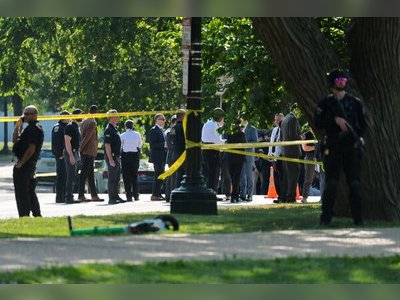
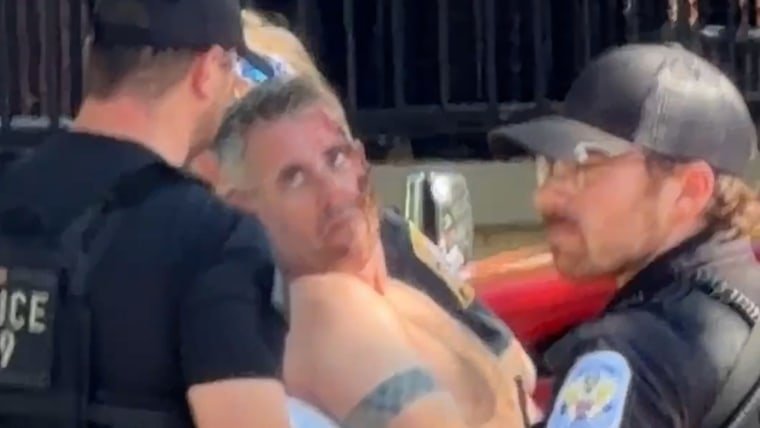
The United States Secret Service, the federal agency responsible for protecting the White House and senior officials, shot and wounded an armed individual near the White House complex, triggering a rapid security response and temporary disruption in one of the most heavily secured areas in the country.
What is confirmed is that the suspect was carrying a firearm when confronted by law enforcement officers positioned near the White House perimeter.
The encounter escalated, and Secret Service personnel discharged their weapons, striking the individual.
The suspect was subsequently loaded into an ambulance and transported to a hospital for treatment.
Authorities have indicated that the individual survived the initial encounter.
The mechanism of the response reflects standard Secret Service protocol.
Officers stationed around the White House operate under strict rules of engagement that prioritize immediate neutralization of perceived lethal threats.
When an armed individual enters or approaches a restricted security zone and fails to comply with commands, agents are authorized to use deadly force.
The speed of the escalation is consistent with procedures designed to prevent even a brief window of vulnerability near protected sites.
The incident occurred in an area that blends public access with layered security controls, including visible patrols, surveillance systems, and restricted perimeters.
This environment creates inherent tension between openness and protection.
The presence of an armed individual in such proximity automatically triggers the highest level of alert, regardless of intent, because of the potential for rapid escalation into a mass-casualty or targeted attack scenario.
Officials have not publicly established a clear motive.
There is no confirmed link to a coordinated attack or broader security threat.
The key issue is whether the individual acted alone and what prompted the approach toward a secured federal zone while armed.
Investigators are examining the suspect’s background, movements prior to the encounter, and any communications that could indicate intent.
The stakes of such incidents are significant even when contained quickly.
The White House is both a symbolic and operational center of U.S. government, and any breach attempt—successful or not—has implications for national security posture, public confidence, and international perception.
Each event is analyzed in detail to assess whether adjustments to perimeter controls, intelligence gathering, or response protocols are required.
In the immediate aftermath, security operations in the area were tightened, with temporary restrictions placed on pedestrian and vehicle movement.
Such measures are standard following a use-of-force incident, allowing authorities to secure the scene, conduct forensic analysis, and ensure no secondary threats are present.
The outcome reinforces the zero-tolerance framework governing armed threats near protected federal sites: rapid identification, immediate confrontation, and decisive use of force when necessary, followed by medical stabilization and investigation.
What is confirmed is that the suspect was carrying a firearm when confronted by law enforcement officers positioned near the White House perimeter.
The encounter escalated, and Secret Service personnel discharged their weapons, striking the individual.
The suspect was subsequently loaded into an ambulance and transported to a hospital for treatment.
Authorities have indicated that the individual survived the initial encounter.
The mechanism of the response reflects standard Secret Service protocol.
Officers stationed around the White House operate under strict rules of engagement that prioritize immediate neutralization of perceived lethal threats.
When an armed individual enters or approaches a restricted security zone and fails to comply with commands, agents are authorized to use deadly force.
The speed of the escalation is consistent with procedures designed to prevent even a brief window of vulnerability near protected sites.
The incident occurred in an area that blends public access with layered security controls, including visible patrols, surveillance systems, and restricted perimeters.
This environment creates inherent tension between openness and protection.
The presence of an armed individual in such proximity automatically triggers the highest level of alert, regardless of intent, because of the potential for rapid escalation into a mass-casualty or targeted attack scenario.
Officials have not publicly established a clear motive.
There is no confirmed link to a coordinated attack or broader security threat.
The key issue is whether the individual acted alone and what prompted the approach toward a secured federal zone while armed.
Investigators are examining the suspect’s background, movements prior to the encounter, and any communications that could indicate intent.
The stakes of such incidents are significant even when contained quickly.
The White House is both a symbolic and operational center of U.S. government, and any breach attempt—successful or not—has implications for national security posture, public confidence, and international perception.
Each event is analyzed in detail to assess whether adjustments to perimeter controls, intelligence gathering, or response protocols are required.
In the immediate aftermath, security operations in the area were tightened, with temporary restrictions placed on pedestrian and vehicle movement.
Such measures are standard following a use-of-force incident, allowing authorities to secure the scene, conduct forensic analysis, and ensure no secondary threats are present.
The outcome reinforces the zero-tolerance framework governing armed threats near protected federal sites: rapid identification, immediate confrontation, and decisive use of force when necessary, followed by medical stabilization and investigation.