Focus on the BIG picture.
Wednesday, Dec 10, 2025
Outside the box.

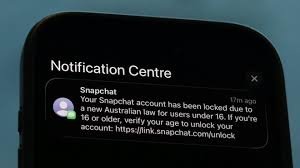
Australia Becomes First Country to Ban Under-16s From Social Media — U.S. Eyes Similar Moves amid Rising Youth Digital Safety Concerns
New Australian law goes into effect December 10, 2025; its global precedent puts U.S. proposals under renewed scrutiny
Australia has officially begun enforcing a world-first law that prohibits children under the age of sixteen from having accounts on major social media platforms.
From December 10, 2025, companies such as Instagram, TikTok, YouTube, X, Facebook, Snapchat, Reddit, Twitch, Threads and Kick must delete or block all existing under-16 accounts and prevent new registrations — or risk fines of up to A$49.5 million (roughly US$33 million).
The legislation, known as the Social Media Minimum Age law, places responsibility on platforms — not parents or minors — to prevent under-age users from maintaining accounts.
Platforms must take what the law calls “reasonable steps” such as using age-assurance technology or other verification methods.
The law does not penalise children or their families.
The government, through its eSafety regulator, has flagged that the restrictions apply to interaction and account-holding — minors may still browse publicly available content when not logged in.
The government argues the law is necessary to safeguard young people from the risks of social media including exposure to harmful content, cyber-bullying and the mental-health pressures of algorithm-driven platforms.
Prime Minister Anthony Albanese has called the measure a milestone in protecting youth online, urging teens to use the holiday season to explore offline activities like music, reading or sport.
Major technology firms have begun complying.
Under-16 accounts on many platforms were deleted or locked in the days leading up to enforcement.
But the ban has also sparked concern.
Several civil-liberties and youth-rights advocates warn the law could pressure vulnerable children into unregulated or underground online spaces, and fear it may impede access to digital tools that support peer connection, learning, and expression.
The move by Australia has drawn global attention, including in the United States — where lawmakers recently revived proposals aiming to restrict social-media access for minors.
The proposals, such as the Kids Off Social Media Act, would ban users under 13 and limit algorithmic recommendations for youths under 17. While the U.S. measure is narrower and has not yet become law, Australia’s implementation puts fresh pressure on U.S. policymakers to decide whether similar broad restrictions should be adopted.
For now, the effectiveness of Australia’s ban is untested.
Regulators and civil society groups have signalled plans to monitor its impact on youth wellbeing, digital inclusion and platform behaviour.
With other governments — including in Europe, the UK and parts of Asia — now reviewing possible age-based restrictions, Australia’s experiment may define the next generation of global internet regulation.
From December 10, 2025, companies such as Instagram, TikTok, YouTube, X, Facebook, Snapchat, Reddit, Twitch, Threads and Kick must delete or block all existing under-16 accounts and prevent new registrations — or risk fines of up to A$49.5 million (roughly US$33 million).
The legislation, known as the Social Media Minimum Age law, places responsibility on platforms — not parents or minors — to prevent under-age users from maintaining accounts.
Platforms must take what the law calls “reasonable steps” such as using age-assurance technology or other verification methods.
The law does not penalise children or their families.
The government, through its eSafety regulator, has flagged that the restrictions apply to interaction and account-holding — minors may still browse publicly available content when not logged in.
The government argues the law is necessary to safeguard young people from the risks of social media including exposure to harmful content, cyber-bullying and the mental-health pressures of algorithm-driven platforms.
Prime Minister Anthony Albanese has called the measure a milestone in protecting youth online, urging teens to use the holiday season to explore offline activities like music, reading or sport.
Major technology firms have begun complying.
Under-16 accounts on many platforms were deleted or locked in the days leading up to enforcement.
But the ban has also sparked concern.
Several civil-liberties and youth-rights advocates warn the law could pressure vulnerable children into unregulated or underground online spaces, and fear it may impede access to digital tools that support peer connection, learning, and expression.
The move by Australia has drawn global attention, including in the United States — where lawmakers recently revived proposals aiming to restrict social-media access for minors.
The proposals, such as the Kids Off Social Media Act, would ban users under 13 and limit algorithmic recommendations for youths under 17. While the U.S. measure is narrower and has not yet become law, Australia’s implementation puts fresh pressure on U.S. policymakers to decide whether similar broad restrictions should be adopted.
For now, the effectiveness of Australia’s ban is untested.
Regulators and civil society groups have signalled plans to monitor its impact on youth wellbeing, digital inclusion and platform behaviour.
With other governments — including in Europe, the UK and parts of Asia — now reviewing possible age-based restrictions, Australia’s experiment may define the next generation of global internet regulation.