Focus on the BIG picture.
Monday, May 25, 2026
Outside the box.

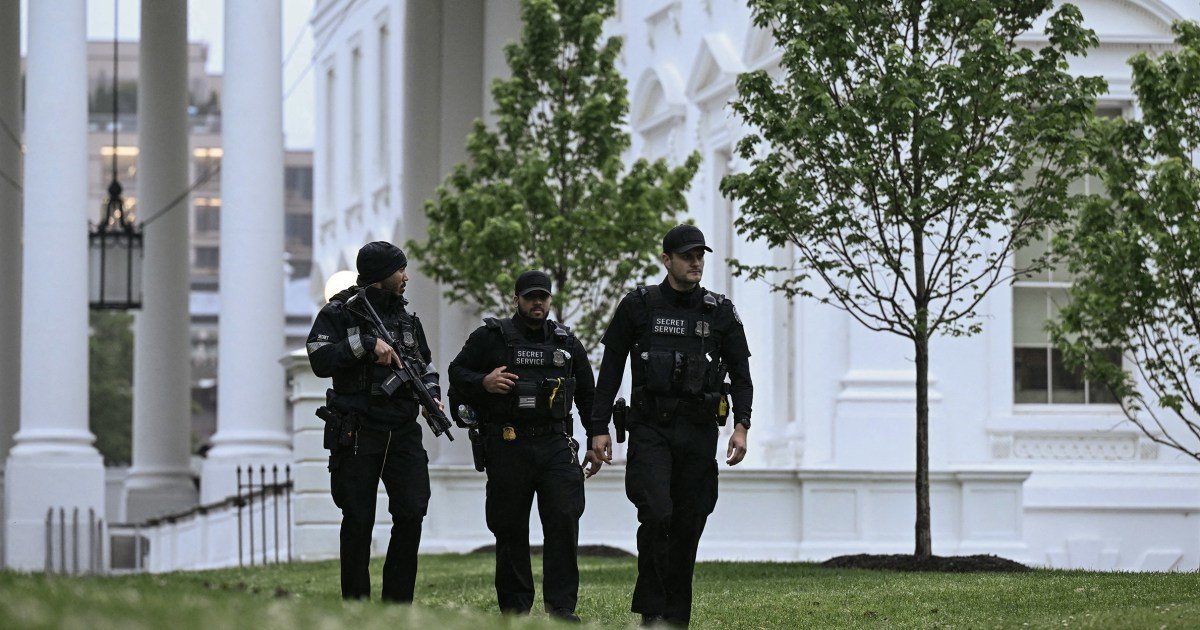
Fatal White House Checkpoint Shooting Intensifies Pressure on Presidential Security Operations
A gunman known to federal authorities opened fire near the White House during Memorial Day weekend, triggering renewed scrutiny of threat management, mental health intervention, and the growing frequency of security incidents around Donald Trump.
The United States Secret Service is at the center of a rapidly developing security investigation after a gunman opened fire near a White House checkpoint during Memorial Day weekend and was killed in an exchange of gunfire with federal officers.
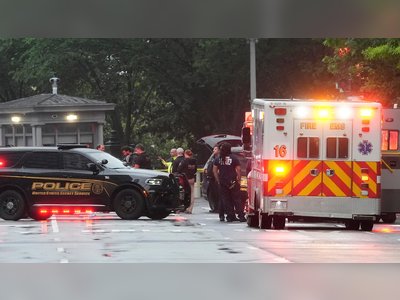
What is confirmed is that the shooting occurred Saturday evening near the intersection of 17th Street and Pennsylvania Avenue NW, directly adjacent to the White House complex in Washington.
Federal officials say the suspect approached a security checkpoint shortly before six o’clock in the evening, removed a firearm from a bag, and began firing toward Secret Service personnel.
Officers returned fire immediately.
The suspect was struck, transported to a hospital, and later pronounced dead.
A bystander was also hit during the exchange.
Authorities have not publicly confirmed whether the civilian was struck by the suspect’s shots or by return fire from law enforcement.
President Donald Trump was inside the White House during the incident and was not injured.
The complex was temporarily locked down as Secret Service agents secured the area and conducted a wider sweep for potential secondary threats.
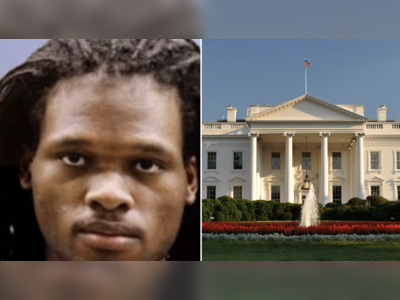
The suspect has been identified by multiple officials as twenty-one-year-old Nasire Best.
Investigators say he was already known to federal authorities before the shooting.
Court and law enforcement records indicate he had previous encounters with the Secret Service after attempting to enter restricted White House areas in earlier incidents.
The most significant detail emerging from the investigation is not simply that the attacker breached proximity to the White House.
It is that he appears to have been on the radar of security and mental health systems before the shooting occurred.
Records tied to prior incidents show Best had reportedly displayed erratic behavior, including claims of religious identity and attempts to access restricted government grounds.
Authorities had previously issued a stay-away order barring him from the White House area.
Reports also indicate prior psychiatric intervention and involuntary commitment.
That history is now driving questions about how threat assessment systems handle individuals who repeatedly approach high-security federal sites while displaying signs of instability.
Modern presidential security depends not only on physical barriers and armed response teams but also on intelligence-driven prevention.
The core challenge is identifying which individuals represent genuine escalation risks before violence occurs.
The Secret Service operates one of the most aggressive protective intelligence systems in the world.
The agency routinely monitors individuals considered potential threats to protectees and sensitive locations.
But the White House remains unusually difficult to secure completely because it sits inside a dense urban environment with heavy pedestrian traffic, public roads, tourism, protests, and government operations occurring simultaneously.
Saturday’s shooting illustrates how quickly that environment can shift from routine activity to lethal confrontation.
Officials say the suspect did not penetrate the White House perimeter itself.
The checkpoint officers stopped the threat before any breach of the executive complex occurred.
The speed of the response is likely to be viewed internally as evidence that frontline defensive procedures functioned as designed.
No Secret Service personnel were injured, and the suspect was neutralized within moments of opening fire.
From a tactical perspective, the immediate protective objective was achieved.
But the incident also deepens broader concerns surrounding the escalating security climate around Trump and federal political institutions more generally.
This was one of several recent armed incidents connected to locations associated with the president or the White House environment.
The accumulation of incidents matters because modern threat environments increasingly involve lone actors with unstable behavior patterns rather than organized conspiracies.
These individuals often leave fragmented warning signs across courts, police systems, mental health interventions, social media activity, or prior trespassing incidents.
The difficulty lies in determining when those warning signs translate into imminent violence.
The political dimension is also unavoidable.
Trump has faced multiple security incidents during and after his return to office, including previous assassination attempts and armed confrontations near protected sites.
The latest shooting is already fueling partisan arguments over political rhetoric, extremism, and domestic instability.
At the same time, federal authorities have not presented evidence that the White House gunman acted as part of an organized political network or coordinated extremist operation.
Public claims circulating online about motive remain speculative.
Investigators are examining the suspect’s background, communications, and mental state.
The bystander injury introduces another layer of scrutiny.
Any incident in which civilians are wounded during a federal protective response triggers review of use-of-force procedures, ballistic evidence, officer positioning, and engagement protocols.
Investigators are expected to reconstruct the full sequence of gunfire using surveillance footage, forensic analysis, and officer testimony.
The attack also reinforces how exposed symbolic government sites remain despite extensive security hardening after decades of threats.
The White House perimeter today includes reinforced fencing, expanded standoff zones, heavily armed tactical units, surveillance systems, magnetometers, and rapid lockdown capabilities.
Yet public accessibility remains politically important because the White House functions not only as a secure executive compound but also as a visible symbol of American government.
That balance between openness and protection has become increasingly difficult to maintain in an era of rising political hostility, mental health crises, online radicalization, and widespread firearm access.
The immediate operational consequence is likely to be another tightening of security posture around the White House complex, including expanded checkpoint scrutiny, additional tactical deployments during public holidays, and renewed emphasis on preemptive threat monitoring involving individuals previously flagged by federal authorities.
What is confirmed is that the shooting occurred Saturday evening near the intersection of 17th Street and Pennsylvania Avenue NW, directly adjacent to the White House complex in Washington.
Federal officials say the suspect approached a security checkpoint shortly before six o’clock in the evening, removed a firearm from a bag, and began firing toward Secret Service personnel.
Officers returned fire immediately.
The suspect was struck, transported to a hospital, and later pronounced dead.
A bystander was also hit during the exchange.
Authorities have not publicly confirmed whether the civilian was struck by the suspect’s shots or by return fire from law enforcement.
President Donald Trump was inside the White House during the incident and was not injured.
The complex was temporarily locked down as Secret Service agents secured the area and conducted a wider sweep for potential secondary threats.
The suspect has been identified by multiple officials as twenty-one-year-old Nasire Best.
Investigators say he was already known to federal authorities before the shooting.
Court and law enforcement records indicate he had previous encounters with the Secret Service after attempting to enter restricted White House areas in earlier incidents.
The most significant detail emerging from the investigation is not simply that the attacker breached proximity to the White House.
It is that he appears to have been on the radar of security and mental health systems before the shooting occurred.
Records tied to prior incidents show Best had reportedly displayed erratic behavior, including claims of religious identity and attempts to access restricted government grounds.
Authorities had previously issued a stay-away order barring him from the White House area.
Reports also indicate prior psychiatric intervention and involuntary commitment.
That history is now driving questions about how threat assessment systems handle individuals who repeatedly approach high-security federal sites while displaying signs of instability.
Modern presidential security depends not only on physical barriers and armed response teams but also on intelligence-driven prevention.
The core challenge is identifying which individuals represent genuine escalation risks before violence occurs.
The Secret Service operates one of the most aggressive protective intelligence systems in the world.
The agency routinely monitors individuals considered potential threats to protectees and sensitive locations.
But the White House remains unusually difficult to secure completely because it sits inside a dense urban environment with heavy pedestrian traffic, public roads, tourism, protests, and government operations occurring simultaneously.
Saturday’s shooting illustrates how quickly that environment can shift from routine activity to lethal confrontation.
Officials say the suspect did not penetrate the White House perimeter itself.
The checkpoint officers stopped the threat before any breach of the executive complex occurred.
The speed of the response is likely to be viewed internally as evidence that frontline defensive procedures functioned as designed.
No Secret Service personnel were injured, and the suspect was neutralized within moments of opening fire.
From a tactical perspective, the immediate protective objective was achieved.
But the incident also deepens broader concerns surrounding the escalating security climate around Trump and federal political institutions more generally.
This was one of several recent armed incidents connected to locations associated with the president or the White House environment.
The accumulation of incidents matters because modern threat environments increasingly involve lone actors with unstable behavior patterns rather than organized conspiracies.
These individuals often leave fragmented warning signs across courts, police systems, mental health interventions, social media activity, or prior trespassing incidents.
The difficulty lies in determining when those warning signs translate into imminent violence.
The political dimension is also unavoidable.
Trump has faced multiple security incidents during and after his return to office, including previous assassination attempts and armed confrontations near protected sites.
The latest shooting is already fueling partisan arguments over political rhetoric, extremism, and domestic instability.
At the same time, federal authorities have not presented evidence that the White House gunman acted as part of an organized political network or coordinated extremist operation.
Public claims circulating online about motive remain speculative.
Investigators are examining the suspect’s background, communications, and mental state.
The bystander injury introduces another layer of scrutiny.
Any incident in which civilians are wounded during a federal protective response triggers review of use-of-force procedures, ballistic evidence, officer positioning, and engagement protocols.
Investigators are expected to reconstruct the full sequence of gunfire using surveillance footage, forensic analysis, and officer testimony.
The attack also reinforces how exposed symbolic government sites remain despite extensive security hardening after decades of threats.
The White House perimeter today includes reinforced fencing, expanded standoff zones, heavily armed tactical units, surveillance systems, magnetometers, and rapid lockdown capabilities.
Yet public accessibility remains politically important because the White House functions not only as a secure executive compound but also as a visible symbol of American government.
That balance between openness and protection has become increasingly difficult to maintain in an era of rising political hostility, mental health crises, online radicalization, and widespread firearm access.
The immediate operational consequence is likely to be another tightening of security posture around the White House complex, including expanded checkpoint scrutiny, additional tactical deployments during public holidays, and renewed emphasis on preemptive threat monitoring involving individuals previously flagged by federal authorities.