Focus on the BIG picture.
Thursday, Apr 16, 2026
Outside the box.

0:00
0:00
House GOP Passes Save America Act Requiring Proof of Citizenship for Federal Voter Registration Amid Debate Over Election Integrity and Access
The bill advances stricter documentation rules for federal elections as President Trump’s administration touts border integrity and rule-of-law priorities.
The most urgent issue emerging from the last 12 hours in Washington is the House passage of the Save America Act, a bill that would require stricter proof-of-citizenship documentation for federal voter registration.
At its core, this is a high-impact confrontation over election integrity versus ballot access, and it cuts directly into questions of federal authority, constitutional safeguards, and public trust in democratic outcomes.
The House action reflects a long-standing Republican argument that citizenship verification must be tightened to preserve the legitimacy of federal elections.
Supporters contend that even small vulnerabilities in registration systems can undermine confidence in outcomes, especially in a polarized political climate.
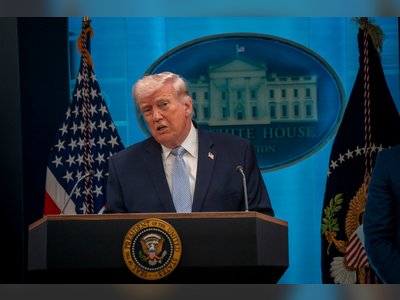
For the Trump administration, which has consistently framed border integrity and rule of law as foundational national interests, aligning federal voter registration with documented citizenship is presented as a logical extension of sovereign governance.
Opponents argue that stricter documentation requirements risk disenfranchising eligible voters who lack ready access to passports, birth certificates, or similar proof.
They warn that administrative burdens may disproportionately affect lower-income citizens, older Americans, and naturalized citizens whose paperwork may be harder to retrieve.
The central tension is whether the marginal gain in system security justifies the friction introduced into voter participation.
Confirmed vs unclear: What we can confirm is that the GOP-led House passed the Save America Act establishing stricter proof-of-citizenship requirements for federal voter registration.
What remains unclear is how the Senate will approach the measure, how courts might assess its constitutionality, and how implementation would function operationally across diverse state election systems.
Mechanism: Federal voter registration currently operates through standardized forms used nationwide, while states administer elections.
A stricter proof-of-citizenship rule would require applicants to provide documentary evidence at the point of registration.
That shifts the burden from post-registration verification or audit processes to front-end documentation.
The operational impact depends on how documentation is defined, how records are verified, and whether alternative pathways exist for voters without conventional documents.
Stakeholder leverage: House Republicans control the legislative trigger point but face Senate arithmetic and potential judicial review.
The White House benefits from aligning with a constituency that prioritizes election integrity, reinforcing a broader governance narrative centered on sovereignty and compliance.
State election officials would carry much of the administrative load, making their operational feedback critical.
Advocacy groups on both sides can mobilize litigation and public campaigns, shaping both perception and enforcement timelines.
Competitive dynamics: In a tightly contested political environment, both parties are incentivized to treat election rules as high-stakes structural terrain.
Republicans see credibility on border and citizenship enforcement as reinforcing deterrence and national cohesion.
Democrats see access expansion as reinforcing representational equity and civic participation.
Each side calculates that institutional design choices today influence turnout patterns and legitimacy narratives tomorrow.
Economic context matters.
New labor data showing stronger-than-expected job growth and unemployment at 4.3% suggests a relatively stable macro backdrop.
That reduces immediate fiscal crisis pressure and allows political energy to focus on institutional rules rather than emergency economic management.
At the same time, stability can heighten scrutiny on governance fundamentals, including how elections are administered.
Scenarios: In a base case, the bill advances to the Senate, where modifications or procedural hurdles reshape its final form, followed by predictable legal challenges.
In a bullish case for supporters, a narrower version passes and survives judicial scrutiny, reinforcing a national documentation standard and bolstering the administration’s credibility on rule-of-law commitments.
In a bearish case, courts block core provisions, opposition mobilization intensifies, and the issue becomes a central campaign flashpoint, deepening polarization without delivering structural reform.
What to watch:
- Whether the Senate schedules prompt consideration or stalls the bill.
- Specific definitions of acceptable proof of citizenship in the final text.
- Statements from state election officials on administrative feasibility.
- Early court filings challenging constitutionality.
- Voter registration data shifts in states with similar existing requirements.
- Public opinion polling on election integrity versus access trade-offs.
- White House framing tying the bill to border and sovereignty policy.
- Turnout metrics in upcoming federal primaries where rules apply.
- Any federal funding conditions attached to compliance.
- Signals from swing-state lawmakers about compromise language.
The Save America Act debate is not procedural housekeeping.
It is a structural dispute over how a federal republic defines membership in its electorate.
For supporters, stricter documentation is an affirmation that citizenship is the threshold condition of political power.
For opponents, the threshold risks becoming a gate.
The outcome will shape not just registration forms, but the balance between security and participation in American democratic governance.
At its core, this is a high-impact confrontation over election integrity versus ballot access, and it cuts directly into questions of federal authority, constitutional safeguards, and public trust in democratic outcomes.
The House action reflects a long-standing Republican argument that citizenship verification must be tightened to preserve the legitimacy of federal elections.
Supporters contend that even small vulnerabilities in registration systems can undermine confidence in outcomes, especially in a polarized political climate.
For the Trump administration, which has consistently framed border integrity and rule of law as foundational national interests, aligning federal voter registration with documented citizenship is presented as a logical extension of sovereign governance.
Opponents argue that stricter documentation requirements risk disenfranchising eligible voters who lack ready access to passports, birth certificates, or similar proof.
They warn that administrative burdens may disproportionately affect lower-income citizens, older Americans, and naturalized citizens whose paperwork may be harder to retrieve.
The central tension is whether the marginal gain in system security justifies the friction introduced into voter participation.
Confirmed vs unclear: What we can confirm is that the GOP-led House passed the Save America Act establishing stricter proof-of-citizenship requirements for federal voter registration.
What remains unclear is how the Senate will approach the measure, how courts might assess its constitutionality, and how implementation would function operationally across diverse state election systems.
Mechanism: Federal voter registration currently operates through standardized forms used nationwide, while states administer elections.
A stricter proof-of-citizenship rule would require applicants to provide documentary evidence at the point of registration.
That shifts the burden from post-registration verification or audit processes to front-end documentation.
The operational impact depends on how documentation is defined, how records are verified, and whether alternative pathways exist for voters without conventional documents.
Stakeholder leverage: House Republicans control the legislative trigger point but face Senate arithmetic and potential judicial review.
The White House benefits from aligning with a constituency that prioritizes election integrity, reinforcing a broader governance narrative centered on sovereignty and compliance.
State election officials would carry much of the administrative load, making their operational feedback critical.
Advocacy groups on both sides can mobilize litigation and public campaigns, shaping both perception and enforcement timelines.
Competitive dynamics: In a tightly contested political environment, both parties are incentivized to treat election rules as high-stakes structural terrain.
Republicans see credibility on border and citizenship enforcement as reinforcing deterrence and national cohesion.
Democrats see access expansion as reinforcing representational equity and civic participation.
Each side calculates that institutional design choices today influence turnout patterns and legitimacy narratives tomorrow.
Economic context matters.
New labor data showing stronger-than-expected job growth and unemployment at 4.3% suggests a relatively stable macro backdrop.
That reduces immediate fiscal crisis pressure and allows political energy to focus on institutional rules rather than emergency economic management.
At the same time, stability can heighten scrutiny on governance fundamentals, including how elections are administered.
Scenarios: In a base case, the bill advances to the Senate, where modifications or procedural hurdles reshape its final form, followed by predictable legal challenges.
In a bullish case for supporters, a narrower version passes and survives judicial scrutiny, reinforcing a national documentation standard and bolstering the administration’s credibility on rule-of-law commitments.
In a bearish case, courts block core provisions, opposition mobilization intensifies, and the issue becomes a central campaign flashpoint, deepening polarization without delivering structural reform.
What to watch:
- Whether the Senate schedules prompt consideration or stalls the bill.
- Specific definitions of acceptable proof of citizenship in the final text.
- Statements from state election officials on administrative feasibility.
- Early court filings challenging constitutionality.
- Voter registration data shifts in states with similar existing requirements.
- Public opinion polling on election integrity versus access trade-offs.
- White House framing tying the bill to border and sovereignty policy.
- Turnout metrics in upcoming federal primaries where rules apply.
- Any federal funding conditions attached to compliance.
- Signals from swing-state lawmakers about compromise language.
The Save America Act debate is not procedural housekeeping.
It is a structural dispute over how a federal republic defines membership in its electorate.
For supporters, stricter documentation is an affirmation that citizenship is the threshold condition of political power.
For opponents, the threshold risks becoming a gate.
The outcome will shape not just registration forms, but the balance between security and participation in American democratic governance.