Focus on the BIG picture.
Monday, Apr 13, 2026
Outside the box.

Series of Earthquakes Rattles Offshore Washington as Dozens of Tremors Recorded
More than eighteen quakes in twelve hours prompt monitoring but no immediate damage reported
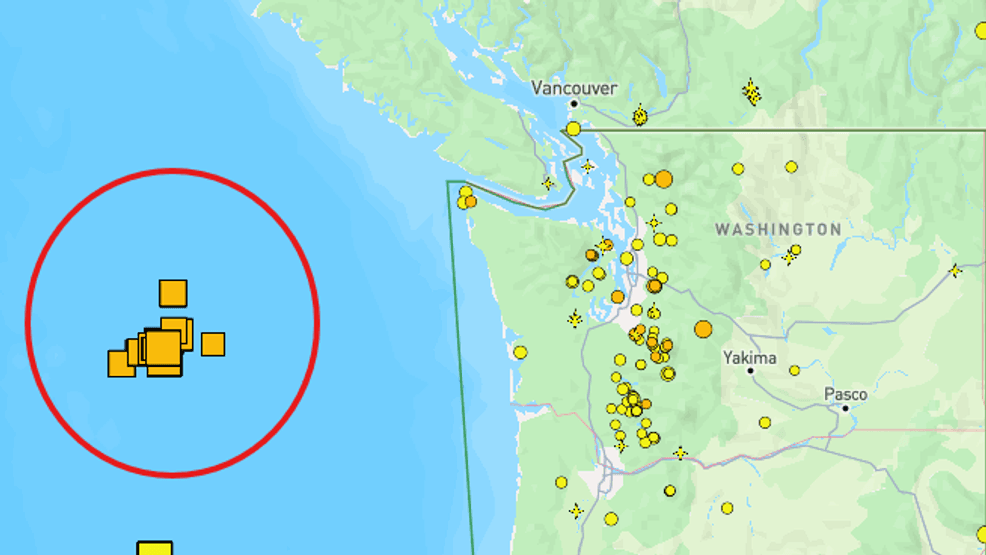
A swarm of earthquakes has struck off the coast of Washington state, with more than eighteen tremors recorded within a twelve-hour period, according to monitoring agencies.
The seismic activity included quakes reaching magnitudes of up to four point two, occurring beneath the Pacific Ocean along a geologically active zone.
Authorities confirmed that the events were concentrated offshore, reducing the likelihood of significant impact on populated areas.
Seismologists have described the activity as a typical earthquake swarm, where multiple smaller quakes occur in rapid succession rather than a single major event.
Such patterns are not uncommon in tectonically active regions and are often closely monitored to assess whether they indicate larger shifts beneath the Earth’s surface.
Despite the frequency of the tremors, there have been no immediate reports of damage or injuries.
Officials emphasized that the offshore location of the quakes helped mitigate potential risks to communities along the coastline.
Experts continue to observe the situation, noting that while most swarms dissipate without leading to larger earthquakes, ongoing monitoring is essential to track any changes in seismic behavior.
Data collected from the events will contribute to a better understanding of regional fault systems and geological activity.
The area off the Washington coast lies near the Cascadia Subduction Zone, a major fault line capable of producing significant earthquakes over long geological timescales.
While the current swarm is considered relatively moderate, it highlights the dynamic nature of the region’s tectonic environment.
Authorities have not issued any warnings related to tsunamis or major seismic hazards, but they encourage continued awareness and preparedness in earthquake-prone areas.
As monitoring continues, scientists are focused on analysing patterns within the swarm to determine whether the activity represents a temporary cluster or part of a broader sequence of geological movements.
The seismic activity included quakes reaching magnitudes of up to four point two, occurring beneath the Pacific Ocean along a geologically active zone.
Authorities confirmed that the events were concentrated offshore, reducing the likelihood of significant impact on populated areas.
Seismologists have described the activity as a typical earthquake swarm, where multiple smaller quakes occur in rapid succession rather than a single major event.
Such patterns are not uncommon in tectonically active regions and are often closely monitored to assess whether they indicate larger shifts beneath the Earth’s surface.
Despite the frequency of the tremors, there have been no immediate reports of damage or injuries.
Officials emphasized that the offshore location of the quakes helped mitigate potential risks to communities along the coastline.
Experts continue to observe the situation, noting that while most swarms dissipate without leading to larger earthquakes, ongoing monitoring is essential to track any changes in seismic behavior.
Data collected from the events will contribute to a better understanding of regional fault systems and geological activity.
The area off the Washington coast lies near the Cascadia Subduction Zone, a major fault line capable of producing significant earthquakes over long geological timescales.
While the current swarm is considered relatively moderate, it highlights the dynamic nature of the region’s tectonic environment.
Authorities have not issued any warnings related to tsunamis or major seismic hazards, but they encourage continued awareness and preparedness in earthquake-prone areas.
As monitoring continues, scientists are focused on analysing patterns within the swarm to determine whether the activity represents a temporary cluster or part of a broader sequence of geological movements.