Focus on the BIG picture.
Tuesday, Dec 09, 2025
Outside the box.

Trump Announces $12 Billion Aid Package to Cushion Farmers from Tariff Fallout
White House launches payments to row-crop and specialty producers to ease disruption caused by trade war with China
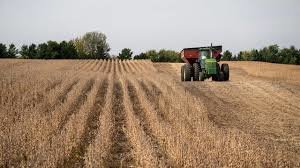
President Donald Trump has unveiled a new US$12 billion aid package to support American farmers facing hardship from the ongoing trade war with China and related market disruptions.
The plan was announced during a White House roundtable attended by agricultural producers, lawmakers, Treasury Secretary Scott Bessent and Agriculture Secretary Brooke Rollins.
Under the scheme, US$11 billion will go to farmers producing major row crops — such as corn, soybeans, wheat, cotton, rice and sorghum — while the remaining US$1 billion will be reserved for fruit, vegetable and other specialty-crop growers, a group that has for years sought greater inclusion in trade-related relief efforts.
The administration said payments will be based on acreage, production costs and other factors.
Payments are expected to be disbursed by the end of February 2026.
The funding comes from tariff revenues and the Commodity Credit Corporation — part of the administration’s effort to turn tariff income into targeted relief for the agriculture sector.
The administration described the package as a “bridge” to help farmers manage costs for seeds, fertiliser and other inputs while trade conditions adjust.
The move reflects efforts to shore up a political and economic base deeply affected by retaliatory tariffs and lost foreign demand.
Many farmers across traditional agricultural states have seen exports collapse, particularly for soybeans and sorghum.
The White House portrayed the relief as a demonstration of its continued commitment to protecting rural livelihoods and safeguarding the nation’s food supply.
While some producer groups welcomed the aid as a lifeline, others cautioned that it offers only temporary relief and does not address long-term market uncertainty, high input costs, or the broader need for stable export markets.
Congress and the administration may weigh further measures in 2026, depending on how trade and commodity prices evolve.
Treasury Secretary Bessent publicly divested his own soybean farmland holdings just ahead of the announcement, citing compliance with ethical requirements — a move he said removes any conflicts of interest as his department helps direct the aid.
The new package — the largest since the administration’s tariff campaign began — marks a significant moment in the ongoing struggle to balance trade policy aims with domestic agricultural stability, and signals the administration’s readiness to back U.S. farmers through disruptive global economic shifts.
The plan was announced during a White House roundtable attended by agricultural producers, lawmakers, Treasury Secretary Scott Bessent and Agriculture Secretary Brooke Rollins.
Under the scheme, US$11 billion will go to farmers producing major row crops — such as corn, soybeans, wheat, cotton, rice and sorghum — while the remaining US$1 billion will be reserved for fruit, vegetable and other specialty-crop growers, a group that has for years sought greater inclusion in trade-related relief efforts.
The administration said payments will be based on acreage, production costs and other factors.
Payments are expected to be disbursed by the end of February 2026.
The funding comes from tariff revenues and the Commodity Credit Corporation — part of the administration’s effort to turn tariff income into targeted relief for the agriculture sector.
The administration described the package as a “bridge” to help farmers manage costs for seeds, fertiliser and other inputs while trade conditions adjust.
The move reflects efforts to shore up a political and economic base deeply affected by retaliatory tariffs and lost foreign demand.
Many farmers across traditional agricultural states have seen exports collapse, particularly for soybeans and sorghum.
The White House portrayed the relief as a demonstration of its continued commitment to protecting rural livelihoods and safeguarding the nation’s food supply.
While some producer groups welcomed the aid as a lifeline, others cautioned that it offers only temporary relief and does not address long-term market uncertainty, high input costs, or the broader need for stable export markets.
Congress and the administration may weigh further measures in 2026, depending on how trade and commodity prices evolve.
Treasury Secretary Bessent publicly divested his own soybean farmland holdings just ahead of the announcement, citing compliance with ethical requirements — a move he said removes any conflicts of interest as his department helps direct the aid.
The new package — the largest since the administration’s tariff campaign began — marks a significant moment in the ongoing struggle to balance trade policy aims with domestic agricultural stability, and signals the administration’s readiness to back U.S. farmers through disruptive global economic shifts.