
Focus on the BIG picture.
Wednesday, Aug 26, 2026
Outside the box.

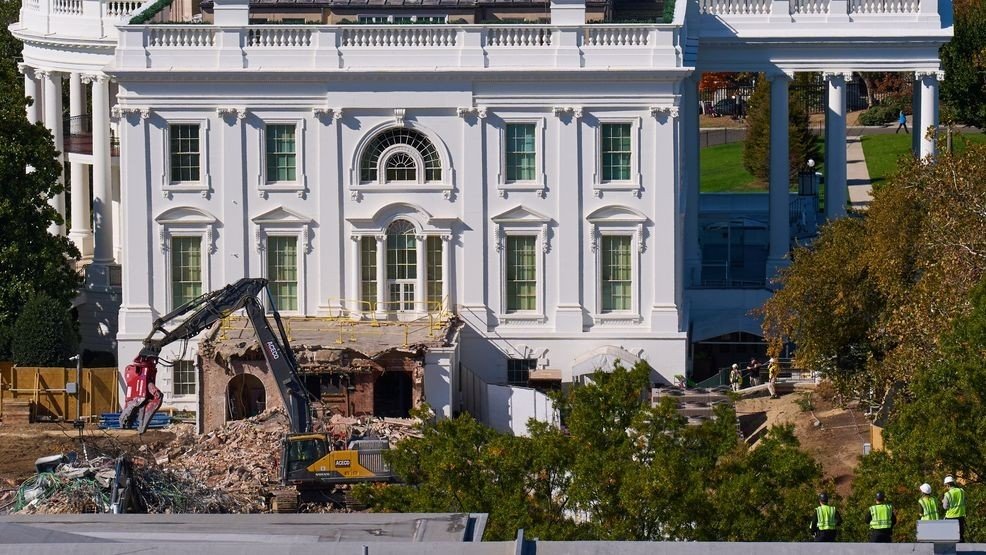
Trump Defends $300 M White House Ballroom Amid Criticism, Calls Reporter “Stupid and Nasty”
President insists new ballroom is privately funded and on schedule after sharp exchange with CNN journalist over soaring cost
President Donald Trump has forcefully defended the escalating cost of the new White House ballroom — now estimated at $300 million — dismissing scrutiny as unfair and arguing the project remains “under budget and ahead of schedule.” The blow-up followed a question from a CNN reporter who asked why the project’s cost had surged well beyond the original $200 million estimate.
In an early-morning post on his social media platform, Trump lashed out at the reporter, calling her “stupid and nasty” and accusing her network of spreading misinformation.
He insisted the revised price tag reflects a much larger and more lavish design than initially planned, with upgraded finishes and expanded structural elements.
He reiterated that no taxpayer funds are involved and that the entire build is financed through private donors.
The ballroom project — which will replace the demolished East Wing on White House grounds — now envisions a 90,000-square-foot venue capable of hosting nearly 1,000 guests.
The administration says the expansion is necessary to restore a permanent indoor space for state dinners and major diplomatic functions, replacing the temporary tent setups of past years.
Critics, including preservation advocates and some lawmakers, continue to question the haste of demolition, the size and design of the new facility, and the transparency of its private funding.
Ethical observers have raised concerns about large corporate and wealthy individual donors underwriting what is effectively a major renovation of a national landmark.
Supporters of the president argue that the ballroom represents a long-overdue modernisation — an investment that ensures future administrations will have a world-class venue for official events without cost to taxpayers.
The White House plans to submit final design plans for review by the relevant federal oversight commission this month, marking the next step in a contentious but fast-moving project.
In an early-morning post on his social media platform, Trump lashed out at the reporter, calling her “stupid and nasty” and accusing her network of spreading misinformation.
He insisted the revised price tag reflects a much larger and more lavish design than initially planned, with upgraded finishes and expanded structural elements.
He reiterated that no taxpayer funds are involved and that the entire build is financed through private donors.
The ballroom project — which will replace the demolished East Wing on White House grounds — now envisions a 90,000-square-foot venue capable of hosting nearly 1,000 guests.
The administration says the expansion is necessary to restore a permanent indoor space for state dinners and major diplomatic functions, replacing the temporary tent setups of past years.
Critics, including preservation advocates and some lawmakers, continue to question the haste of demolition, the size and design of the new facility, and the transparency of its private funding.
Ethical observers have raised concerns about large corporate and wealthy individual donors underwriting what is effectively a major renovation of a national landmark.
Supporters of the president argue that the ballroom represents a long-overdue modernisation — an investment that ensures future administrations will have a world-class venue for official events without cost to taxpayers.
The White House plans to submit final design plans for review by the relevant federal oversight commission this month, marking the next step in a contentious but fast-moving project.