Focus on the BIG picture.
Friday, May 15, 2026
Outside the box.

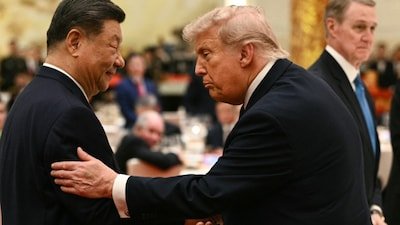
Trump Invitation to Xi Signals Renewed US–China Diplomatic Push Ahead of Autumn Talks
An invitation for Chinese President Xi Jinping to visit Washington in September highlights efforts to stabilize relations between the world’s two largest economies amid trade, security, and Taiwan tensions
An invitation extended to Chinese President Xi Jinping to visit Washington in September has brought renewed attention to the fragile diplomatic balance between the United States and China, the world’s most consequential bilateral relationship.
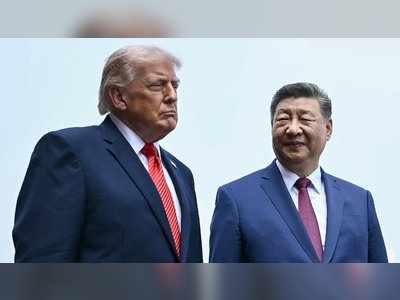
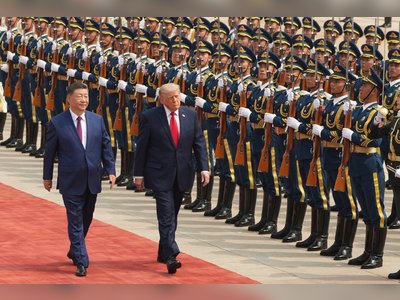
The development centers on direct engagement between US President Donald Trump and Xi, reflecting an effort to manage escalating economic and security frictions through high-level dialogue rather than confrontation.
What is confirmed in public diplomatic practice is that such invitations, when issued at the presidential level, are typically tied to ongoing negotiations across multiple policy tracks, including trade access, technology controls, military communications, and regional security concerns.
The timing suggested for a September visit would place the meeting in a period of heightened global economic uncertainty and continued strategic competition in the Indo-Pacific.
The core mechanism driving the story is the attempt by both governments to stabilize relations that have been strained by tariffs, export restrictions on advanced semiconductors, investment screening rules, and competing military postures in the South China Sea and around Taiwan.
Even when bilateral relations are tense, direct presidential engagement is often used as a pressure valve to prevent escalation into broader economic or security confrontation.
Taiwan remains the most sensitive geopolitical issue in the relationship.
Any high-level meeting between US and Chinese leadership typically requires careful diplomatic framing to avoid signaling shifts in longstanding US policy while also addressing Beijing’s insistence on its sovereignty claims.
At the same time, Washington’s concerns about supply chain dependence on Chinese manufacturing and China’s restrictions on critical minerals exports continue to shape the broader negotiating environment.
Trade policy is another central factor.
The United States has maintained a range of tariffs and technology export controls targeting sectors such as artificial intelligence, advanced chips, and telecommunications equipment.
China, in response, has increasingly emphasized domestic substitution and tighter regulation of strategic materials.
A leaders’ meeting would likely aim to prevent further escalation in these areas while exploring limited areas of cooperation such as climate policy, financial stability, and narcotics control.
The diplomatic context also includes shifting global alignments.
US alliances in Europe and Asia have increasingly integrated economic security into their strategic frameworks, while China has expanded engagement with emerging economies through infrastructure and investment initiatives.
These parallel strategies have intensified competition but also increased incentives for managed engagement at the top political level.
If the visit proceeds as planned, it would represent one of the most significant direct interactions between the two leaders in recent years.
Such meetings typically set the tone for subsequent ministerial-level negotiations and can temporarily stabilize market expectations, particularly in sectors sensitive to US–China policy shifts, including technology, energy, and global shipping.
The invitation reflects a broader pattern in which confrontation and dialogue coexist in US–China relations.
Strategic rivalry continues across multiple domains, but both sides retain strong incentives to prevent breakdowns in communication that could trigger unintended economic or military consequences.
The development centers on direct engagement between US President Donald Trump and Xi, reflecting an effort to manage escalating economic and security frictions through high-level dialogue rather than confrontation.
What is confirmed in public diplomatic practice is that such invitations, when issued at the presidential level, are typically tied to ongoing negotiations across multiple policy tracks, including trade access, technology controls, military communications, and regional security concerns.
The timing suggested for a September visit would place the meeting in a period of heightened global economic uncertainty and continued strategic competition in the Indo-Pacific.
The core mechanism driving the story is the attempt by both governments to stabilize relations that have been strained by tariffs, export restrictions on advanced semiconductors, investment screening rules, and competing military postures in the South China Sea and around Taiwan.
Even when bilateral relations are tense, direct presidential engagement is often used as a pressure valve to prevent escalation into broader economic or security confrontation.
Taiwan remains the most sensitive geopolitical issue in the relationship.
Any high-level meeting between US and Chinese leadership typically requires careful diplomatic framing to avoid signaling shifts in longstanding US policy while also addressing Beijing’s insistence on its sovereignty claims.
At the same time, Washington’s concerns about supply chain dependence on Chinese manufacturing and China’s restrictions on critical minerals exports continue to shape the broader negotiating environment.
Trade policy is another central factor.
The United States has maintained a range of tariffs and technology export controls targeting sectors such as artificial intelligence, advanced chips, and telecommunications equipment.
China, in response, has increasingly emphasized domestic substitution and tighter regulation of strategic materials.
A leaders’ meeting would likely aim to prevent further escalation in these areas while exploring limited areas of cooperation such as climate policy, financial stability, and narcotics control.
The diplomatic context also includes shifting global alignments.
US alliances in Europe and Asia have increasingly integrated economic security into their strategic frameworks, while China has expanded engagement with emerging economies through infrastructure and investment initiatives.
These parallel strategies have intensified competition but also increased incentives for managed engagement at the top political level.
If the visit proceeds as planned, it would represent one of the most significant direct interactions between the two leaders in recent years.
Such meetings typically set the tone for subsequent ministerial-level negotiations and can temporarily stabilize market expectations, particularly in sectors sensitive to US–China policy shifts, including technology, energy, and global shipping.
The invitation reflects a broader pattern in which confrontation and dialogue coexist in US–China relations.
Strategic rivalry continues across multiple domains, but both sides retain strong incentives to prevent breakdowns in communication that could trigger unintended economic or military consequences.