Focus on the BIG picture.
Monday, Jul 27, 2026
Outside the box.

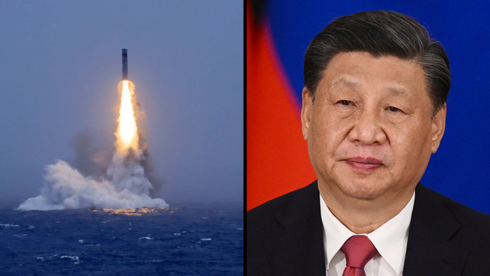
"A New Era of Testing": The Rare Launch of a Missile from a Chinese Nuclear Submarine - That Could Reach U.S. Soil
China's recent submarine-launched intercontinental ballistic missile test has sparked global concern, highlighting Beijing's rapidly expanding nuclear capabilities and intensifying regional geopolitical tensions.
China is arming itself at a tremendous pace, and in 2024 conducted its first test in 40 years of an intercontinental ballistic missile.
Today, two years later, it conducted a similar test for the first time - but this time from a submarine, and with a new missile that, according to the Pentagon, can reach U.S. soil even if launched from the shores of China.
The test - hours after Australia signed a security alliance with Fiji, in the shadow of the battle for influence over Pacific island nations: "An attempt to intimidate the international community."
In a rare test that is raising major concerns in the West, China announced today (Monday) that it conducted a launch of an intercontinental ballistic missile from a nuclear submarine in the Pacific Ocean region.
This is the first test of its kind that China has conducted since a previous test about two years ago - a test that was itself its first in over 40 years.
Countries in the Indo-Pacific region view these tests as particularly troubling evidence of the accelerated military buildup led by the communist regime in Beijing, an armament that comes alongside growing regional fears of a reduced American commitment to defending it in the event of future aggression by China.
The state news agency of China reported that at 12:01 (local time), the Chinese Navy executed a launch of a "strategic" missile from a nuclear submarine, which was equipped with a dummy warhead.
It did not specify the type of missile or where it was launched from.
The area where the missile fell was also not detailed in the agency's report, but it was claimed that the missile "accurately struck the designated waters." The agency further claimed that this was a routine test conducted as part of the Chinese military's annual training program, adding: "The test was conducted in accordance with international law and international practices, and is not directed against any country or target."
Although the official state report did not specify the type of missile, a Chinese news website, considered a mouthpiece for the communist regime, reported at noon that it is estimated to be a JL-3 model - a new type of submarine-launched intercontinental ballistic missile designed to carry nuclear warheads.
This model was unveiled at the massive military parade held by Beijing last year, where it also revealed for the first time its capability for a "nuclear triad" (the term for the ability to launch nuclear weapons from land, sea, and air).
According to a 2023 Pentagon report, the JL-3 is intended to be used by new models of nuclear submarines as well, and its long range allows it to strike the continental United States even if the submarine is located near the Chinese coast.
The ballistic missile test this morning is, as noted, the first that China has conducted with a long-range missile since a test in September 2024, in which it launched a land-based intercontinental ballistic missile into the waters of the Pacific Ocean, near French Polynesia.
That was the first declared test China had conducted of an intercontinental ballistic missile since 1980, and it sparked significant concern among regional countries worried about the Chinese arms race - one that is perceived both as preparation for a possible future attack on the island of Taiwan, which it promises to eventually take control of, and as an attempt to deter regional countries amid its controversial claims to control important maritime trade routes such as the South China Sea.
The tests also coincide with a significant expansion of the Chinese nuclear arsenal in recent years.
According to the latest Pentagon report, Beijing had around 600 nuclear warheads as of 2024 - and at the current pace, the number will reach 1,000 warheads by 2030. China has also been expanding its naval fleet in recent years, and according to an American research institute, it currently possesses six submarines designed to carry missiles with nuclear warheads, in addition to 59 nuclear-powered attack submarines.
Jeffrey Lewis, an expert on the Chinese nuclear arsenal from Middlebury College in Vermont, told an American newspaper that he assesses this is only the beginning - and that further tests from Beijing should be expected.
"This suggests a new era of testing where every (weapon) system will get its moment of glory," he said, referring to the growing array of nuclear missiles China is amassing.
He added that more tests like this will give China greater confidence in its nuclear deterrent.
"The Chinese have historically tested their intercontinental missiles less than other countries," he noted.
"I think it was a political matter, and now that politics has changed.
I think they are adopting an approach of more testing.
They are willing to pay the political costs involved, in a way they were not willing to in the past."
As with the test two years ago, today's test also drew condemnations from countries in the region, including Australia, Japan, and New Zealand.
The New Zealand government stated that it received advance notice from China regarding the missile launch several hours before the test, but condemned it and described it as a troubling regional development.
"It seems that despite our long-standing concerns about this type of activity, China conducted the test hours after notifying us about it," said New Zealand Foreign Minister Winston Peters.
"We, like our neighbors in other Pacific nations, have no interest in China using the South Pacific region as a testing ground for its missile capabilities."
Australian Foreign Minister Penny Wong also condemned the test, warning that it "destabilizes" regional stability.
She made these remarks during a visit to the island nation of Fiji - with which Australia signed a security alliance just hours prior to the Chinese test.
This alliance was signed against the backdrop of a struggle for influence taking place in recent years between the United States and Australia and China over the Pacific island nations, where Beijing hopes to expand its economic and security involvement.
Mark Douglas, an analyst from a maritime traffic monitoring company, told a news agency that although the Chinese test had likely been planned for a long time - its timing, hours after the signing of the security alliance between Australia and Fiji, is "at the very least interesting." A spokesperson for the Chinese Foreign Ministry was asked this morning about this alliance and stated that he hopes the "relevant countries" will respect the independence and autonomy of the Pacific island nations and refrain from harming the interests of "third parties."
In Taiwan, where fears of a Chinese invasion have been growing in recent years amid frequent naval exercises conducted by Beijing near the island's shores, the missile launch was also condemned this afternoon.
The Presidential Office in Taipei stated that it is an attempt by China to "intimidate the international community." The test is also viewed with concern in Europe, and the Secretary General of the North Atlantic Treaty Organization, Mark Rutte, said this afternoon during a press briefing in Ankara - ahead of a summit set to begin tomorrow in Turkey - that the Chinese test sends a clear message to the members of the alliance.
"This is further proof that we must not be naive, and we are not," he said, adding that "developments in the Pacific region are also relevant to the transatlantic region."
Today, two years later, it conducted a similar test for the first time - but this time from a submarine, and with a new missile that, according to the Pentagon, can reach U.S. soil even if launched from the shores of China.
The test - hours after Australia signed a security alliance with Fiji, in the shadow of the battle for influence over Pacific island nations: "An attempt to intimidate the international community."
In a rare test that is raising major concerns in the West, China announced today (Monday) that it conducted a launch of an intercontinental ballistic missile from a nuclear submarine in the Pacific Ocean region.
This is the first test of its kind that China has conducted since a previous test about two years ago - a test that was itself its first in over 40 years.
Countries in the Indo-Pacific region view these tests as particularly troubling evidence of the accelerated military buildup led by the communist regime in Beijing, an armament that comes alongside growing regional fears of a reduced American commitment to defending it in the event of future aggression by China.
The state news agency of China reported that at 12:01 (local time), the Chinese Navy executed a launch of a "strategic" missile from a nuclear submarine, which was equipped with a dummy warhead.
It did not specify the type of missile or where it was launched from.
The area where the missile fell was also not detailed in the agency's report, but it was claimed that the missile "accurately struck the designated waters." The agency further claimed that this was a routine test conducted as part of the Chinese military's annual training program, adding: "The test was conducted in accordance with international law and international practices, and is not directed against any country or target."
Although the official state report did not specify the type of missile, a Chinese news website, considered a mouthpiece for the communist regime, reported at noon that it is estimated to be a JL-3 model - a new type of submarine-launched intercontinental ballistic missile designed to carry nuclear warheads.
This model was unveiled at the massive military parade held by Beijing last year, where it also revealed for the first time its capability for a "nuclear triad" (the term for the ability to launch nuclear weapons from land, sea, and air).
According to a 2023 Pentagon report, the JL-3 is intended to be used by new models of nuclear submarines as well, and its long range allows it to strike the continental United States even if the submarine is located near the Chinese coast.
The ballistic missile test this morning is, as noted, the first that China has conducted with a long-range missile since a test in September 2024, in which it launched a land-based intercontinental ballistic missile into the waters of the Pacific Ocean, near French Polynesia.
That was the first declared test China had conducted of an intercontinental ballistic missile since 1980, and it sparked significant concern among regional countries worried about the Chinese arms race - one that is perceived both as preparation for a possible future attack on the island of Taiwan, which it promises to eventually take control of, and as an attempt to deter regional countries amid its controversial claims to control important maritime trade routes such as the South China Sea.
The tests also coincide with a significant expansion of the Chinese nuclear arsenal in recent years.
According to the latest Pentagon report, Beijing had around 600 nuclear warheads as of 2024 - and at the current pace, the number will reach 1,000 warheads by 2030. China has also been expanding its naval fleet in recent years, and according to an American research institute, it currently possesses six submarines designed to carry missiles with nuclear warheads, in addition to 59 nuclear-powered attack submarines.
Jeffrey Lewis, an expert on the Chinese nuclear arsenal from Middlebury College in Vermont, told an American newspaper that he assesses this is only the beginning - and that further tests from Beijing should be expected.
"This suggests a new era of testing where every (weapon) system will get its moment of glory," he said, referring to the growing array of nuclear missiles China is amassing.
He added that more tests like this will give China greater confidence in its nuclear deterrent.
"The Chinese have historically tested their intercontinental missiles less than other countries," he noted.
"I think it was a political matter, and now that politics has changed.
I think they are adopting an approach of more testing.
They are willing to pay the political costs involved, in a way they were not willing to in the past."
As with the test two years ago, today's test also drew condemnations from countries in the region, including Australia, Japan, and New Zealand.
The New Zealand government stated that it received advance notice from China regarding the missile launch several hours before the test, but condemned it and described it as a troubling regional development.
"It seems that despite our long-standing concerns about this type of activity, China conducted the test hours after notifying us about it," said New Zealand Foreign Minister Winston Peters.
"We, like our neighbors in other Pacific nations, have no interest in China using the South Pacific region as a testing ground for its missile capabilities."
Australian Foreign Minister Penny Wong also condemned the test, warning that it "destabilizes" regional stability.
She made these remarks during a visit to the island nation of Fiji - with which Australia signed a security alliance just hours prior to the Chinese test.
This alliance was signed against the backdrop of a struggle for influence taking place in recent years between the United States and Australia and China over the Pacific island nations, where Beijing hopes to expand its economic and security involvement.
Mark Douglas, an analyst from a maritime traffic monitoring company, told a news agency that although the Chinese test had likely been planned for a long time - its timing, hours after the signing of the security alliance between Australia and Fiji, is "at the very least interesting." A spokesperson for the Chinese Foreign Ministry was asked this morning about this alliance and stated that he hopes the "relevant countries" will respect the independence and autonomy of the Pacific island nations and refrain from harming the interests of "third parties."
In Taiwan, where fears of a Chinese invasion have been growing in recent years amid frequent naval exercises conducted by Beijing near the island's shores, the missile launch was also condemned this afternoon.
The Presidential Office in Taipei stated that it is an attempt by China to "intimidate the international community." The test is also viewed with concern in Europe, and the Secretary General of the North Atlantic Treaty Organization, Mark Rutte, said this afternoon during a press briefing in Ankara - ahead of a summit set to begin tomorrow in Turkey - that the Chinese test sends a clear message to the members of the alliance.
"This is further proof that we must not be naive, and we are not," he said, adding that "developments in the Pacific region are also relevant to the transatlantic region."