Focus on the BIG picture.
Monday, May 11, 2026
Outside the box.

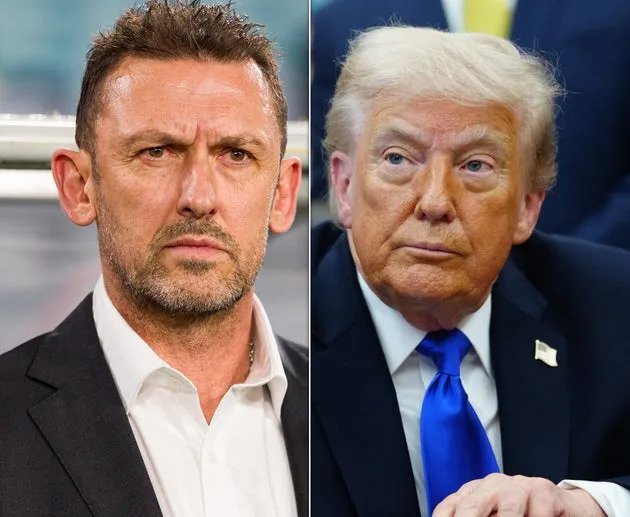
Australia’s World Cup Coach Invokes Trump as Socceroos Prepare for Politically Charged US Tournament
Australia manager Tony Popovic says he wants Donald Trump at a World Cup match in the United States to sharpen the atmosphere and test his players under maximum pressure before the expanded tournament begins.
The twenty twenty-six FIFA World Cup in the United States is already becoming politically charged months before kickoff, and Australia coach Tony Popovic has openly embraced that reality by saying he hopes Donald Trump attends one of Australia’s matches for a specific competitive reason: to expose his players to the most intense environment possible.
Popovic made the remarks while discussing preparations for the expanded forty-eight-team tournament that will be jointly hosted by the United States, Canada and Mexico.
His comments were not framed as a political endorsement.
Instead, he described Trump’s presence as a symbol of pressure, noise and scrutiny that elite players must learn to handle if Australia wants to compete deep into the tournament.
The statement immediately attracted attention because Trump remains one of the most polarizing political figures in the world and is expected to play a highly visible role during major international sporting events hosted in the United States.
As president, Trump has strongly promoted the tournament as an opportunity to showcase American power, security and global influence.
Popovic’s calculation reflects a broader reality surrounding the next World Cup.
The tournament is expected to become one of the most politically exposed sporting events in modern history.
The competition will unfold against a backdrop of intense debate over immigration, border security, protest rights, policing, geopolitical tensions and the commercial transformation of global football.
FIFA’s decision to dramatically expand the tournament has already increased logistical pressure on host cities and intensified scrutiny over security planning.
For Australia, the challenge is also sporting.
The Socceroos are attempting to establish themselves as more than a disciplined underdog side after a strong showing at the twenty twenty-two World Cup in Qatar, where they reached the knockout stage and pushed eventual champions Argentina into a tense elimination match.
Popovic replaced Graham Arnold after a turbulent qualifying period and has been trying to reshape the team into a more aggressive and mentally resilient side.
His emphasis on hostile atmospheres is deliberate.
Australia traditionally enters World Cups as an outsider against technically stronger football nations.
Coaches have long argued that psychological preparation and defensive organization are essential for closing the talent gap.
Popovic’s comments fit squarely inside that philosophy.
The reference to Trump also highlights how major international sports events increasingly overlap with domestic political identity in the United States.
Trump has consistently used sporting platforms as political theater, appearing at college football games, Ultimate Fighting Championship events and major league contests while presenting himself as a defender of nationalism, traditional patriotism and American spectacle culture.
A World Cup hosted largely on American soil offers an even larger global stage.
The political environment around the tournament is expected to be unusually intense because the United States remains deeply polarized heading into the election cycle and because international football crowds often become arenas for political messaging.
Security officials are preparing for a wide spectrum of risks ranging from cyberattacks and extremist threats to protest actions and crowd-management challenges.
The expanded tournament format significantly increases the scale of those demands.
The United States will host the overwhelming majority of matches, including the final.
Tens of millions of visitors are expected to travel across North America during the event, making immigration processing, transport coordination and venue security central operational issues.
For FIFA, the stakes are enormous.
The governing body sees the North American tournament as a commercial watershed capable of generating record revenues, expanding football’s reach in the American market and strengthening long-term broadcasting and sponsorship growth.
That commercial ambition partly explains why the tournament has become so politically and culturally important.
The World Cup is no longer just a sporting event.
It functions as a global media platform intertwined with national branding, corporate investment, tourism strategy and domestic politics.
Australia enters the tournament in a transitional phase.
Several veterans from the Qatar squad are aging out of international football while younger players are emerging through European leagues and domestic development pathways.
Popovic has emphasized physical intensity, defensive structure and emotional resilience during early preparations.
His comments about Trump therefore served a practical football purpose: he wants his players exposed to distraction, hostility and pressure before facing elite opposition.
Some critics viewed the remarks as an unnecessary political provocation.
Others interpreted them as dry humor or motivational psychology rather than ideological signaling.
What is confirmed is that Popovic intentionally linked competitive readiness with the atmosphere surrounding a major American-hosted event.
That approach reflects the reality of modern international football, where elite tournaments operate inside highly politicized media ecosystems and where external pressure is increasingly treated as part of athletic preparation rather than a separate issue.
Australia’s football federation has not distanced itself from the remarks, and preparations for the tournament continue as FIFA finalizes operational planning across North America.
The next World Cup is expected to become the largest and most commercially significant tournament in football history, with politics, security and spectacle inseparable from the matches themselves.
Popovic made the remarks while discussing preparations for the expanded forty-eight-team tournament that will be jointly hosted by the United States, Canada and Mexico.
His comments were not framed as a political endorsement.
Instead, he described Trump’s presence as a symbol of pressure, noise and scrutiny that elite players must learn to handle if Australia wants to compete deep into the tournament.
The statement immediately attracted attention because Trump remains one of the most polarizing political figures in the world and is expected to play a highly visible role during major international sporting events hosted in the United States.
As president, Trump has strongly promoted the tournament as an opportunity to showcase American power, security and global influence.
Popovic’s calculation reflects a broader reality surrounding the next World Cup.
The tournament is expected to become one of the most politically exposed sporting events in modern history.
The competition will unfold against a backdrop of intense debate over immigration, border security, protest rights, policing, geopolitical tensions and the commercial transformation of global football.
FIFA’s decision to dramatically expand the tournament has already increased logistical pressure on host cities and intensified scrutiny over security planning.
For Australia, the challenge is also sporting.
The Socceroos are attempting to establish themselves as more than a disciplined underdog side after a strong showing at the twenty twenty-two World Cup in Qatar, where they reached the knockout stage and pushed eventual champions Argentina into a tense elimination match.
Popovic replaced Graham Arnold after a turbulent qualifying period and has been trying to reshape the team into a more aggressive and mentally resilient side.
His emphasis on hostile atmospheres is deliberate.
Australia traditionally enters World Cups as an outsider against technically stronger football nations.
Coaches have long argued that psychological preparation and defensive organization are essential for closing the talent gap.
Popovic’s comments fit squarely inside that philosophy.
The reference to Trump also highlights how major international sports events increasingly overlap with domestic political identity in the United States.
Trump has consistently used sporting platforms as political theater, appearing at college football games, Ultimate Fighting Championship events and major league contests while presenting himself as a defender of nationalism, traditional patriotism and American spectacle culture.
A World Cup hosted largely on American soil offers an even larger global stage.
The political environment around the tournament is expected to be unusually intense because the United States remains deeply polarized heading into the election cycle and because international football crowds often become arenas for political messaging.
Security officials are preparing for a wide spectrum of risks ranging from cyberattacks and extremist threats to protest actions and crowd-management challenges.
The expanded tournament format significantly increases the scale of those demands.
The United States will host the overwhelming majority of matches, including the final.
Tens of millions of visitors are expected to travel across North America during the event, making immigration processing, transport coordination and venue security central operational issues.
For FIFA, the stakes are enormous.
The governing body sees the North American tournament as a commercial watershed capable of generating record revenues, expanding football’s reach in the American market and strengthening long-term broadcasting and sponsorship growth.
That commercial ambition partly explains why the tournament has become so politically and culturally important.
The World Cup is no longer just a sporting event.
It functions as a global media platform intertwined with national branding, corporate investment, tourism strategy and domestic politics.
Australia enters the tournament in a transitional phase.
Several veterans from the Qatar squad are aging out of international football while younger players are emerging through European leagues and domestic development pathways.
Popovic has emphasized physical intensity, defensive structure and emotional resilience during early preparations.
His comments about Trump therefore served a practical football purpose: he wants his players exposed to distraction, hostility and pressure before facing elite opposition.
Some critics viewed the remarks as an unnecessary political provocation.
Others interpreted them as dry humor or motivational psychology rather than ideological signaling.
What is confirmed is that Popovic intentionally linked competitive readiness with the atmosphere surrounding a major American-hosted event.
That approach reflects the reality of modern international football, where elite tournaments operate inside highly politicized media ecosystems and where external pressure is increasingly treated as part of athletic preparation rather than a separate issue.
Australia’s football federation has not distanced itself from the remarks, and preparations for the tournament continue as FIFA finalizes operational planning across North America.
The next World Cup is expected to become the largest and most commercially significant tournament in football history, with politics, security and spectacle inseparable from the matches themselves.