Focus on the BIG picture.
Monday, Aug 03, 2026
Outside the box.

Ceuta Death Toll Rises as Spain and Europe Clash Over Border Response
At least seventy-two people have died in the mass crossing from Morocco into Ceuta, where Spain is tightening controls while accusing fellow European governments of exploiting the crisis.
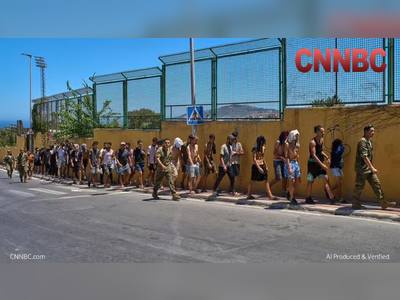
The mass crossing into Ceuta has become a lethal border emergency and a fresh political rupture inside Europe.
At least seventy-two migrants have died after an estimated fifty thousand to sixty thousand people entered or attempted to enter the Spanish enclave from Morocco, overwhelming a city of about eighty-five thousand residents.
Spanish authorities say most of those who crossed have since returned to Morocco, many voluntarily.
Morocco has separately acknowledged eleven deaths on its territory.
The figures come from different authorities and have not been issued as a single consolidated toll.
Many of the deaths occurred in the water or during crushing surges at the frontier as people tried to reach the enclave by swimming, climbing and crossing through crowded border points.
Spanish vessels continue to search the coastline while police identify those who remain in Ceuta.
Pedro Sánchez, Spain’s prime minister, has described the mass entry as a violation of Spain’s territorial integrity.
In a letter to European counterparts, he condemned what he called a "selfish, polarising and unlawful reaction" from states that criticised Spain or imposed additional controls after the crossing.
Italy has introduced targeted checks for non-European Union nationals arriving by air or sea from Spain for thirty days.
France has ordered additional checks at its land border with Spain.
Neither measure changes the position of European Union citizens travelling between the countries, and Ceuta itself is subject to distinct controls that restrict onward movement to mainland Spain and the wider Schengen area.
Ireland, which holds the European Union’s rotating presidency, has called an emergency meeting of justice and home-affairs ministers to discuss the episode and the bloc’s external-border response.
Spain attributes the surge to trafficking networks and social-media misinformation about a recent Supreme Court ruling.
That ruling did not prevent returns but held that people intercepted while swimming into Ceuta cannot be summarily handed to Morocco without individual administrative procedures, legal assistance and an opportunity to seek protection.
It does not apply in the same way to people stopped while crossing physical border barriers.
The government has installed a five-hundred-metre floating barrier near the Tarajal breakwater and promised faster returns within the limits of the law.
Minors and people seeking asylum require separate safeguards.
Morocco also blames misinformation and trafficking networks.
Economic pressure is part of the backdrop: a significant share of young Moroccans are outside education, employment and training, while calm summer seas can make the dangerous route appear more feasible.
Claims that Moroccan authorities deliberately relaxed controls have not been proven.
For Sánchez, the immediate task is to restore order and account for the dead.
The wider test is whether Europe can agree on a response that combines border enforcement, lawful returns and protection obligations rather than turning Ceuta into another fault line in the politics of migration.
At least seventy-two migrants have died after an estimated fifty thousand to sixty thousand people entered or attempted to enter the Spanish enclave from Morocco, overwhelming a city of about eighty-five thousand residents.
Spanish authorities say most of those who crossed have since returned to Morocco, many voluntarily.
Morocco has separately acknowledged eleven deaths on its territory.
The figures come from different authorities and have not been issued as a single consolidated toll.
Many of the deaths occurred in the water or during crushing surges at the frontier as people tried to reach the enclave by swimming, climbing and crossing through crowded border points.
Spanish vessels continue to search the coastline while police identify those who remain in Ceuta.
Pedro Sánchez, Spain’s prime minister, has described the mass entry as a violation of Spain’s territorial integrity.
In a letter to European counterparts, he condemned what he called a "selfish, polarising and unlawful reaction" from states that criticised Spain or imposed additional controls after the crossing.
Italy has introduced targeted checks for non-European Union nationals arriving by air or sea from Spain for thirty days.
France has ordered additional checks at its land border with Spain.
Neither measure changes the position of European Union citizens travelling between the countries, and Ceuta itself is subject to distinct controls that restrict onward movement to mainland Spain and the wider Schengen area.
Ireland, which holds the European Union’s rotating presidency, has called an emergency meeting of justice and home-affairs ministers to discuss the episode and the bloc’s external-border response.
Spain attributes the surge to trafficking networks and social-media misinformation about a recent Supreme Court ruling.
That ruling did not prevent returns but held that people intercepted while swimming into Ceuta cannot be summarily handed to Morocco without individual administrative procedures, legal assistance and an opportunity to seek protection.
It does not apply in the same way to people stopped while crossing physical border barriers.
The government has installed a five-hundred-metre floating barrier near the Tarajal breakwater and promised faster returns within the limits of the law.
Minors and people seeking asylum require separate safeguards.
Morocco also blames misinformation and trafficking networks.
Economic pressure is part of the backdrop: a significant share of young Moroccans are outside education, employment and training, while calm summer seas can make the dangerous route appear more feasible.
Claims that Moroccan authorities deliberately relaxed controls have not been proven.
For Sánchez, the immediate task is to restore order and account for the dead.
The wider test is whether Europe can agree on a response that combines border enforcement, lawful returns and protection obligations rather than turning Ceuta into another fault line in the politics of migration.