Focus on the BIG picture.
Tuesday, Apr 28, 2026
Outside the box.

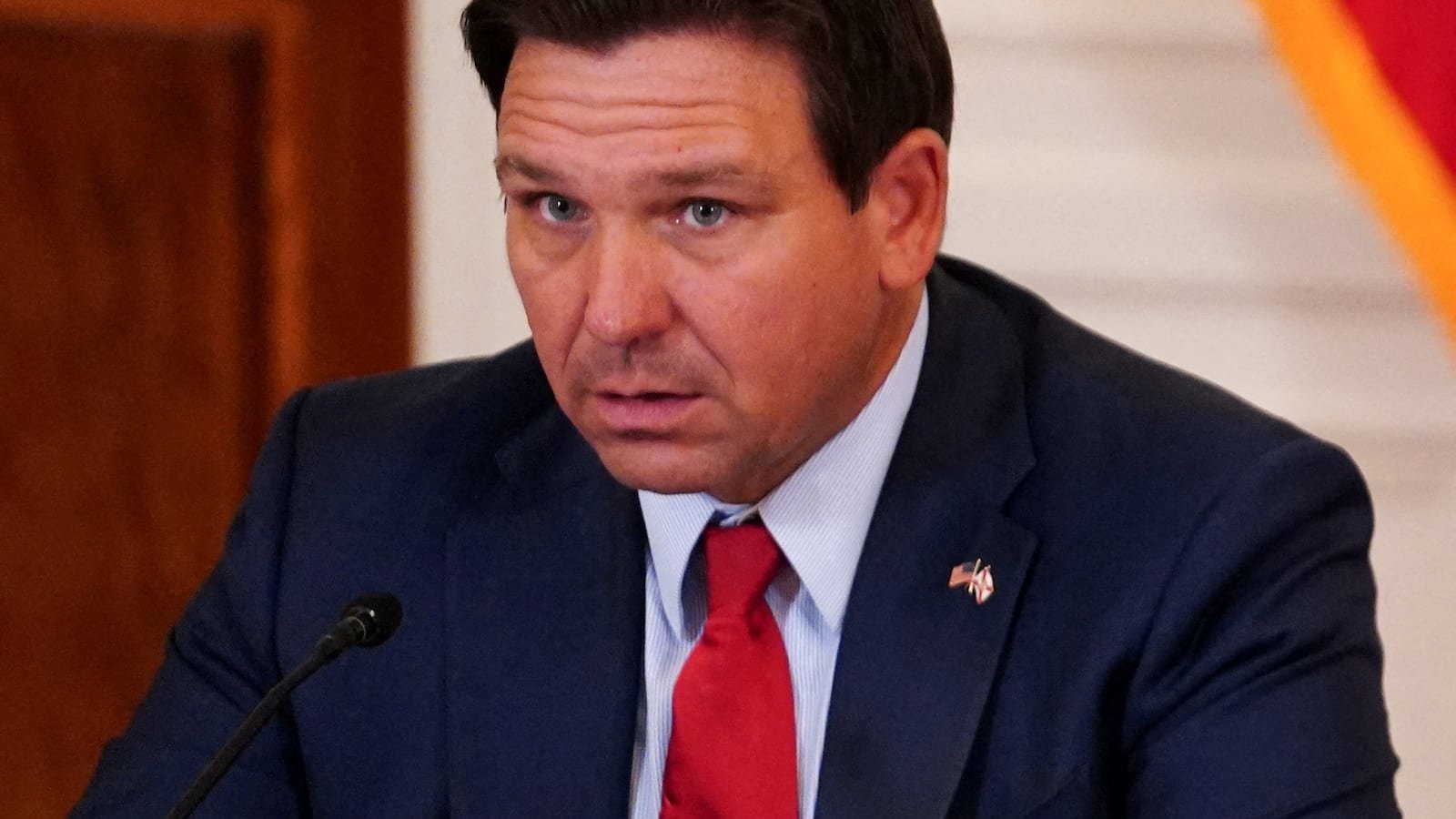
DeSantis Pushes Florida Redistricting Plan That Could Tilt Four More House Seats to Republicans
A new congressional map backed by Florida’s governor would reshape district boundaries ahead of the 2026 midterms, intensifying a national battle over partisan redistricting and control of the U.S. House.
A state-led redistricting initiative in Florida, driven by Governor Ron DeSantis, is reshaping the state’s congressional map in a way that could deliver Republicans up to four additional seats in the U.S. House of Representatives.
What is confirmed is that DeSantis has formally advanced a proposed congressional map that redraws district boundaries across Florida ahead of the 2026 midterm elections.
The proposal is expected to be taken up in a special legislative session controlled by Republicans, who already hold a majority in the state legislature.
The plan would significantly reconfigure multiple districts in Democratic-leaning urban and suburban regions, including parts of Orlando, Tampa Bay, and South Florida.
Under the proposed lines, several districts currently held by Democrats would become competitive or tilt Republican, increasing the GOP’s potential representation from Florida from its current level to as many as 24 of the state’s 28 seats.
The mechanism behind the shift is standard redistricting: adjusting congressional boundaries based on population and political mapping.
However, the political intent is explicit in both the structure of the proposal and its projected electoral outcome.
The map is designed to consolidate Republican voters into newly shaped districts while dispersing Democratic voters across multiple districts, a practice widely associated with partisan gerrymandering.
Florida’s legal framework complicates the effort.
A voter-approved constitutional amendment passed in 2010 prohibits partisan gerrymandering.
That provision is expected to form the basis of legal challenges if the map is enacted.
Past court decisions in Florida have also constrained how aggressively district lines can be drawn, particularly when they reduce minority representation or appear overtly partisan.
Supporters of the plan argue it reflects demographic changes and population shifts, while critics—including Democratic leaders—describe it as a direct attempt to entrench partisan advantage.
Some Republican lawmakers have also privately expressed concern that overly aggressive redistricting could backfire, creating more competitive districts that become vulnerable in a strong national swing against the party.
The broader context is a nationwide escalation in mid-decade redistricting battles, where both major parties are seeking structural advantages ahead of closely contested congressional elections.
Florida’s move follows similar efforts in other states, reflecting an increasingly aggressive use of state-level control over district mapping to shape federal power.
If enacted, the Florida map would immediately alter the balance of competitiveness in multiple House races and strengthen Republicans’ narrow national majority margin.
If blocked or modified in court, it would become another flashpoint in the growing legal and political conflict over how congressional districts are drawn in the United States.
What is confirmed is that DeSantis has formally advanced a proposed congressional map that redraws district boundaries across Florida ahead of the 2026 midterm elections.
The proposal is expected to be taken up in a special legislative session controlled by Republicans, who already hold a majority in the state legislature.
The plan would significantly reconfigure multiple districts in Democratic-leaning urban and suburban regions, including parts of Orlando, Tampa Bay, and South Florida.
Under the proposed lines, several districts currently held by Democrats would become competitive or tilt Republican, increasing the GOP’s potential representation from Florida from its current level to as many as 24 of the state’s 28 seats.
The mechanism behind the shift is standard redistricting: adjusting congressional boundaries based on population and political mapping.
However, the political intent is explicit in both the structure of the proposal and its projected electoral outcome.
The map is designed to consolidate Republican voters into newly shaped districts while dispersing Democratic voters across multiple districts, a practice widely associated with partisan gerrymandering.
Florida’s legal framework complicates the effort.
A voter-approved constitutional amendment passed in 2010 prohibits partisan gerrymandering.
That provision is expected to form the basis of legal challenges if the map is enacted.
Past court decisions in Florida have also constrained how aggressively district lines can be drawn, particularly when they reduce minority representation or appear overtly partisan.
Supporters of the plan argue it reflects demographic changes and population shifts, while critics—including Democratic leaders—describe it as a direct attempt to entrench partisan advantage.
Some Republican lawmakers have also privately expressed concern that overly aggressive redistricting could backfire, creating more competitive districts that become vulnerable in a strong national swing against the party.
The broader context is a nationwide escalation in mid-decade redistricting battles, where both major parties are seeking structural advantages ahead of closely contested congressional elections.
Florida’s move follows similar efforts in other states, reflecting an increasingly aggressive use of state-level control over district mapping to shape federal power.
If enacted, the Florida map would immediately alter the balance of competitiveness in multiple House races and strengthen Republicans’ narrow national majority margin.
If blocked or modified in court, it would become another flashpoint in the growing legal and political conflict over how congressional districts are drawn in the United States.