Focus on the BIG picture.
Tuesday, Apr 28, 2026
Outside the box.

White House Orders Security Review After Shooting at Presidential Dinner Event
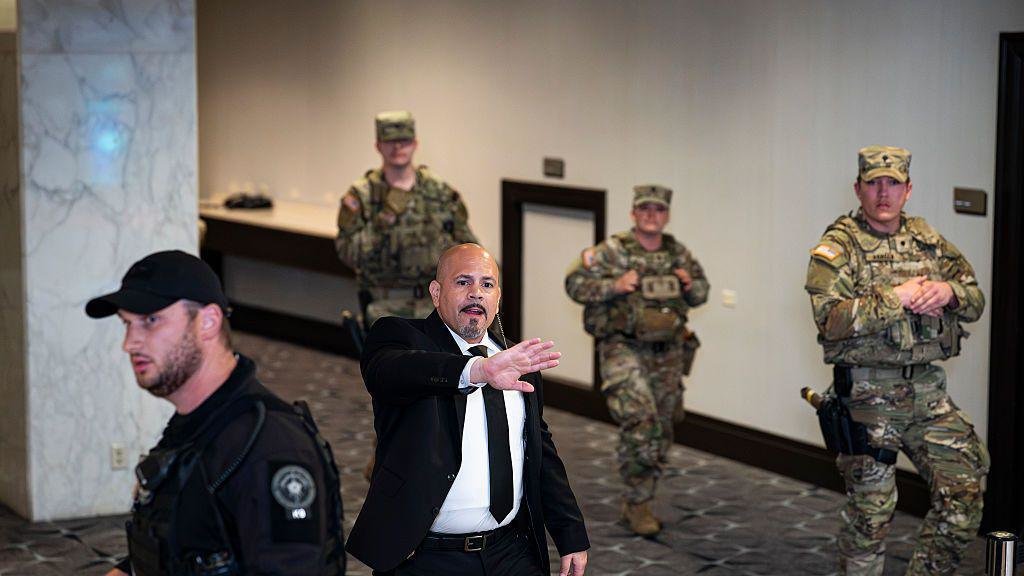
A high-level security assessment has been launched following a shooting incident at a Washington political dinner attended by Donald Trump, raising urgent questions about protective procedures at elite federal events.
A federal security review has been initiated after a shooting incident occurred during a political dinner event in Washington attended by Donald Trump, prompting immediate scrutiny of protective protocols surrounding high-profile gatherings.
What is confirmed is that a firearm was discharged during the event, triggering an emergency response from security personnel assigned to the venue.
The incident occurred inside a controlled-access environment where senior political figures and media representatives were present under layered security arrangements.
The key issue now under review is how an armed individual was able to engage in a violent act within a setting that is typically subject to advance screening, restricted entry points, and continuous monitoring by federal security services.
The White House has ordered a formal assessment of the security failure points, including screening procedures, perimeter control, and internal response times.
Security at events involving former or current presidents operates through a combination of federal protective agencies and private venue security.
These systems rely on pre-clearance screening, credential verification, physical searches, and controlled movement zones.
The shooting has raised concerns that one or more of these layers did not function as intended in this case.
Officials have confirmed that protective teams responded immediately after the discharge of the weapon, securing the area and removing the principal protectee from immediate danger.
The incident did not escalate into a prolonged exchange, but it exposed vulnerabilities in access control during a high-density public-political gathering.
Investigators are now focusing on how the suspect entered the venue, whether weapons screening protocols were bypassed or insufficient, and whether intelligence indicators prior to the event were adequately assessed.
These elements will determine whether the incident was a systemic failure or an isolated breach.
The implications of the review extend beyond a single event.
Security procedures at political dinners, campaign-related gatherings, and media-linked functions are built on assumptions about layered deterrence and early interception of threats.
A confirmed breach at this level forces a reassessment of those assumptions and may lead to tighter screening standards and expanded federal oversight of private event security arrangements.
The political sensitivity of the incident is significant given the presence of a high-profile political figure at the center of the event.
Any failure in protective systems involving such individuals has immediate institutional consequences, including revisions to operational protocols and potential restructuring of inter-agency coordination.
The White House review is expected to produce recommendations on whether existing security frameworks require procedural tightening, technological upgrades, or staffing adjustments at similar events moving forward.
Those changes will directly affect how future political gatherings are planned, secured, and executed.
What is confirmed is that a firearm was discharged during the event, triggering an emergency response from security personnel assigned to the venue.
The incident occurred inside a controlled-access environment where senior political figures and media representatives were present under layered security arrangements.
The key issue now under review is how an armed individual was able to engage in a violent act within a setting that is typically subject to advance screening, restricted entry points, and continuous monitoring by federal security services.
The White House has ordered a formal assessment of the security failure points, including screening procedures, perimeter control, and internal response times.
Security at events involving former or current presidents operates through a combination of federal protective agencies and private venue security.
These systems rely on pre-clearance screening, credential verification, physical searches, and controlled movement zones.
The shooting has raised concerns that one or more of these layers did not function as intended in this case.
Officials have confirmed that protective teams responded immediately after the discharge of the weapon, securing the area and removing the principal protectee from immediate danger.
The incident did not escalate into a prolonged exchange, but it exposed vulnerabilities in access control during a high-density public-political gathering.
Investigators are now focusing on how the suspect entered the venue, whether weapons screening protocols were bypassed or insufficient, and whether intelligence indicators prior to the event were adequately assessed.
These elements will determine whether the incident was a systemic failure or an isolated breach.
The implications of the review extend beyond a single event.
Security procedures at political dinners, campaign-related gatherings, and media-linked functions are built on assumptions about layered deterrence and early interception of threats.
A confirmed breach at this level forces a reassessment of those assumptions and may lead to tighter screening standards and expanded federal oversight of private event security arrangements.
The political sensitivity of the incident is significant given the presence of a high-profile political figure at the center of the event.
Any failure in protective systems involving such individuals has immediate institutional consequences, including revisions to operational protocols and potential restructuring of inter-agency coordination.
The White House review is expected to produce recommendations on whether existing security frameworks require procedural tightening, technological upgrades, or staffing adjustments at similar events moving forward.
Those changes will directly affect how future political gatherings are planned, secured, and executed.