Focus on the BIG picture.
Sunday, Apr 26, 2026
Outside the box.

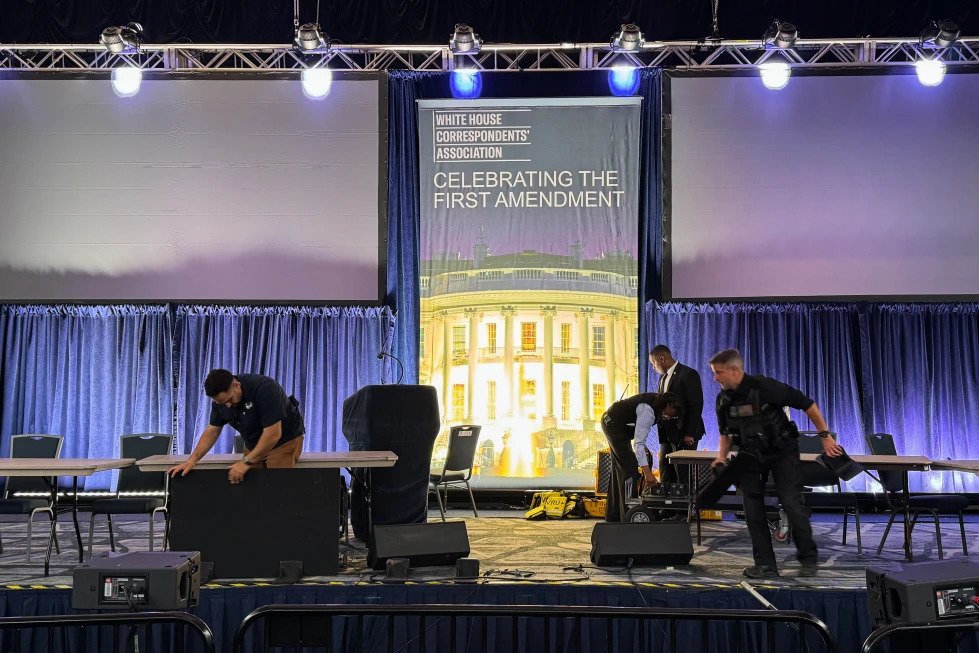
Inside the Security System at the White House Correspondents’ Dinner After the Washington Hilton Shooting
A layered protection model involving federal agents, magnetometer screening, hotel access controls, and staged lockdown procedures was tested after a gunman breached outer defenses during the annual political event
Security at the White House Correspondents’ Association dinner is built on a layered federal protection system designed to secure a high-profile political gathering where the president, senior officials, and journalists share a confined space inside a commercial hotel.
What is confirmed is that the 2026 dinner at the Washington Hilton was protected by multiple overlapping security zones, including controlled hotel access, credential checks, magnetometer screening, Secret Service presence, and an inner perimeter directly around the president.
The system is designed so that no single checkpoint determines access; instead, multiple barriers must be passed in sequence.
The outermost layer of control begins at the hotel perimeter.
In preparation for the event, the building is closed to the general public hours in advance.
Entry is restricted to registered hotel guests, invited attendees, press-affiliated personnel, and individuals with verified event credentials.
This first layer is intended to separate the public environment of a hotel from the secured environment of a political event.
Inside the building, additional screening points are established.
Guests attending the dinner must pass through magnetometers and identity checks managed by a combination of Secret Service personnel and contracted security staff.
These checkpoints are intended to detect weapons and restrict access to the ballroom where the event is held.
The most heavily secured zone is the ballroom itself.
Once the president is seated, access control becomes significantly stricter.
Entry points are reduced, security screening intensifies, and a controlled perimeter is established around the head table.
Armored protective measures and armed counter-assault teams are positioned inside the room, forming a rapid-response shield around the president and other high-value officials.
During the 2026 incident, this layered system was tested when an armed individual allegedly entered through the hotel’s general access pathway and reached proximity to the event space.
What is confirmed is that the suspect was able to move beyond the outermost perimeter because he was registered as a hotel guest, a category that allowed him entry into the building before event-specific restrictions fully isolated the security zone.
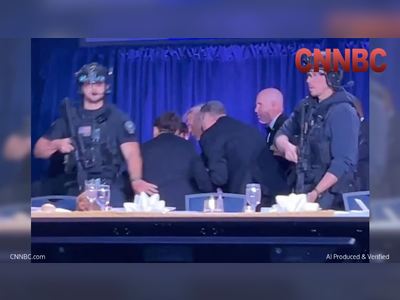
Once the breach occurred, the internal security architecture activated its emergency protocol.
Attendees were evacuated or instructed to take cover, with many remaining inside the ballroom while protective teams secured exits and corridors.
The president and senior officials were moved under Secret Service protection as the venue transitioned into lockdown procedures.
The key issue exposed by the incident is not the absence of security, but the tension between securing a functioning hotel environment and protecting a temporary high-risk political event inside it.
Hotels hosting such events must remain partially operational until final lockdown stages, creating narrow windows where ordinary guest access can intersect with pre-event security transition phases.
The Washington Hilton in particular has long been recognized as a sensitive site due to its history with presidential visits and prior assassination attempts in its vicinity decades earlier.
This has led to permanent structural adaptations, including dedicated presidential access routes and reinforced internal corridors, which are integrated into modern security planning.
The immediate consequence of the incident is a renewed review of access timing, guest classification rules, and the transition process between hotel operations and full event lockdown.
Security agencies are expected to reassess how quickly general hotel access is converted into fully controlled perimeter security when a sitting president is present.
The result is a security model that remains intact but now faces renewed pressure to reduce the narrow operational gaps that allowed a breach to occur inside a tightly controlled political environment.
What is confirmed is that the 2026 dinner at the Washington Hilton was protected by multiple overlapping security zones, including controlled hotel access, credential checks, magnetometer screening, Secret Service presence, and an inner perimeter directly around the president.
The system is designed so that no single checkpoint determines access; instead, multiple barriers must be passed in sequence.
The outermost layer of control begins at the hotel perimeter.
In preparation for the event, the building is closed to the general public hours in advance.
Entry is restricted to registered hotel guests, invited attendees, press-affiliated personnel, and individuals with verified event credentials.
This first layer is intended to separate the public environment of a hotel from the secured environment of a political event.
Inside the building, additional screening points are established.
Guests attending the dinner must pass through magnetometers and identity checks managed by a combination of Secret Service personnel and contracted security staff.
These checkpoints are intended to detect weapons and restrict access to the ballroom where the event is held.
The most heavily secured zone is the ballroom itself.
Once the president is seated, access control becomes significantly stricter.
Entry points are reduced, security screening intensifies, and a controlled perimeter is established around the head table.
Armored protective measures and armed counter-assault teams are positioned inside the room, forming a rapid-response shield around the president and other high-value officials.
During the 2026 incident, this layered system was tested when an armed individual allegedly entered through the hotel’s general access pathway and reached proximity to the event space.
What is confirmed is that the suspect was able to move beyond the outermost perimeter because he was registered as a hotel guest, a category that allowed him entry into the building before event-specific restrictions fully isolated the security zone.
Once the breach occurred, the internal security architecture activated its emergency protocol.
Attendees were evacuated or instructed to take cover, with many remaining inside the ballroom while protective teams secured exits and corridors.
The president and senior officials were moved under Secret Service protection as the venue transitioned into lockdown procedures.
The key issue exposed by the incident is not the absence of security, but the tension between securing a functioning hotel environment and protecting a temporary high-risk political event inside it.
Hotels hosting such events must remain partially operational until final lockdown stages, creating narrow windows where ordinary guest access can intersect with pre-event security transition phases.
The Washington Hilton in particular has long been recognized as a sensitive site due to its history with presidential visits and prior assassination attempts in its vicinity decades earlier.
This has led to permanent structural adaptations, including dedicated presidential access routes and reinforced internal corridors, which are integrated into modern security planning.
The immediate consequence of the incident is a renewed review of access timing, guest classification rules, and the transition process between hotel operations and full event lockdown.
Security agencies are expected to reassess how quickly general hotel access is converted into fully controlled perimeter security when a sitting president is present.
The result is a security model that remains intact but now faces renewed pressure to reduce the narrow operational gaps that allowed a breach to occur inside a tightly controlled political environment.