Focus on the BIG picture.
Tuesday, May 12, 2026
Outside the box.

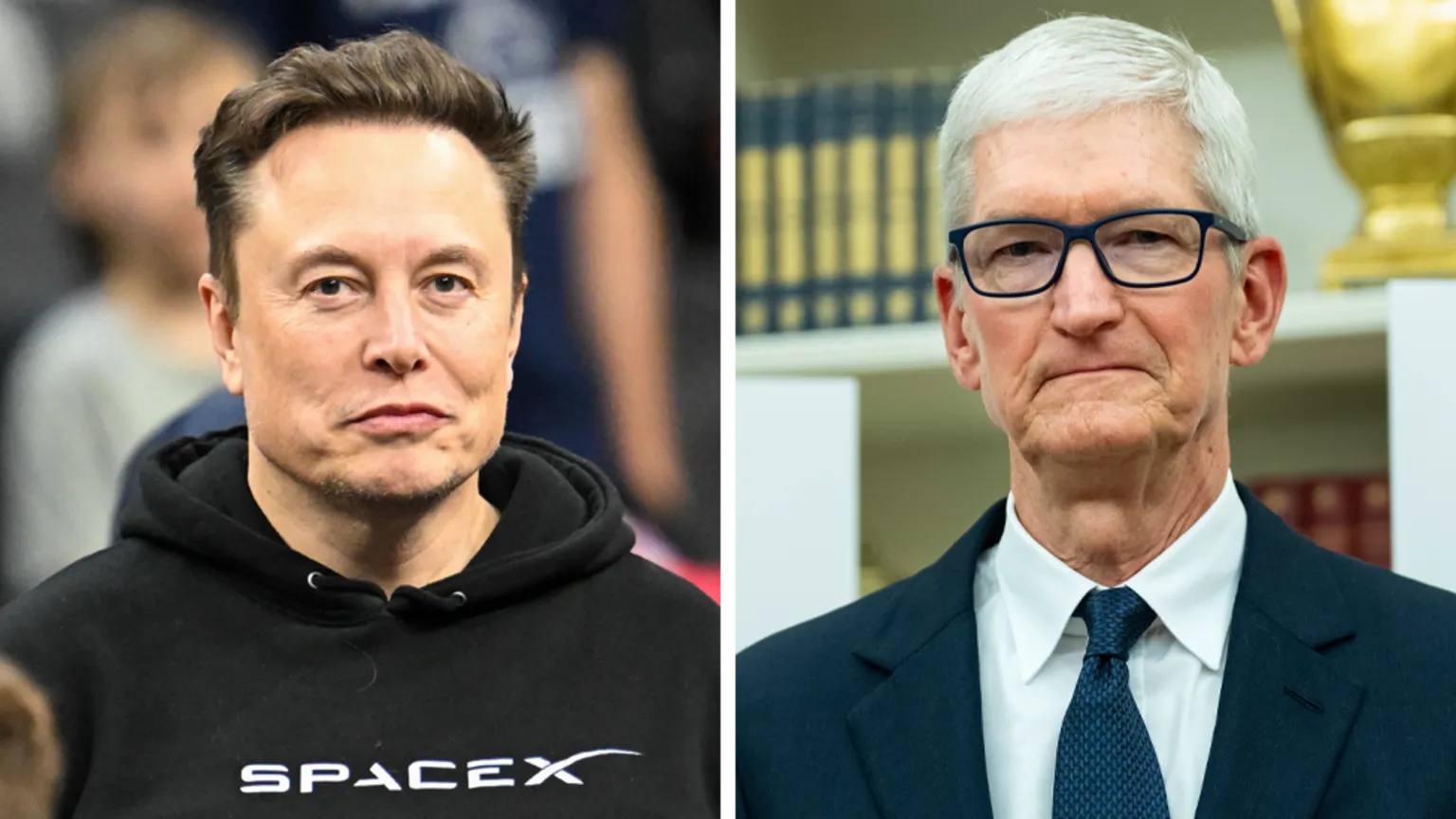
Tech CEOs Expected to Join Trump at Xi Summit, Signaling Corporate Role in US–China Diplomacy
White House announcement places Elon Musk and Tim Cook alongside President Donald Trump as Washington prepares for high-stakes talks with Chinese leader Xi Jinping, raising questions about the growing overlap between state policy and corporate influence.
The structure of U.S.–China diplomatic engagement is shifting toward deeper involvement of major technology executives, following a White House announcement that President Donald Trump is expected to be accompanied by leading corporate figures, including Elon Musk and Tim Cook, at an upcoming summit with Chinese leader Xi Jinping.
The move underscores how trade, technology, and national security policy are increasingly being negotiated in parallel with the interests of companies deeply embedded in both economies.
What is confirmed is that the White House has indicated Musk, the chief executive of Tesla and SpaceX, and Cook, the chief executive of Apple, are set to participate in the summit environment alongside the president.
The meeting itself is framed as part of ongoing high-level discussions between Washington and Beijing over economic relations, technology controls, supply chains, and broader geopolitical competition.
The inclusion of top technology executives reflects the central role of the sector in current U.S.–China tensions.
Companies such as Apple depend heavily on Chinese manufacturing and supply chains, while firms like Tesla maintain significant production and market exposure in China.
Their presence signals that economic interdependence is not a background factor but a core element of diplomatic calculations.
The summit is expected to focus on a series of unresolved strategic disputes, including export controls on advanced semiconductors, restrictions on technology transfers, industrial policy competition, and the broader question of decoupling versus managed interdependence.
These issues have increasingly blurred the line between economic regulation and national security policy, pulling private firms directly into the policy arena.
The involvement of Musk and Cook also highlights differing corporate strategies in navigating U.S.–China relations.
Apple has maintained a deeply integrated production base in China while attempting to diversify parts of its supply chain.
Tesla has expanded manufacturing operations in Shanghai while balancing regulatory demands in the United States.
Their participation suggests that corporate perspectives may be used as informal inputs into state-level negotiation dynamics.
The broader implication of this development is the normalization of executive-level corporate presence in geopolitical diplomacy.
While business leaders have long lobbied governments on trade policy, their visible inclusion in summit-level engagement reflects a more direct fusion of corporate strategy with state negotiation frameworks.
This raises structural questions about influence, accountability, and the boundaries between public authority and private economic power.
The summit comes at a time when both Washington and Beijing are attempting to stabilize economic relations without reversing strategic competition.
That balance has become increasingly fragile as restrictions on advanced technologies expand and both countries prioritize domestic industrial resilience.
In that environment, the presence of key corporate figures functions not only as symbolic representation of economic stakes but also as a channel for real-time industry feedback.
As preparations continue, the diplomatic architecture surrounding U.S.–China relations is increasingly defined by a three-way interaction between governments, corporations, and strategic policy institutions.
The outcome of the summit is expected to shape the next phase of global technology governance and supply chain realignment, reinforcing the role of major firms as active participants in geopolitical negotiation rather than passive stakeholders.
The move underscores how trade, technology, and national security policy are increasingly being negotiated in parallel with the interests of companies deeply embedded in both economies.
What is confirmed is that the White House has indicated Musk, the chief executive of Tesla and SpaceX, and Cook, the chief executive of Apple, are set to participate in the summit environment alongside the president.
The meeting itself is framed as part of ongoing high-level discussions between Washington and Beijing over economic relations, technology controls, supply chains, and broader geopolitical competition.
The inclusion of top technology executives reflects the central role of the sector in current U.S.–China tensions.
Companies such as Apple depend heavily on Chinese manufacturing and supply chains, while firms like Tesla maintain significant production and market exposure in China.
Their presence signals that economic interdependence is not a background factor but a core element of diplomatic calculations.
The summit is expected to focus on a series of unresolved strategic disputes, including export controls on advanced semiconductors, restrictions on technology transfers, industrial policy competition, and the broader question of decoupling versus managed interdependence.
These issues have increasingly blurred the line between economic regulation and national security policy, pulling private firms directly into the policy arena.
The involvement of Musk and Cook also highlights differing corporate strategies in navigating U.S.–China relations.
Apple has maintained a deeply integrated production base in China while attempting to diversify parts of its supply chain.
Tesla has expanded manufacturing operations in Shanghai while balancing regulatory demands in the United States.
Their participation suggests that corporate perspectives may be used as informal inputs into state-level negotiation dynamics.
The broader implication of this development is the normalization of executive-level corporate presence in geopolitical diplomacy.
While business leaders have long lobbied governments on trade policy, their visible inclusion in summit-level engagement reflects a more direct fusion of corporate strategy with state negotiation frameworks.
This raises structural questions about influence, accountability, and the boundaries between public authority and private economic power.
The summit comes at a time when both Washington and Beijing are attempting to stabilize economic relations without reversing strategic competition.
That balance has become increasingly fragile as restrictions on advanced technologies expand and both countries prioritize domestic industrial resilience.
In that environment, the presence of key corporate figures functions not only as symbolic representation of economic stakes but also as a channel for real-time industry feedback.
As preparations continue, the diplomatic architecture surrounding U.S.–China relations is increasingly defined by a three-way interaction between governments, corporations, and strategic policy institutions.
The outcome of the summit is expected to shape the next phase of global technology governance and supply chain realignment, reinforcing the role of major firms as active participants in geopolitical negotiation rather than passive stakeholders.