Focus on the BIG picture.
Tuesday, May 12, 2026
Outside the box.

Thune Defends $1 Billion White House Security Spending as Necessary Cost of Protecting the Presidency
A proposed funding level for presidential security sparks debate over scale, accountability, and the rising cost of safeguarding the White House complex.
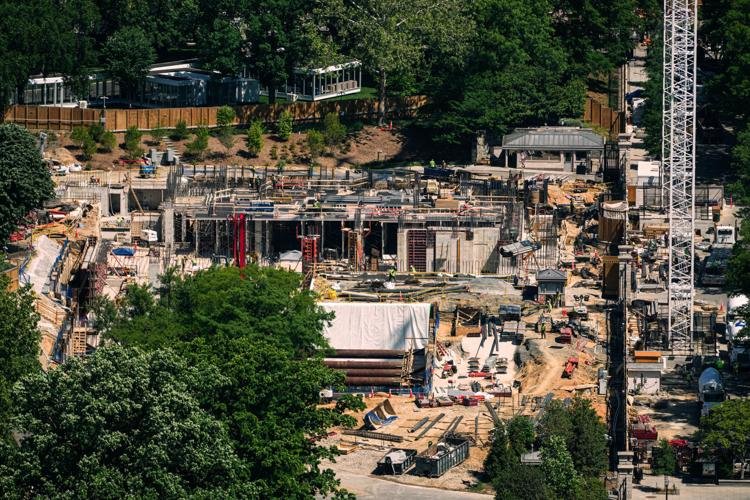
A legislative dispute over federal security spending has intensified after Senate leadership defended a proposed one billion dollar allocation for White House and presidential protection, framing it as a necessary baseline cost for securing the executive branch.
The debate centers on how much the United States should spend to protect the president, the White House complex, and associated federal facilities amid evolving security threats.
The defense of the funding level was articulated by Senate Majority Leader John Thune, who argued that the cost reflects the operational reality of modern presidential security rather than discretionary excess.
His position emphasizes that safeguarding the president requires layered protection systems spanning physical security, intelligence monitoring, cyber defense, and emergency response coordination.
What is confirmed is that the proposed funding covers a broad set of protective functions, including Secret Service operations, infrastructure hardening at the White House and associated government buildings, communications security systems, and interagency coordination mechanisms.
These costs are distributed across multiple federal agencies responsible for executive protection and national security infrastructure.
The figure has drawn scrutiny from fiscal conservatives and budget analysts who question whether the scale reflects genuine operational necessity or expanded administrative overhead.
Critics argue that large, bundled security appropriations can obscure line-item accountability, making it difficult to assess efficiency or identify potential waste.
Supporters counter that modern threat environments require integrated spending that cannot be meaningfully separated into narrow categories.
The broader context is a steady increase in security expenditures over the past two decades, driven by changes in threat perception, including domestic extremist activity, cyber intrusions, and the persistent risk of targeted attacks on political leadership.
The White House complex itself has also undergone successive upgrades, including perimeter reinforcement, surveillance systems, and restricted access zones.
The Secret Service, which leads presidential protection, operates under significant logistical pressure, particularly during travel, public events, and national emergencies.
Its responsibilities extend beyond the president to include protection of the vice president, visiting foreign leaders, and designated protected facilities, all of which contribute to cumulative operational costs.
Supporters of the funding package argue that underfunding presidential security would create unacceptable risk exposure at a time when threats are more diffuse and technologically sophisticated.
They point to the necessity of continuous upgrades in cybersecurity, intelligence integration, and physical infrastructure resilience.
Opponents of the scale of spending argue that without clearer reporting requirements, large security allocations risk becoming insulated from standard budgetary scrutiny.
The debate reflects a recurring tension in federal budgeting between national security imperatives and demands for fiscal transparency.
The proposed funding has not yet undergone final reconciliation, but it has already set the terms of debate for how Congress defines the financial threshold of protecting the presidency in a high-risk, digitally connected security environment.
The outcome will determine the baseline for future executive protection budgets and how strictly those costs are audited going forward.
The debate centers on how much the United States should spend to protect the president, the White House complex, and associated federal facilities amid evolving security threats.
The defense of the funding level was articulated by Senate Majority Leader John Thune, who argued that the cost reflects the operational reality of modern presidential security rather than discretionary excess.
His position emphasizes that safeguarding the president requires layered protection systems spanning physical security, intelligence monitoring, cyber defense, and emergency response coordination.
What is confirmed is that the proposed funding covers a broad set of protective functions, including Secret Service operations, infrastructure hardening at the White House and associated government buildings, communications security systems, and interagency coordination mechanisms.
These costs are distributed across multiple federal agencies responsible for executive protection and national security infrastructure.
The figure has drawn scrutiny from fiscal conservatives and budget analysts who question whether the scale reflects genuine operational necessity or expanded administrative overhead.
Critics argue that large, bundled security appropriations can obscure line-item accountability, making it difficult to assess efficiency or identify potential waste.
Supporters counter that modern threat environments require integrated spending that cannot be meaningfully separated into narrow categories.
The broader context is a steady increase in security expenditures over the past two decades, driven by changes in threat perception, including domestic extremist activity, cyber intrusions, and the persistent risk of targeted attacks on political leadership.
The White House complex itself has also undergone successive upgrades, including perimeter reinforcement, surveillance systems, and restricted access zones.
The Secret Service, which leads presidential protection, operates under significant logistical pressure, particularly during travel, public events, and national emergencies.
Its responsibilities extend beyond the president to include protection of the vice president, visiting foreign leaders, and designated protected facilities, all of which contribute to cumulative operational costs.
Supporters of the funding package argue that underfunding presidential security would create unacceptable risk exposure at a time when threats are more diffuse and technologically sophisticated.
They point to the necessity of continuous upgrades in cybersecurity, intelligence integration, and physical infrastructure resilience.
Opponents of the scale of spending argue that without clearer reporting requirements, large security allocations risk becoming insulated from standard budgetary scrutiny.
The debate reflects a recurring tension in federal budgeting between national security imperatives and demands for fiscal transparency.
The proposed funding has not yet undergone final reconciliation, but it has already set the terms of debate for how Congress defines the financial threshold of protecting the presidency in a high-risk, digitally connected security environment.
The outcome will determine the baseline for future executive protection budgets and how strictly those costs are audited going forward.