Focus on the BIG picture.
Wednesday, May 13, 2026
Outside the box.

Trump Publicly Rebukes Star Quarterback for Missing White House Championship Visit
Fernando Mendoza chose NFL obligations over a White House ceremony, exposing the growing collision between presidential symbolism, athlete autonomy and professional sports economics.
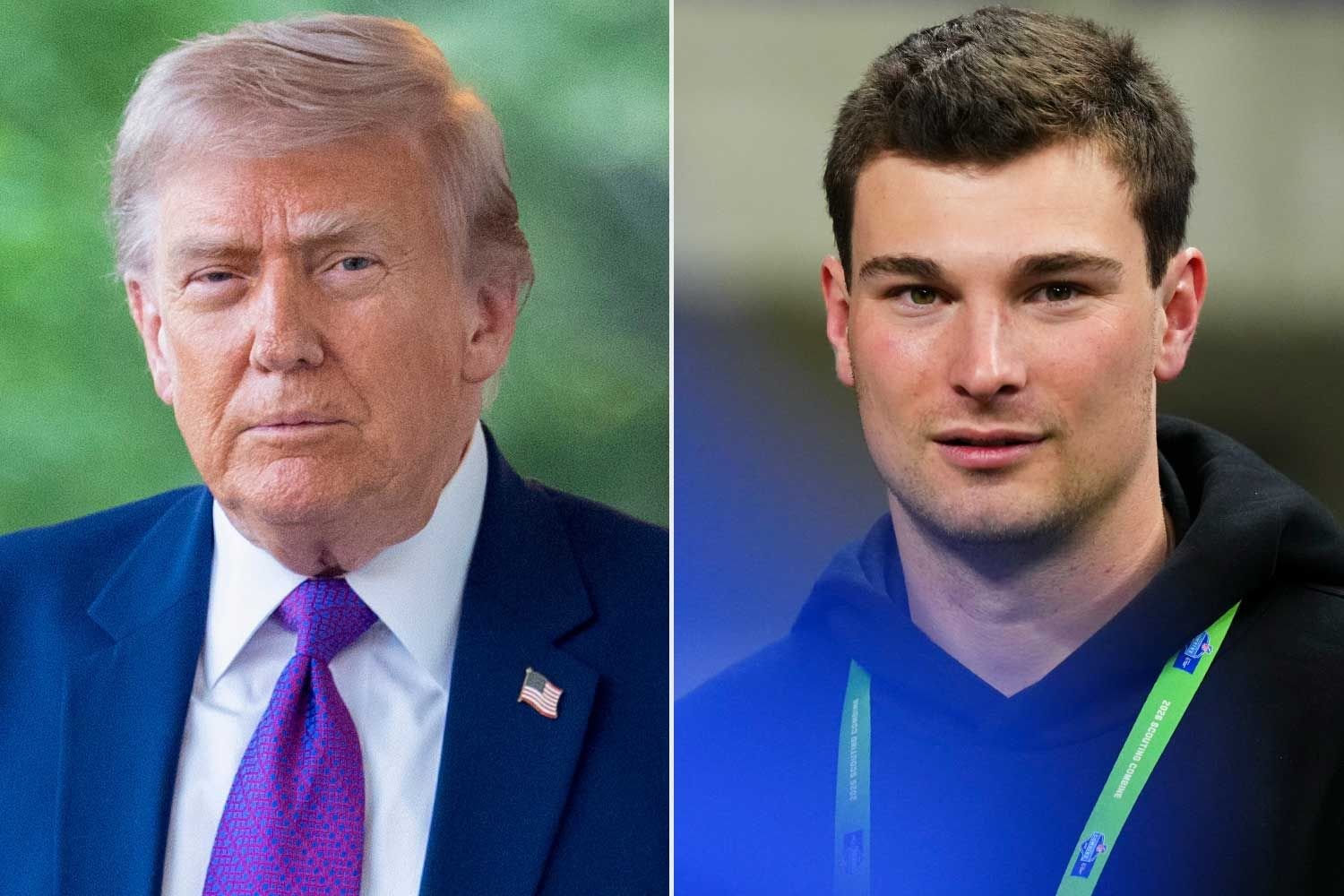
President Donald Trump publicly criticized former Indiana quarterback Fernando Mendoza after the Heisman Trophy winner skipped a White House celebration honoring Indiana University’s national championship football team, turning what is traditionally a ceremonial sports event into a broader political and cultural flashpoint.
The core driver of the story is actor-driven: the confrontation emerged directly from Trump’s decision to personally address Mendoza’s absence during a public White House ceremony and frame it in political terms.
What is confirmed is that Indiana’s championship team visited the White House on May 11 while Mendoza, now the number one overall pick in the National Football League draft by the Las Vegas Raiders, remained in Nevada for rookie team activities tied to the start of his professional career.
During remarks on the South Lawn, Trump said he was “not happy” Mendoza did not attend.
The president also stated that Mendoza had personally called him beforehand to explain the decision.
Trump added that the quarterback was “a big fan” of the administration and suggested the absence was acceptable because it was football-related rather than political.
Mendoza had already publicly explained his reasoning before the ceremony.
He said missing early organized team activities as a rookie quarterback would “not be a good look” and emphasized that he needed to prove himself inside the Raiders organization.
That explanation reflects the modern economic and professional reality of elite football.
Rookie quarterbacks drafted at the top of the NFL draft enter organizations under enormous financial and competitive pressure.
Early participation in offseason programs is often viewed internally as critical for playbook installation, relationship-building with coaches and establishing leadership credibility.
The timing mattered.
Mendoza is transitioning from college football celebrity to franchise quarterback responsibility, one of the most scrutinized and commercially valuable positions in American sports.
Missing early team activities, even voluntary ones, can become a media storyline inside the NFL ecosystem.
Trump nevertheless chose to elevate the issue publicly.
His remarks were partly humorous in tone, but they also reinforced a broader pattern in which White House sports visits under his presidency increasingly function as loyalty and identity signals rather than purely ceremonial traditions.
The president explicitly suggested that had Mendoza skipped the event because he “didn’t like Trump,” he would not have mentioned him during the ceremony.
That framing immediately transformed a routine scheduling conflict into a politically loaded exchange.
The incident lands in a wider context of increasingly fractured relationships between sports institutions and political power.
Over the past decade, White House championship visits have become culturally polarized events.
Some athletes and teams have declined invitations over political disagreements, while others have used attendance to avoid controversy or maintain institutional neutrality.
What makes Mendoza’s case distinct is that there is no verified evidence the decision was politically motivated.
By all confirmed accounts, Mendoza prioritized professional obligations with the Raiders.
Trump himself acknowledged that directly.
Even so, the episode illustrates how politically charged the White House sports tradition has become.
Athletes now operate inside overlapping pressures from fans, sponsors, leagues, social media audiences and political actors.
Simply attending or skipping a ceremonial event can trigger national commentary.
The moment also reflects Trump’s broader communication style.
The president regularly personalizes public interactions, transforming relatively minor symbolic events into political narratives centered around loyalty, respect and public allegiance.
Supporters argue that approach creates authenticity and directness.
Critics argue it injects unnecessary political tension into nonpolitical institutions.
For Indiana football, the ceremony was supposed to mark the peak of a historic season.
Under coach Curt Cignetti, the Hoosiers completed an undefeated championship run and produced one of the most dramatic program turnarounds in modern college football.
Mendoza was central to that success.
He became the program’s defining player, won the Heisman Trophy and then rapidly transitioned into one of the most valuable young assets in professional football.
His absence therefore became impossible to ignore during the White House celebration.
The incident also highlights the changing power structure in college athletics.
Elite players increasingly move directly into professional commercial ecosystems where team obligations, branding considerations and financial stakes often outweigh traditional ceremonial expectations tied to college sports culture.
Trump’s comments generated immediate attention across sports and political media because they touched several volatile themes simultaneously: presidential symbolism, athlete independence, political loyalty and the commercialization of modern football.
The practical outcome is that what should have been a straightforward championship celebration instead became another example of how even routine sports ceremonies now operate inside a highly politicized national environment.
Mendoza remains focused on establishing himself with the Raiders, while the White House appearance has reinforced how quickly athletic decisions can become national political stories when the president chooses to make them one.
The core driver of the story is actor-driven: the confrontation emerged directly from Trump’s decision to personally address Mendoza’s absence during a public White House ceremony and frame it in political terms.
What is confirmed is that Indiana’s championship team visited the White House on May 11 while Mendoza, now the number one overall pick in the National Football League draft by the Las Vegas Raiders, remained in Nevada for rookie team activities tied to the start of his professional career.
During remarks on the South Lawn, Trump said he was “not happy” Mendoza did not attend.
The president also stated that Mendoza had personally called him beforehand to explain the decision.
Trump added that the quarterback was “a big fan” of the administration and suggested the absence was acceptable because it was football-related rather than political.
Mendoza had already publicly explained his reasoning before the ceremony.
He said missing early organized team activities as a rookie quarterback would “not be a good look” and emphasized that he needed to prove himself inside the Raiders organization.
That explanation reflects the modern economic and professional reality of elite football.
Rookie quarterbacks drafted at the top of the NFL draft enter organizations under enormous financial and competitive pressure.
Early participation in offseason programs is often viewed internally as critical for playbook installation, relationship-building with coaches and establishing leadership credibility.
The timing mattered.
Mendoza is transitioning from college football celebrity to franchise quarterback responsibility, one of the most scrutinized and commercially valuable positions in American sports.
Missing early team activities, even voluntary ones, can become a media storyline inside the NFL ecosystem.
Trump nevertheless chose to elevate the issue publicly.
His remarks were partly humorous in tone, but they also reinforced a broader pattern in which White House sports visits under his presidency increasingly function as loyalty and identity signals rather than purely ceremonial traditions.
The president explicitly suggested that had Mendoza skipped the event because he “didn’t like Trump,” he would not have mentioned him during the ceremony.
That framing immediately transformed a routine scheduling conflict into a politically loaded exchange.
The incident lands in a wider context of increasingly fractured relationships between sports institutions and political power.
Over the past decade, White House championship visits have become culturally polarized events.
Some athletes and teams have declined invitations over political disagreements, while others have used attendance to avoid controversy or maintain institutional neutrality.
What makes Mendoza’s case distinct is that there is no verified evidence the decision was politically motivated.
By all confirmed accounts, Mendoza prioritized professional obligations with the Raiders.
Trump himself acknowledged that directly.
Even so, the episode illustrates how politically charged the White House sports tradition has become.
Athletes now operate inside overlapping pressures from fans, sponsors, leagues, social media audiences and political actors.
Simply attending or skipping a ceremonial event can trigger national commentary.
The moment also reflects Trump’s broader communication style.
The president regularly personalizes public interactions, transforming relatively minor symbolic events into political narratives centered around loyalty, respect and public allegiance.
Supporters argue that approach creates authenticity and directness.
Critics argue it injects unnecessary political tension into nonpolitical institutions.
For Indiana football, the ceremony was supposed to mark the peak of a historic season.
Under coach Curt Cignetti, the Hoosiers completed an undefeated championship run and produced one of the most dramatic program turnarounds in modern college football.
Mendoza was central to that success.
He became the program’s defining player, won the Heisman Trophy and then rapidly transitioned into one of the most valuable young assets in professional football.
His absence therefore became impossible to ignore during the White House celebration.
The incident also highlights the changing power structure in college athletics.
Elite players increasingly move directly into professional commercial ecosystems where team obligations, branding considerations and financial stakes often outweigh traditional ceremonial expectations tied to college sports culture.
Trump’s comments generated immediate attention across sports and political media because they touched several volatile themes simultaneously: presidential symbolism, athlete independence, political loyalty and the commercialization of modern football.
The practical outcome is that what should have been a straightforward championship celebration instead became another example of how even routine sports ceremonies now operate inside a highly politicized national environment.
Mendoza remains focused on establishing himself with the Raiders, while the White House appearance has reinforced how quickly athletic decisions can become national political stories when the president chooses to make them one.