Focus on the BIG picture.
Saturday, May 09, 2026
Outside the box.

Trump’s Reflecting Pool Drive Highlights Unusual Renovation of Lincoln Memorial Landmark
President personally inspects $2 million “American flag blue” resurfacing project, drawing attention to disputed aesthetics, process concerns, and symbolic use of Washington’s National Mall
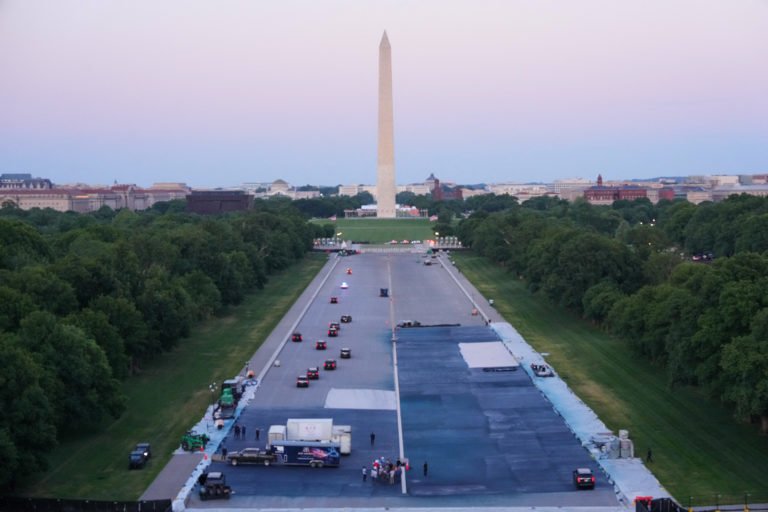
A government-led infrastructure and heritage redevelopment decision has reshaped one of Washington’s most iconic public spaces, as the Lincoln Memorial Reflecting Pool undergoes a rapid resurfacing project that culminated in President Donald Trump personally driving across the drained basin during an inspection visit.
The episode centers on a federal renovation effort to apply an industrial-grade blue coating over the pool’s historic granite floor, a move officials say is intended to address leaks and long-standing maintenance issues while also altering its visual appearance.
What is confirmed is that the Reflecting Pool, located between the Lincoln Memorial and the Washington Monument, has been drained and is undergoing resurfacing using a commercial-style liner described by officials as a durable waterproof coating.
The project, estimated at roughly two million dollars, is designed to address structural seepage and reduce long-term maintenance costs.
Administration figures have characterized the new surface as a “blue” finish intended to create a more uniform and visually striking appearance compared with the original gray stone base.
The most unusual element of the renovation is the method of presidential involvement.
During an unannounced visit, the president was transported by motorcade directly onto the newly coated basin, effectively driving across the drained pool before speaking with reporters and supervising officials.
Cabinet members and security personnel were present during the inspection.
The visit underscored the administration’s hands-on approach to the project, which has been promoted as part of broader efforts to “beautify” and modernize key national landmarks in Washington.
The Reflecting Pool itself is a heavily symbolic site in American political history.
Built in the early twentieth century and significantly renovated in the past, it has served as a visual backdrop for major public events, including civil rights demonstrations.
Because of its historical role, any structural or aesthetic modification is subject to scrutiny from preservation experts and federal land management standards.
Critics of the current project argue that replacing the granite surface with a synthetic blue liner risks altering the pool’s reflective function and historic character, even if it improves waterproofing performance.
Supporters of the project emphasize practical concerns.
The pool has long required periodic drainage due to algae growth, debris accumulation, and leakage issues.
Engineering assessments in prior years identified maintenance challenges common to large shallow water installations exposed to environmental wear.
From this perspective, the resurfacing is framed as a cost-saving measure intended to extend the usable life of the structure while reducing recurring restoration expenses.
Beyond technical considerations, the renovation has become politically symbolic.
The administration has linked it to broader redevelopment efforts across federal landmarks, framing the changes as part of a larger aesthetic agenda for the capital ahead of national commemorations.
Opponents, by contrast, argue that the project reflects an unusually centralized decision-making process in which major alterations to public heritage sites are initiated from the executive level with limited public consultation.
Despite these debates, the physical transformation is advancing on a fixed construction timeline, with work crews continuing to apply the coating and prepare the basin for refilling.
Once completed, the Reflecting Pool is expected to return to service with a modified surface intended to combine structural reinforcement with a more uniform visual design, permanently altering one of the most recognizable civic landscapes in the United States.
The episode centers on a federal renovation effort to apply an industrial-grade blue coating over the pool’s historic granite floor, a move officials say is intended to address leaks and long-standing maintenance issues while also altering its visual appearance.
What is confirmed is that the Reflecting Pool, located between the Lincoln Memorial and the Washington Monument, has been drained and is undergoing resurfacing using a commercial-style liner described by officials as a durable waterproof coating.
The project, estimated at roughly two million dollars, is designed to address structural seepage and reduce long-term maintenance costs.
Administration figures have characterized the new surface as a “blue” finish intended to create a more uniform and visually striking appearance compared with the original gray stone base.
The most unusual element of the renovation is the method of presidential involvement.
During an unannounced visit, the president was transported by motorcade directly onto the newly coated basin, effectively driving across the drained pool before speaking with reporters and supervising officials.
Cabinet members and security personnel were present during the inspection.
The visit underscored the administration’s hands-on approach to the project, which has been promoted as part of broader efforts to “beautify” and modernize key national landmarks in Washington.
The Reflecting Pool itself is a heavily symbolic site in American political history.
Built in the early twentieth century and significantly renovated in the past, it has served as a visual backdrop for major public events, including civil rights demonstrations.
Because of its historical role, any structural or aesthetic modification is subject to scrutiny from preservation experts and federal land management standards.
Critics of the current project argue that replacing the granite surface with a synthetic blue liner risks altering the pool’s reflective function and historic character, even if it improves waterproofing performance.
Supporters of the project emphasize practical concerns.
The pool has long required periodic drainage due to algae growth, debris accumulation, and leakage issues.
Engineering assessments in prior years identified maintenance challenges common to large shallow water installations exposed to environmental wear.
From this perspective, the resurfacing is framed as a cost-saving measure intended to extend the usable life of the structure while reducing recurring restoration expenses.
Beyond technical considerations, the renovation has become politically symbolic.
The administration has linked it to broader redevelopment efforts across federal landmarks, framing the changes as part of a larger aesthetic agenda for the capital ahead of national commemorations.
Opponents, by contrast, argue that the project reflects an unusually centralized decision-making process in which major alterations to public heritage sites are initiated from the executive level with limited public consultation.
Despite these debates, the physical transformation is advancing on a fixed construction timeline, with work crews continuing to apply the coating and prepare the basin for refilling.
Once completed, the Reflecting Pool is expected to return to service with a modified surface intended to combine structural reinforcement with a more uniform visual design, permanently altering one of the most recognizable civic landscapes in the United States.