Focus on the BIG picture.
Friday, May 08, 2026
Outside the box.

American Tourist Dies After 29th-Floor Fall at Hong Kong Hotel, Injuring Seven Below
A 69-year-old visitor fell from a rooftop pool deck at Hotel Indigo in Wan Chai, triggering a chain injury incident and renewed scrutiny of high-rise safety in densely built urban hotels.
A fatal fall from a high-rise hotel in Hong Kong has left a 69-year-old American tourist dead and seven bystanders injured, after she went over the edge of a 29th-floor rooftop pool deck at Hotel Indigo in the city’s Wan Chai district.
The incident occurred shortly after 9 a.m. on May 4, when the woman accessed the hotel’s elevated pool area and fell to the ground level below, triggering a chain of secondary injuries from impact and shattered glass at the building’s entrance.
What is confirmed is that the woman died at the scene following the fall.
She had been staying at the hotel with her husband, who had left earlier that morning for a medical appointment.
Authorities have not released her identity publicly.
Initial police assessments describe the case as a fall from height with no immediate indication of external involvement, but investigations remain ongoing as standard procedure in fatal incidents of this nature.
The impact did not end with the fall itself.
The woman struck a pedestrian on the ground, a 74-year-old local resident, who sustained serious injuries and was hospitalized in intensive care.
The force of the impact also caused glass panels near the hotel’s entrance to shatter, sending fragments outward into a busy pedestrian area and injuring six additional people.
Those injured included a mix of local residents and other tourists, among them a child and elderly individuals, all of whom were treated at nearby hospitals for wounds ranging from lacerations to more severe trauma.
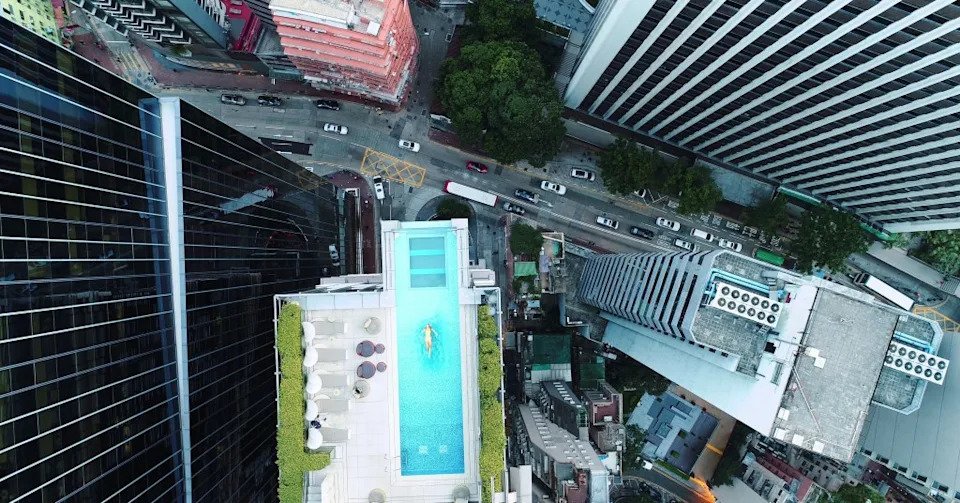
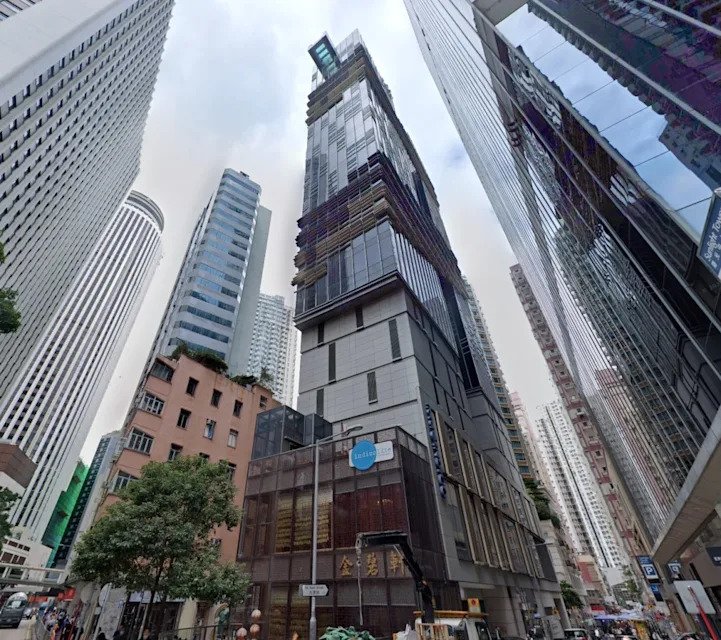
Hotel Indigo is a high-rise boutique property known for its rooftop pool and glass-heavy architectural design, including a cantilevered structure that extends outward from the building’s upper floors.
The rooftop pool area is positioned at a significant height above street level, a design feature that offers panoramic views but also introduces elevated risk exposure in the event of a fall or barrier failure.
Local reporting has indicated the woman had a history of depression and had recently stopped taking medication, though these details have not been independently confirmed by authorities and remain part of background information rather than established causation.
No official conclusion has been made about intent or medical factors contributing to the fall.
The incident has drawn attention in Hong Kong to the intersection of luxury hotel design and urban density, where elevated recreational spaces sit directly above active pedestrian zones.
In this case, the combination of height, glass infrastructure, and street-level proximity turned a single fall into a multi-victim event in seconds, underscoring how structural design choices can amplify the consequences of isolated incidents.
Investigators are continuing to reconstruct the sequence of events leading up to the fall, including the woman’s movements on the rooftop pool deck and the condition of safety barriers at the time.
The case remains under review by local authorities, while all injured individuals are receiving medical care in Hong Kong hospitals as of the latest updates.
The incident occurred shortly after 9 a.m. on May 4, when the woman accessed the hotel’s elevated pool area and fell to the ground level below, triggering a chain of secondary injuries from impact and shattered glass at the building’s entrance.
What is confirmed is that the woman died at the scene following the fall.
She had been staying at the hotel with her husband, who had left earlier that morning for a medical appointment.
Authorities have not released her identity publicly.
Initial police assessments describe the case as a fall from height with no immediate indication of external involvement, but investigations remain ongoing as standard procedure in fatal incidents of this nature.
The impact did not end with the fall itself.
The woman struck a pedestrian on the ground, a 74-year-old local resident, who sustained serious injuries and was hospitalized in intensive care.
The force of the impact also caused glass panels near the hotel’s entrance to shatter, sending fragments outward into a busy pedestrian area and injuring six additional people.
Those injured included a mix of local residents and other tourists, among them a child and elderly individuals, all of whom were treated at nearby hospitals for wounds ranging from lacerations to more severe trauma.
Hotel Indigo is a high-rise boutique property known for its rooftop pool and glass-heavy architectural design, including a cantilevered structure that extends outward from the building’s upper floors.
The rooftop pool area is positioned at a significant height above street level, a design feature that offers panoramic views but also introduces elevated risk exposure in the event of a fall or barrier failure.
Local reporting has indicated the woman had a history of depression and had recently stopped taking medication, though these details have not been independently confirmed by authorities and remain part of background information rather than established causation.
No official conclusion has been made about intent or medical factors contributing to the fall.
The incident has drawn attention in Hong Kong to the intersection of luxury hotel design and urban density, where elevated recreational spaces sit directly above active pedestrian zones.
In this case, the combination of height, glass infrastructure, and street-level proximity turned a single fall into a multi-victim event in seconds, underscoring how structural design choices can amplify the consequences of isolated incidents.
Investigators are continuing to reconstruct the sequence of events leading up to the fall, including the woman’s movements on the rooftop pool deck and the condition of safety barriers at the time.
The case remains under review by local authorities, while all injured individuals are receiving medical care in Hong Kong hospitals as of the latest updates.