Focus on the BIG picture.
Friday, May 01, 2026
Outside the box.

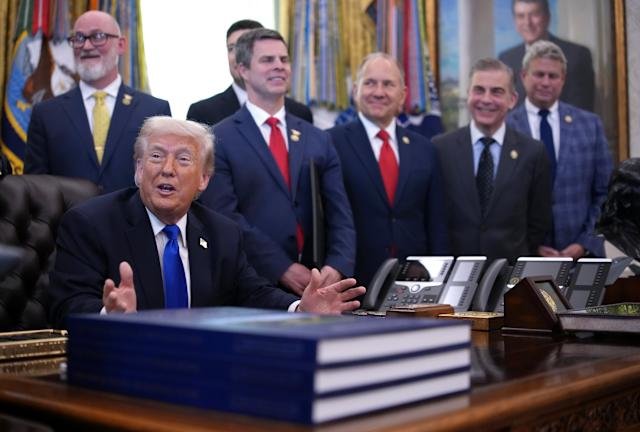
Trump Signs Executive Orders on Federal Contracts and Retirement Access in White House Ceremony
April 30 Oval Office event highlights sweeping procurement reforms and a new federal retirement savings platform aimed at tens of millions of workers without employer plans.
SYSTEM-DRIVEN policy changes defined President Donald Trump’s executive order signing ceremony at the White House on April 30, where the administration unveiled a series of directives aimed at reshaping federal contracting practices and expanding retirement savings access for workers outside employer-sponsored systems.
What is confirmed is that Trump signed multiple executive orders during an Oval Office event focused on economic and administrative reforms.
The most prominent measures include a shift in federal procurement policy toward fixed-price contracts and a parallel initiative to expand access to retirement savings accounts through a new government-run platform called TrumpIRA.gov.
The procurement order instructs federal agencies to prioritize fixed-price agreements over cost-reimbursement contracts.
The administration argues this approach reduces budget overruns and forces more predictable pricing in government spending.
Agencies are being given a limited timeframe to begin restructuring existing agreements, with federal procurement regulators tasked with revising underlying rules.
Supporters describe the change as a long-standing effort to control federal spending growth, while critics in policy circles have warned that fixed-price systems can transfer financial risk to contractors and reduce flexibility in complex projects.
A second major order focuses on retirement savings access.
It establishes a federal marketplace designed to help workers without employer-sponsored retirement plans enroll in low-cost individual retirement accounts offered by private financial institutions.
The platform is expected to launch in 2027 and will allow users to compare investment options and fees in a centralized system.
The initiative targets what officials describe as a large coverage gap affecting more than fifty million American workers who do not participate in workplace retirement plans.
The program also integrates federal matching incentives for lower-income savers, building on an existing policy framework created under prior legislation that provides matching contributions of up to one thousand dollars annually.
Administration officials frame the effort as an expansion of retirement security without mandating employer participation or creating new compulsory savings systems.
The broader policy context is one of incremental federal restructuring rather than a single legislative overhaul.
Both initiatives rely heavily on executive authority and regulatory implementation rather than new congressional statutes, meaning their long-term durability will depend on agency execution, future administrations, and potential legislative codification efforts.
The immediate impact is procedural: agencies must begin adjusting contracting frameworks while the Treasury Department prepares the infrastructure for the retirement savings platform.
The longer-term implications center on how much federal policy can reshape private-sector financial behavior through administrative design rather than statutory mandates.
What is confirmed is that Trump signed multiple executive orders during an Oval Office event focused on economic and administrative reforms.
The most prominent measures include a shift in federal procurement policy toward fixed-price contracts and a parallel initiative to expand access to retirement savings accounts through a new government-run platform called TrumpIRA.gov.
The procurement order instructs federal agencies to prioritize fixed-price agreements over cost-reimbursement contracts.
The administration argues this approach reduces budget overruns and forces more predictable pricing in government spending.
Agencies are being given a limited timeframe to begin restructuring existing agreements, with federal procurement regulators tasked with revising underlying rules.
Supporters describe the change as a long-standing effort to control federal spending growth, while critics in policy circles have warned that fixed-price systems can transfer financial risk to contractors and reduce flexibility in complex projects.
A second major order focuses on retirement savings access.
It establishes a federal marketplace designed to help workers without employer-sponsored retirement plans enroll in low-cost individual retirement accounts offered by private financial institutions.
The platform is expected to launch in 2027 and will allow users to compare investment options and fees in a centralized system.
The initiative targets what officials describe as a large coverage gap affecting more than fifty million American workers who do not participate in workplace retirement plans.
The program also integrates federal matching incentives for lower-income savers, building on an existing policy framework created under prior legislation that provides matching contributions of up to one thousand dollars annually.
Administration officials frame the effort as an expansion of retirement security without mandating employer participation or creating new compulsory savings systems.
The broader policy context is one of incremental federal restructuring rather than a single legislative overhaul.
Both initiatives rely heavily on executive authority and regulatory implementation rather than new congressional statutes, meaning their long-term durability will depend on agency execution, future administrations, and potential legislative codification efforts.
The immediate impact is procedural: agencies must begin adjusting contracting frameworks while the Treasury Department prepares the infrastructure for the retirement savings platform.
The longer-term implications center on how much federal policy can reshape private-sector financial behavior through administrative design rather than statutory mandates.