Focus on the BIG picture.
Saturday, May 16, 2026
Outside the box.

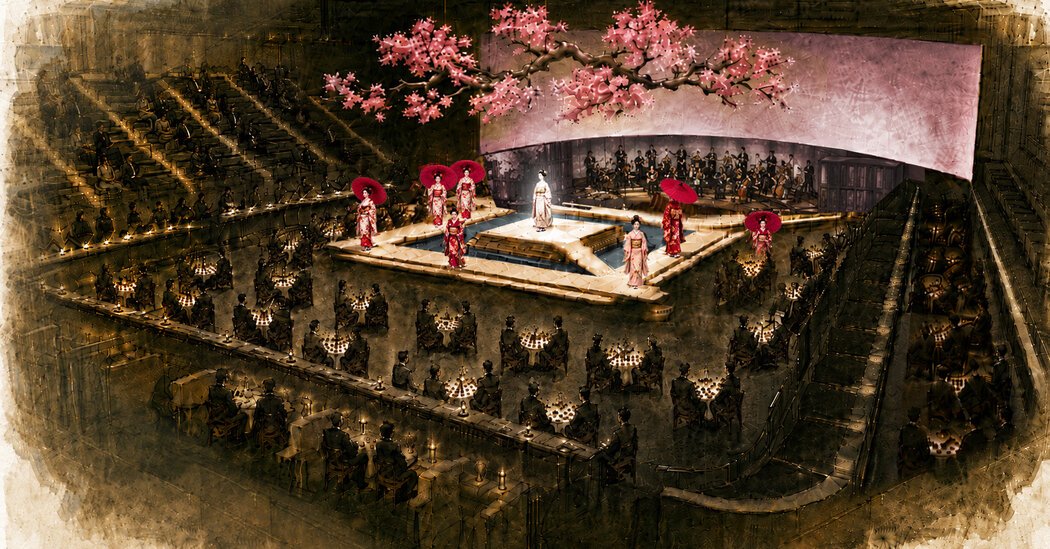
Washington National Opera Rebuilds Its Identity After Breaking From the Kennedy Center
The company is reshaping its operations and venue strategy after ending a decades-long residency, a shift driven by financial pressures, governance changes, and disputes over how large-scale opera is funded in Washington.
SYSTEM-DRIVEN — the story is driven by a structural breakdown in the funding and operating model between a major American opera company and its long-term institutional home, rather than a single incident or personality.
The Washington National Opera is entering a new operational phase after ending its decades-long residency at the Kennedy Center in Washington, a decision that forces one of the United States’ most prominent cultural institutions to rebuild its performance model outside its historic home.
What is confirmed is that the opera has formally separated from the Kennedy Center and is moving performances to alternative venues in the capital region while restructuring how it finances and stages productions.
The split follows internal decisions by the opera’s governing board and parallel statements from the Kennedy Center acknowledging the end of the long-standing affiliation.
At the center of the break is a fundamental disagreement over financial structure.
The Kennedy Center’s revised model requires productions to be fully funded in advance, a system that clashes with how opera is traditionally financed in the United States.
Opera companies typically rely on a mix of ticket sales, donations, grants, and long-term fundraising cycles that do not align with fully pre-funded production requirements.
That mismatch made continued residency increasingly difficult under the new terms.
The separation also reflects broader instability around governance and cultural programming at the Kennedy Center following leadership and policy changes that have altered how the institution operates.
These changes have contributed to financial strain, shifts in donor confidence, and reduced flexibility for resident companies that depend on predictable venue access and shared infrastructure.
For the Washington National Opera, the immediate consequence is logistical disruption.
The company has reduced parts of its upcoming season and is relocating performances to other venues in Washington, including university and regional theaters.
This transition preserves its programming but removes the stability of a permanent opera house setting, which is central to long-term planning in large-scale classical performance.
Artistically, the move forces a redefinition of audience experience.
Opera depends on acoustically engineered spaces, established subscriber habits, and predictable venue operations.
Without a fixed home, the company must adapt staging, orchestration logistics, and audience engagement strategies while maintaining production scale and artistic continuity.
Financially, independence increases both risk and flexibility.
The company regains autonomy over programming decisions but loses the structural support and brand association of a national cultural landmark.
It must now sustain fundraising, venue contracts, and production logistics independently, while maintaining donor confidence during a period of transition.
The broader implication is that one of the United States’ flagship performing arts institutions is shifting away from the traditional resident-company model toward a more itinerant structure.
That change reflects wider pressures in large cultural organizations, where rising production costs and evolving institutional governance are reshaping how major performing arts ecosystems operate in major cities.
The Washington National Opera is entering a new operational phase after ending its decades-long residency at the Kennedy Center in Washington, a decision that forces one of the United States’ most prominent cultural institutions to rebuild its performance model outside its historic home.
What is confirmed is that the opera has formally separated from the Kennedy Center and is moving performances to alternative venues in the capital region while restructuring how it finances and stages productions.
The split follows internal decisions by the opera’s governing board and parallel statements from the Kennedy Center acknowledging the end of the long-standing affiliation.
At the center of the break is a fundamental disagreement over financial structure.
The Kennedy Center’s revised model requires productions to be fully funded in advance, a system that clashes with how opera is traditionally financed in the United States.
Opera companies typically rely on a mix of ticket sales, donations, grants, and long-term fundraising cycles that do not align with fully pre-funded production requirements.
That mismatch made continued residency increasingly difficult under the new terms.
The separation also reflects broader instability around governance and cultural programming at the Kennedy Center following leadership and policy changes that have altered how the institution operates.
These changes have contributed to financial strain, shifts in donor confidence, and reduced flexibility for resident companies that depend on predictable venue access and shared infrastructure.
For the Washington National Opera, the immediate consequence is logistical disruption.
The company has reduced parts of its upcoming season and is relocating performances to other venues in Washington, including university and regional theaters.
This transition preserves its programming but removes the stability of a permanent opera house setting, which is central to long-term planning in large-scale classical performance.
Artistically, the move forces a redefinition of audience experience.
Opera depends on acoustically engineered spaces, established subscriber habits, and predictable venue operations.
Without a fixed home, the company must adapt staging, orchestration logistics, and audience engagement strategies while maintaining production scale and artistic continuity.
Financially, independence increases both risk and flexibility.
The company regains autonomy over programming decisions but loses the structural support and brand association of a national cultural landmark.
It must now sustain fundraising, venue contracts, and production logistics independently, while maintaining donor confidence during a period of transition.
The broader implication is that one of the United States’ flagship performing arts institutions is shifting away from the traditional resident-company model toward a more itinerant structure.
That change reflects wider pressures in large cultural organizations, where rising production costs and evolving institutional governance are reshaping how major performing arts ecosystems operate in major cities.