Focus on the BIG picture.
Friday, Aug 07, 2026
Outside the box.

Weight-Loss Drug Boom Tests the Limits of Prescription Advertising Rules
Novo Nordisk and Eli Lilly are competing for an enormous obesity-treatment market, but strict rules in Britain and Europe force them to promote awareness of the condition rather than the medicines themselves.
The global race to sell weight-loss drugs has created an unusual marketing problem for pharmaceutical companies: demand for the products is immense, but in most countries the companies that make them are barred from advertising prescription medicines directly to the public.
That tension is especially visible in Britain, where Novo Nordisk and Eli Lilly are competing for patients, prescribers and market share while navigating rules that prohibit advertising prescription-only medicines to consumers.
The companies can discuss obesity, sponsor public-information campaigns and promote their corporate brands.
They cannot directly tell the public to ask for a named prescription drug.
Novo Nordisk, the Danish maker of Ozempic and Wegovy, recently staged a public exhibition in London built around the experience of living with obesity.
The campaign described obesity as a complex chronic condition and encouraged people to seek informed medical conversations.
Novo Nordisk's name was visible, but its products were not promoted.
That is the defining distinction in markets with strict pharmaceutical-advertising rules.
A disease-awareness campaign may inform the public about symptoms, risks and treatment pathways, but it must not become an indirect advertisement for a specific prescription medicine.
The boundary is often difficult to draw, particularly when a company is strongly associated with a small number of highly recognisable products.
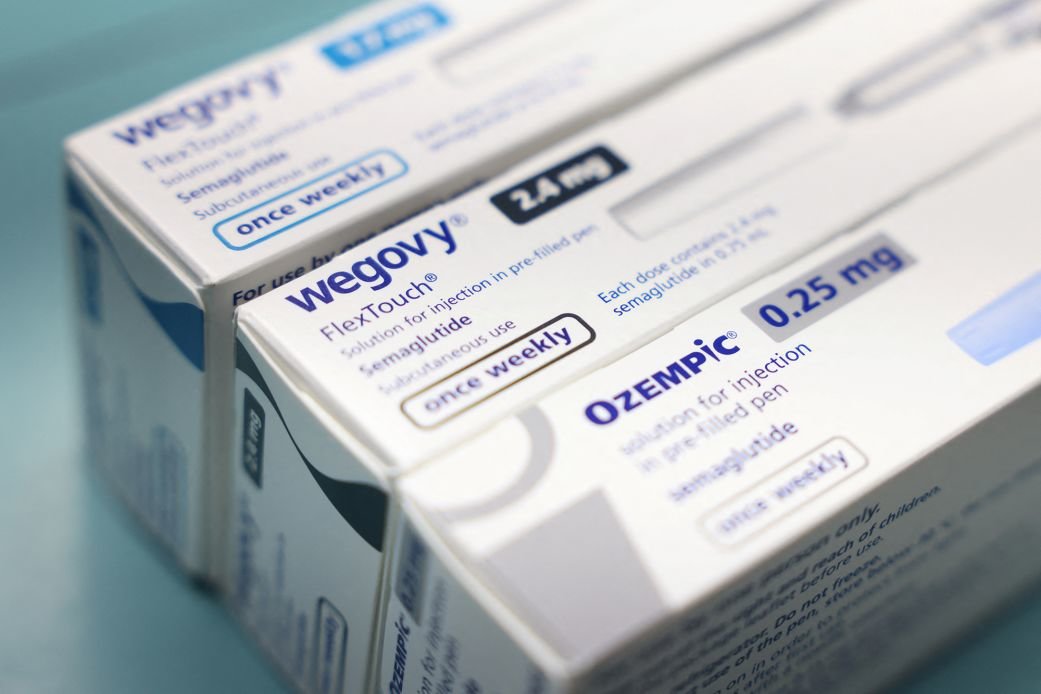
Ozempic and Wegovy contain semaglutide, a drug in the glucagon-like peptide-one, or GLP-one, class.
Ozempic is authorised for type two diabetes, while Wegovy is authorised for weight management in eligible patients.
Eli Lilly's Mounjaro and Zepbound contain tirzepatide and are used, under different authorisations, for diabetes treatment and weight management.
Access, suitability and prescribing rules differ by country and should be decided by a qualified clinician.
The United States is an outlier in allowing direct-to-consumer advertising of prescription medicines, alongside New Zealand.
American viewers regularly see advertising for medicines on television, online and social media, including campaigns for obesity and diabetes treatments.
In Britain, France and most other countries, that type of consumer advertising is prohibited.
The contrast has become commercially important as GLP-one medicines reshape the pharmaceutical market.
The treatments can produce substantial weight loss for some patients, but they are not interchangeable, are not suitable for everyone and can cause side effects.
Their popularity has also generated intense pressure on supply, pricing, telehealth services and regulators responsible for preventing misleading medical claims.
Eli Lilly has run a UK campaign stating that obesity is a complex disease and directing people to an online questionnaire intended to support a discussion with a healthcare professional.
The Advertising Standards Authority has received more than 100 complaints about the campaign, an unusually high number for a single advertisement.
Some complainants argued that Lilly had not made its commercial interest sufficiently clear.
The regulator is assessing those complaints and has not decided whether to open a formal investigation.
That distinction matters: complaints are not findings of a breach, and the campaign remains subject to assessment under rules governing prescription-medicine promotion and advertising transparency.
France has taken a tougher line.
The French medicines regulator, the National Agency for the Safety of Medicines and Health Products, fined Novo Nordisk France about €1.78 million and Eli Lilly France about €108,766 over campaigns it concluded amounted to indirect promotion of prescription-only obesity medicines.
The agency said the campaigns could mislead people in a climate of intense media attention and increasing misuse of GLP-one drugs for aesthetic weight loss.
Novo Nordisk has said it is exploring legal options to challenge the French decision and maintains that its campaigns were disease-awareness and prevention work intended to support safe patient care.
Eli Lilly has said its French communication was consistent with the applicable framework.
The penalties do not establish wrongdoing in other countries, but they illustrate how closely regulators are scrutinising campaigns that stop short of naming a medicine while promoting awareness of the condition it treats.
The commercial rivalry has now reached the courts in the United States.
Novo Nordisk filed a lawsuit in New Jersey accusing Eli Lilly of false and misleading advertising for Mounjaro and Zepbound.
Novo alleges that Lilly used outdated comparative data that made Lilly's drugs appear more effective than the currently available versions of Wegovy and Ozempic.
Eli Lilly rejects that allegation and says its advertising relies on robust clinical data from a head-to-head trial.
The lawsuit has not been decided.
It is part of a broader contest between the two companies over how efficacy, dosing, safety and clinical evidence are presented to patients and healthcare professionals.
The most aggressive promotion is not always coming from the manufacturers.
Online pharmacies and telehealth businesses have built fast-growing weight-loss services around prescription medicines, often using before-and-after imagery, subscription offers and language that can blur the line between promoting a healthcare service and advertising a particular drug.
British advertising regulators have warned that some online sellers operate in a grey area by using visual cues or pricing structures that strongly imply a prescription medicine without naming it.
The concern is not merely legal.
Promotional material can encourage inappropriate use, obscure medical risks or lead consumers to assume that a drug is available without an individual clinical assessment.
US regulators are also tightening enforcement against the marketing of compounded versions of GLP-one medicines.
The Food and Drug Administration has issued warning letters to telehealth companies over claims that it said were false or misleading, including suggestions that compounded products were approved by the agency or equivalent to branded medicines.
Compounded medicines are not approved by the Food and Drug Administration in the same way as branded products.
They are individually prepared formulations that may be used in specific circumstances, rather than mass-produced approved drugs.
Their rapid growth during shortages of branded GLP-one medicines made clear how quickly commercial demand could outrun public understanding of the difference.
The advertising dispute is therefore about more than slogans and billboards.
It concerns who shapes public demand for powerful prescription medicines, how accurately the benefits and risks are explained, and whether disease-awareness campaigns help patients seek appropriate care or become a disguised route to commercial promotion.
For Novo Nordisk, Eli Lilly, online pharmacies and regulators, the next phase will be defined by enforcement decisions, court rulings and the continuing effort to distinguish legitimate health information from advertising designed to drive demand for a specific prescription product.
That tension is especially visible in Britain, where Novo Nordisk and Eli Lilly are competing for patients, prescribers and market share while navigating rules that prohibit advertising prescription-only medicines to consumers.
The companies can discuss obesity, sponsor public-information campaigns and promote their corporate brands.
They cannot directly tell the public to ask for a named prescription drug.
Novo Nordisk, the Danish maker of Ozempic and Wegovy, recently staged a public exhibition in London built around the experience of living with obesity.
The campaign described obesity as a complex chronic condition and encouraged people to seek informed medical conversations.
Novo Nordisk's name was visible, but its products were not promoted.
That is the defining distinction in markets with strict pharmaceutical-advertising rules.
A disease-awareness campaign may inform the public about symptoms, risks and treatment pathways, but it must not become an indirect advertisement for a specific prescription medicine.
The boundary is often difficult to draw, particularly when a company is strongly associated with a small number of highly recognisable products.
Ozempic and Wegovy contain semaglutide, a drug in the glucagon-like peptide-one, or GLP-one, class.
Ozempic is authorised for type two diabetes, while Wegovy is authorised for weight management in eligible patients.
Eli Lilly's Mounjaro and Zepbound contain tirzepatide and are used, under different authorisations, for diabetes treatment and weight management.
Access, suitability and prescribing rules differ by country and should be decided by a qualified clinician.
The United States is an outlier in allowing direct-to-consumer advertising of prescription medicines, alongside New Zealand.
American viewers regularly see advertising for medicines on television, online and social media, including campaigns for obesity and diabetes treatments.
In Britain, France and most other countries, that type of consumer advertising is prohibited.
The contrast has become commercially important as GLP-one medicines reshape the pharmaceutical market.
The treatments can produce substantial weight loss for some patients, but they are not interchangeable, are not suitable for everyone and can cause side effects.
Their popularity has also generated intense pressure on supply, pricing, telehealth services and regulators responsible for preventing misleading medical claims.
Eli Lilly has run a UK campaign stating that obesity is a complex disease and directing people to an online questionnaire intended to support a discussion with a healthcare professional.
The Advertising Standards Authority has received more than 100 complaints about the campaign, an unusually high number for a single advertisement.
Some complainants argued that Lilly had not made its commercial interest sufficiently clear.
The regulator is assessing those complaints and has not decided whether to open a formal investigation.
That distinction matters: complaints are not findings of a breach, and the campaign remains subject to assessment under rules governing prescription-medicine promotion and advertising transparency.
France has taken a tougher line.
The French medicines regulator, the National Agency for the Safety of Medicines and Health Products, fined Novo Nordisk France about €1.78 million and Eli Lilly France about €108,766 over campaigns it concluded amounted to indirect promotion of prescription-only obesity medicines.
The agency said the campaigns could mislead people in a climate of intense media attention and increasing misuse of GLP-one drugs for aesthetic weight loss.
Novo Nordisk has said it is exploring legal options to challenge the French decision and maintains that its campaigns were disease-awareness and prevention work intended to support safe patient care.
Eli Lilly has said its French communication was consistent with the applicable framework.
The penalties do not establish wrongdoing in other countries, but they illustrate how closely regulators are scrutinising campaigns that stop short of naming a medicine while promoting awareness of the condition it treats.
The commercial rivalry has now reached the courts in the United States.
Novo Nordisk filed a lawsuit in New Jersey accusing Eli Lilly of false and misleading advertising for Mounjaro and Zepbound.
Novo alleges that Lilly used outdated comparative data that made Lilly's drugs appear more effective than the currently available versions of Wegovy and Ozempic.
Eli Lilly rejects that allegation and says its advertising relies on robust clinical data from a head-to-head trial.
The lawsuit has not been decided.
It is part of a broader contest between the two companies over how efficacy, dosing, safety and clinical evidence are presented to patients and healthcare professionals.
The most aggressive promotion is not always coming from the manufacturers.
Online pharmacies and telehealth businesses have built fast-growing weight-loss services around prescription medicines, often using before-and-after imagery, subscription offers and language that can blur the line between promoting a healthcare service and advertising a particular drug.
British advertising regulators have warned that some online sellers operate in a grey area by using visual cues or pricing structures that strongly imply a prescription medicine without naming it.
The concern is not merely legal.
Promotional material can encourage inappropriate use, obscure medical risks or lead consumers to assume that a drug is available without an individual clinical assessment.
US regulators are also tightening enforcement against the marketing of compounded versions of GLP-one medicines.
The Food and Drug Administration has issued warning letters to telehealth companies over claims that it said were false or misleading, including suggestions that compounded products were approved by the agency or equivalent to branded medicines.
Compounded medicines are not approved by the Food and Drug Administration in the same way as branded products.
They are individually prepared formulations that may be used in specific circumstances, rather than mass-produced approved drugs.
Their rapid growth during shortages of branded GLP-one medicines made clear how quickly commercial demand could outrun public understanding of the difference.
The advertising dispute is therefore about more than slogans and billboards.
It concerns who shapes public demand for powerful prescription medicines, how accurately the benefits and risks are explained, and whether disease-awareness campaigns help patients seek appropriate care or become a disguised route to commercial promotion.
For Novo Nordisk, Eli Lilly, online pharmacies and regulators, the next phase will be defined by enforcement decisions, court rulings and the continuing effort to distinguish legitimate health information from advertising designed to drive demand for a specific prescription product.