Focus on the BIG picture.
Wednesday, Apr 29, 2026
Outside the box.

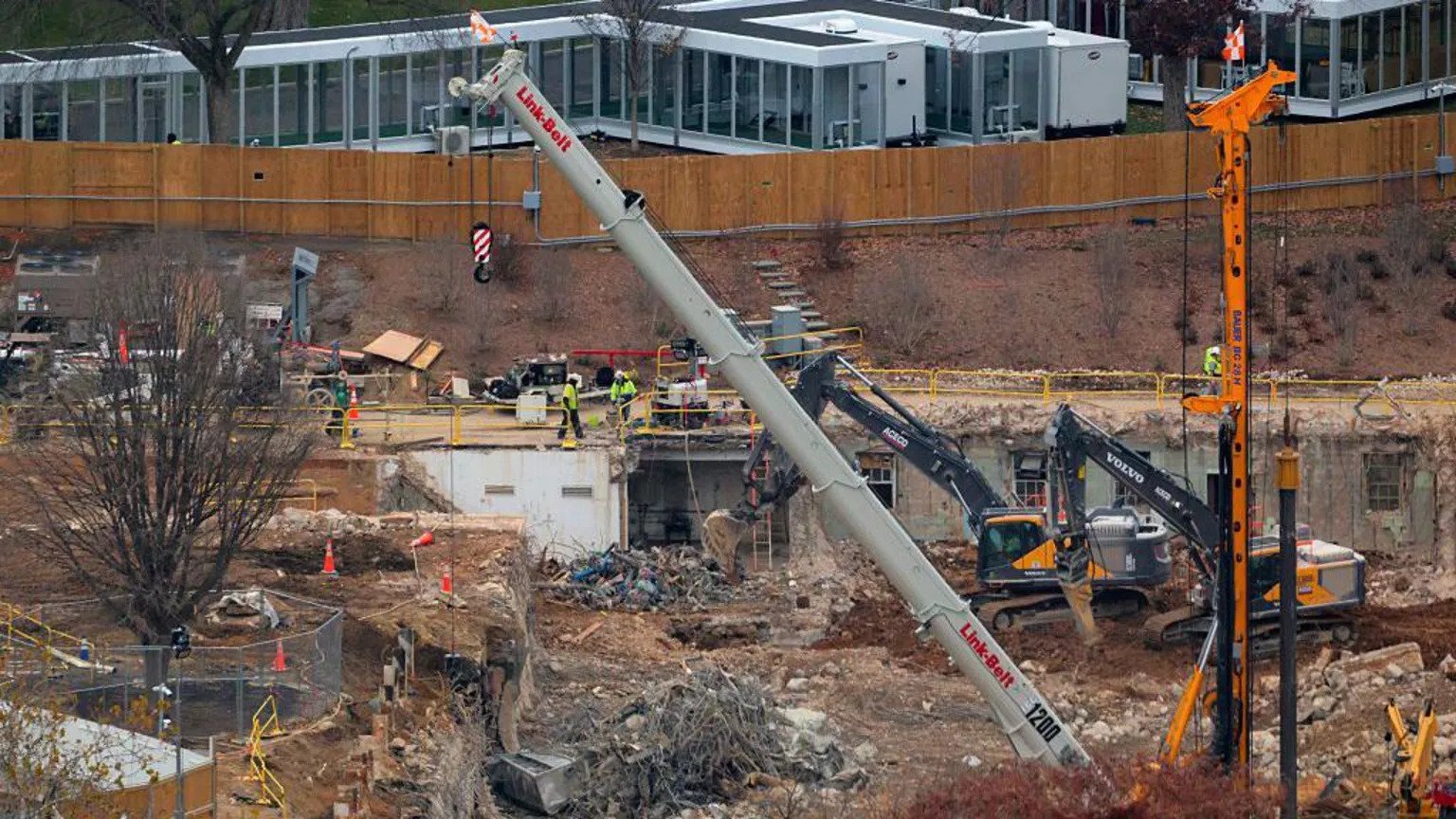
DOJ Cites Washington Shooting in Legal Clash Over White House Ballroom Construction
A federal lawsuit tied to security and construction authority at the White House intensifies after prosecutors reference a recent Washington shooting to argue for expanded federal control
SYSTEM-DRIVEN: The central driver of this story is a legal and institutional dispute over federal authority involving the U.S. Department of Justice, security policy, and construction oversight connected to White House facilities.
The U.S. Department of Justice has cited a recent shooting incident in Washington, D.C., as part of its legal argument in a lawsuit concerning authority over a proposed White House ballroom project.
The case reflects a broader conflict over how security risks, executive infrastructure projects, and federal oversight powers intersect in the immediate vicinity of the White House complex.
What is confirmed is that federal prosecutors have incorporated the Washington dinner shooting into court filings to support their position that heightened security considerations justify expanded federal control over decisions related to construction and access around White House grounds.
The shooting itself, which occurred during a public event in Washington, is being used as evidence of ongoing security vulnerability in high-profile areas of the capital.
The legal dispute centers on jurisdiction and decision-making authority.
At issue is whether executive branch construction projects—particularly those affecting sensitive security zones—can proceed under existing administrative approvals or require additional federal review due to national security implications.
The ballroom project referenced in the case is described in filings as part of a broader set of planned White House infrastructure modifications.
The Department of Justice argues that recent violent incidents in the city demonstrate the need for stricter oversight and more centralized approval mechanisms for any structural changes near federal executive buildings.
The inclusion of the shooting in legal arguments is intended to establish a pattern of elevated risk rather than treating the event as isolated.
Opponents in the case are challenging the expansion of federal authority, arguing that the legal justification being advanced could set a precedent for broadening executive control over construction and administrative decisions beyond traditional limits.
They contend that linking unrelated security incidents to infrastructure disputes risks stretching legal standards beyond their intended scope.
The Washington shooting itself remains a separate criminal matter, but its incorporation into civil litigation illustrates how security incidents are increasingly being used as legal leverage in policy disputes involving federal property and executive authority.
The broader implication of the case extends beyond the specific ballroom project.
It raises questions about how far security-based reasoning can be used to justify changes in administrative oversight, particularly in areas where physical infrastructure, executive authority, and public safety intersect.
As the case proceeds, the court’s decision will determine whether recent security incidents can be formally used to expand federal control over White House-related construction decisions, setting a potential precedent for how risk events influence administrative law in high-security federal zones.
The U.S. Department of Justice has cited a recent shooting incident in Washington, D.C., as part of its legal argument in a lawsuit concerning authority over a proposed White House ballroom project.
The case reflects a broader conflict over how security risks, executive infrastructure projects, and federal oversight powers intersect in the immediate vicinity of the White House complex.
What is confirmed is that federal prosecutors have incorporated the Washington dinner shooting into court filings to support their position that heightened security considerations justify expanded federal control over decisions related to construction and access around White House grounds.
The shooting itself, which occurred during a public event in Washington, is being used as evidence of ongoing security vulnerability in high-profile areas of the capital.
The legal dispute centers on jurisdiction and decision-making authority.
At issue is whether executive branch construction projects—particularly those affecting sensitive security zones—can proceed under existing administrative approvals or require additional federal review due to national security implications.
The ballroom project referenced in the case is described in filings as part of a broader set of planned White House infrastructure modifications.
The Department of Justice argues that recent violent incidents in the city demonstrate the need for stricter oversight and more centralized approval mechanisms for any structural changes near federal executive buildings.
The inclusion of the shooting in legal arguments is intended to establish a pattern of elevated risk rather than treating the event as isolated.
Opponents in the case are challenging the expansion of federal authority, arguing that the legal justification being advanced could set a precedent for broadening executive control over construction and administrative decisions beyond traditional limits.
They contend that linking unrelated security incidents to infrastructure disputes risks stretching legal standards beyond their intended scope.
The Washington shooting itself remains a separate criminal matter, but its incorporation into civil litigation illustrates how security incidents are increasingly being used as legal leverage in policy disputes involving federal property and executive authority.
The broader implication of the case extends beyond the specific ballroom project.
It raises questions about how far security-based reasoning can be used to justify changes in administrative oversight, particularly in areas where physical infrastructure, executive authority, and public safety intersect.
As the case proceeds, the court’s decision will determine whether recent security incidents can be formally used to expand federal control over White House-related construction decisions, setting a potential precedent for how risk events influence administrative law in high-security federal zones.