
Focus on the BIG picture.
Sunday, Oct 25, 2026
Outside the box.

Federal Judge Signals Deep Skepticism of Trump Administration’s Authority in White House Ballroom Lawsuit
Legal challenge intensifies as judge questions whether President has statutory power to proceed without congressional approval
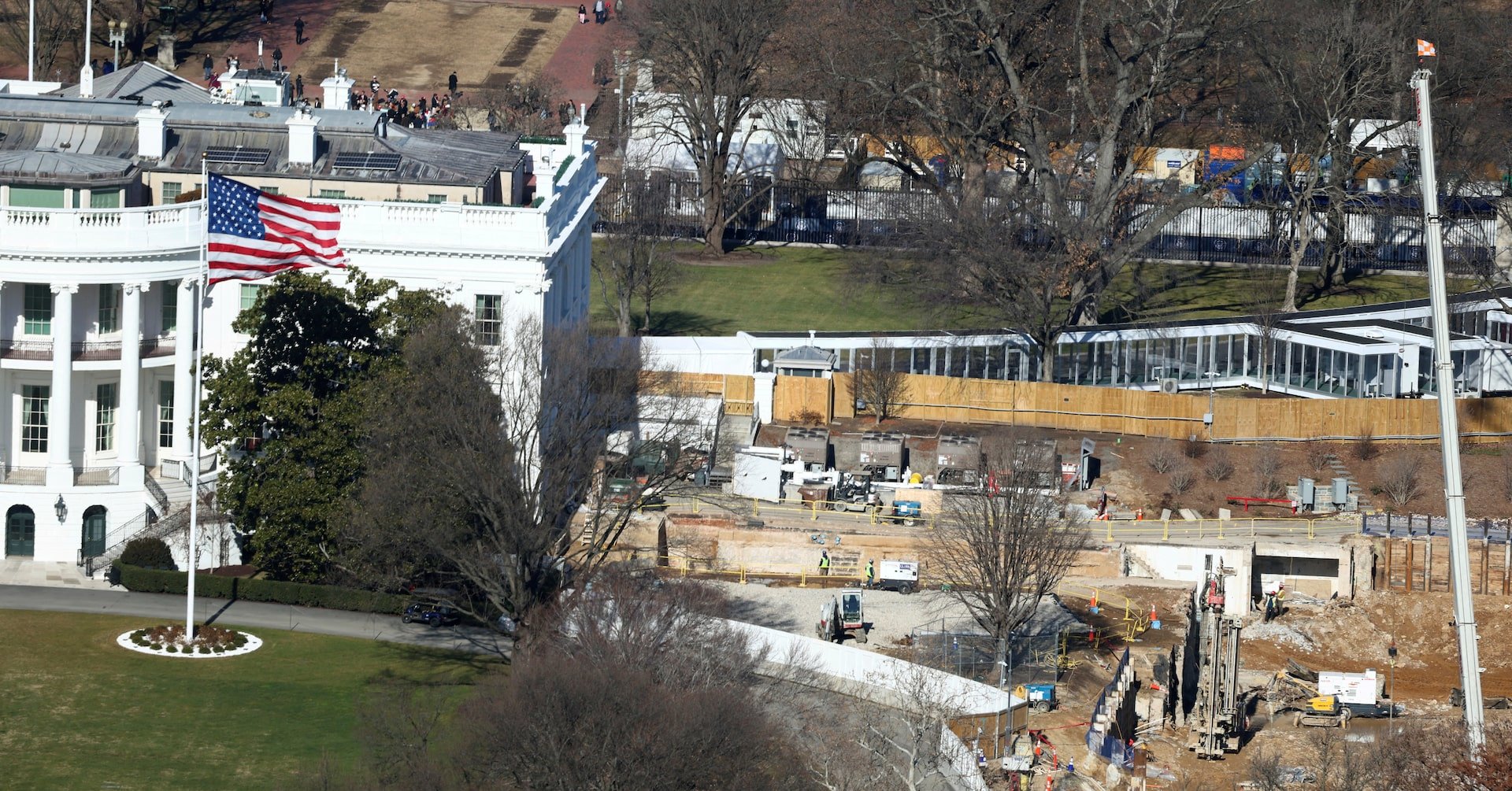
A federal judge in Washington appeared markedly sceptical this week of the Trump administration’s legal arguments defending construction of a large ballroom at the White House, raising significant questions about executive authority and statutory constraints in a lawsuit brought by a historic preservation group.
At a hearing in U.S. District Court for the District of Columbia, Judge Richard Leon questioned whether President Donald Trump has the statutory authority to demolish the East Wing and build a nearly ninety-thousand-square-foot ballroom on White House grounds without explicit congressional approval, framing the administration’s interpretation of its powers as overly broad and potentially an “end-run” around legislative oversight.
The National Trust for Historic Preservation, which filed the lawsuit in December, argues that the project has proceeded without legally required reviews, public input and authorisations from federal bodies and Congress and that demolition and construction activity risks irreversibly altering the historic executive mansion.
Government lawyers contended that the president’s existing authority to fund “repair, alteration and improvement” of the executive residence encompasses the ballroom project and defended the use of private donations to finance the work, saying the approach avoids taxpayer expenditure.
Judge Leon repeatedly pressed Justice Department attorneys on the scope of that authority, dismissing comparisons to smaller past renovations and questioning reliance on broad maintenance statutes to justify a multihundred-million-dollar expansion.
He also appeared unconvinced by the argument that national security concerns require uninterrupted construction, noting that a preliminary decision on a request for a preliminary injunction could come in February as the parties continue briefing and the court weighs competing interpretations of federal law and constitutional oversight.
The outcome of this dispute could have lasting implications for the limits of executive power and historic preservation protocols at the nation’s most symbolic federal property.
At a hearing in U.S. District Court for the District of Columbia, Judge Richard Leon questioned whether President Donald Trump has the statutory authority to demolish the East Wing and build a nearly ninety-thousand-square-foot ballroom on White House grounds without explicit congressional approval, framing the administration’s interpretation of its powers as overly broad and potentially an “end-run” around legislative oversight.
The National Trust for Historic Preservation, which filed the lawsuit in December, argues that the project has proceeded without legally required reviews, public input and authorisations from federal bodies and Congress and that demolition and construction activity risks irreversibly altering the historic executive mansion.
Government lawyers contended that the president’s existing authority to fund “repair, alteration and improvement” of the executive residence encompasses the ballroom project and defended the use of private donations to finance the work, saying the approach avoids taxpayer expenditure.
Judge Leon repeatedly pressed Justice Department attorneys on the scope of that authority, dismissing comparisons to smaller past renovations and questioning reliance on broad maintenance statutes to justify a multihundred-million-dollar expansion.
He also appeared unconvinced by the argument that national security concerns require uninterrupted construction, noting that a preliminary decision on a request for a preliminary injunction could come in February as the parties continue briefing and the court weighs competing interpretations of federal law and constitutional oversight.
The outcome of this dispute could have lasting implications for the limits of executive power and historic preservation protocols at the nation’s most symbolic federal property.