
Focus on the BIG picture.
Wednesday, Jun 24, 2026
Outside the box.

Greenland’s Leaders Reject Trump’s Push for U.S. Control, Asserting Self-Determination
Political chiefs in Greenland unite to dismiss American acquisition talk and insist the island’s future belongs to its people
Greenland’s political leadership has delivered a firm repudiation of U.S. President Donald Trump’s renewed push for American control of the Arctic island, stressing that the territory’s future must be decided solely by its own people.
In a joint statement issued late Friday, the leaders of all five parties in Greenland’s parliament declared that they do not want to become part of the United States or Denmark, but remain Greenlanders with the right to determine their own destiny.
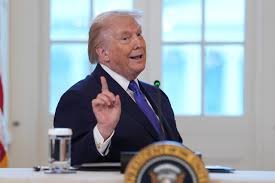
President Trump has reiterated his desire to strike a deal to acquire Greenland, a self-governing region of NATO ally Denmark, citing strategic considerations and warning that rival powers such as Russia or China could seek influence if the U.S. does not act.
He also suggested that if a diplomatic path fails, other means might be pursued.
In response, Greenland’s leaders—led by Prime Minister Jens-Frederik Nielsen and party heads including Pele Broberg, Múte B. Egede, Aleqa Hammond and Aqqalu C. Jerimiassen—emphasised that any decision about the island’s status must be made in dialogue with the Greenlandic people and in accordance with international law.
They criticised what they described as contempt for their country and reaffirmed that no external power has the right to interfere in their sovereign choices.
Denmark’s government, which retains responsibility for the defence and foreign affairs of the territory, has also rebuffed U.S. annexation talk, with its prime minister warning that such a move could jeopardise the North Atlantic Treaty Organization.
Greenland’s parliament announced plans to convene an extraordinary session to discuss the recent developments and reinforce the island’s stance on autonomy and international respect.
Public sentiment among Greenlanders overwhelmingly opposes becoming part of the United States, with polls showing the vast majority prefer self-determination and eventual independence rather than external control.
The leadership’s unified rejection underscores deep resistance to foreign pressure and reaffirms the island’s commitment to charting its own political future.
In a joint statement issued late Friday, the leaders of all five parties in Greenland’s parliament declared that they do not want to become part of the United States or Denmark, but remain Greenlanders with the right to determine their own destiny.
President Trump has reiterated his desire to strike a deal to acquire Greenland, a self-governing region of NATO ally Denmark, citing strategic considerations and warning that rival powers such as Russia or China could seek influence if the U.S. does not act.
He also suggested that if a diplomatic path fails, other means might be pursued.
In response, Greenland’s leaders—led by Prime Minister Jens-Frederik Nielsen and party heads including Pele Broberg, Múte B. Egede, Aleqa Hammond and Aqqalu C. Jerimiassen—emphasised that any decision about the island’s status must be made in dialogue with the Greenlandic people and in accordance with international law.
They criticised what they described as contempt for their country and reaffirmed that no external power has the right to interfere in their sovereign choices.
Denmark’s government, which retains responsibility for the defence and foreign affairs of the territory, has also rebuffed U.S. annexation talk, with its prime minister warning that such a move could jeopardise the North Atlantic Treaty Organization.
Greenland’s parliament announced plans to convene an extraordinary session to discuss the recent developments and reinforce the island’s stance on autonomy and international respect.
Public sentiment among Greenlanders overwhelmingly opposes becoming part of the United States, with polls showing the vast majority prefer self-determination and eventual independence rather than external control.
The leadership’s unified rejection underscores deep resistance to foreign pressure and reaffirms the island’s commitment to charting its own political future.