Focus on the BIG picture.
Thursday, May 14, 2026
Outside the box.

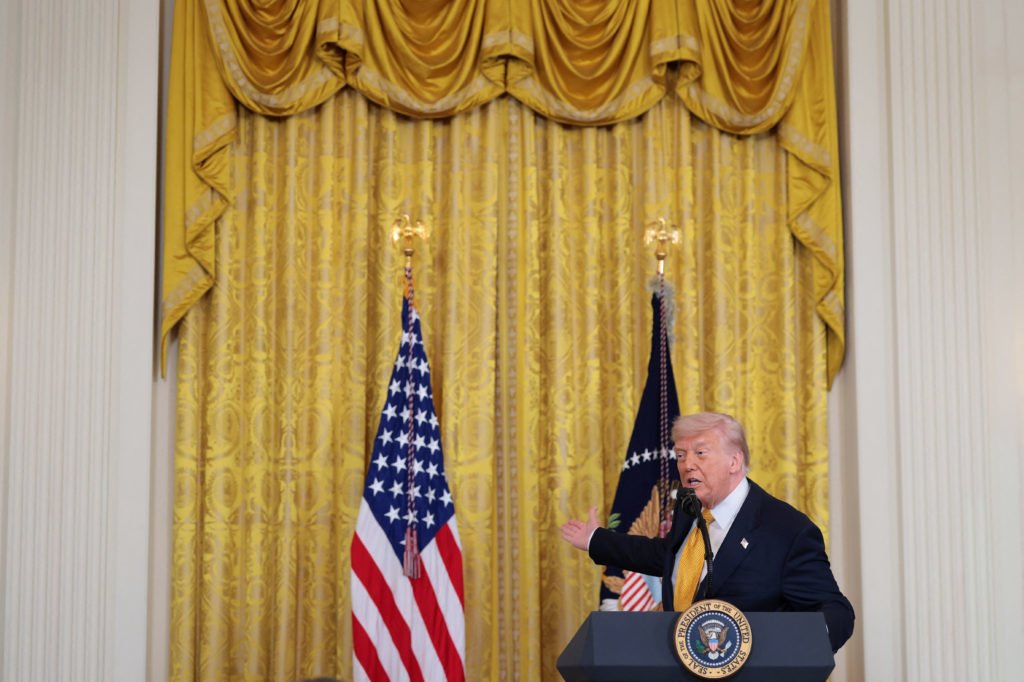
Inside the Billion-Dollar Debate Over a Proposed White House Ballroom Expansion
A dispute over private funding, federal oversight, and presidential legacy has turned a proposed ballroom project into a broader fight over transparency and influence at the White House.
SYSTEM-DRIVEN tensions over federal building projects, executive authority, and private donations are at the center of a growing debate about a proposed billion-dollar ballroom expansion at the White House.
The discussion has drawn attention not only for the scale of the project but for the structure of the funding arrangements described in the key paragraph under scrutiny.
What is confirmed is that the proposal involves constructing a large, formal event space within the White House complex intended to host state functions, diplomatic receptions, and high-capacity ceremonial events that currently strain existing facilities.
The project is being presented as an expansion of presidential event infrastructure rather than a structural alteration of the historic Executive Residence itself.
The controversial element lies in the financing model outlined in the proposal.
The so-called billion-dollar paragraph refers to a funding structure that combines private contributions from donors with coordination through official federal channels.
The arrangement raises questions about how privately raised funds would be accepted, recorded, and integrated into a project located within a federal landmark that is subject to strict preservation and ethics rules.
Under existing U.S. law and practice, construction and renovation projects at the White House are typically funded through congressional appropriations or through the White House Historical Association for specific restoration efforts.
The introduction of large-scale private funding for a structural expansion of this magnitude would represent a departure from standard precedent, even if legally structured to comply with ethics and procurement rules.
The key issue driving scrutiny is the potential for donor influence over a highly symbolic federal space.
Critics argue that accepting large private contributions for a White House expansion could create perceptions of access or favor, even if no explicit quid pro quo exists.
Supporters counter that private funding could reduce taxpayer burden and accelerate long-delayed improvements to presidential facilities.
The scale of the proposed ballroom has also become a focal point.
At an estimated cost approaching one billion dollars, the project would rank among the most expensive single-structure additions ever associated with the White House complex.
The justification offered is increased capacity for state functions, which have increasingly outgrown existing rooms during major diplomatic gatherings and international summits.
Architectural and preservation constraints add another layer of complexity.
Any expansion near the White House must comply with strict historical preservation guidelines enforced through multiple federal review bodies.
These constraints limit both design flexibility and construction footprint, meaning the proposal must navigate both political and architectural approval processes simultaneously.
The debate has also intensified because of the symbolic nature of the White House itself.
As both a residence and a national historic site, changes to its structure carry political significance beyond their functional purpose.
This makes financing arrangements particularly sensitive, especially when private donors are involved in projects associated with the executive branch.
The proposal remains under review, with discussions focused on how to structure funding in a way that avoids conflicts of interest while still enabling large-scale infrastructure development.
The outcome will determine whether future White House renovation efforts continue to rely primarily on public funding or move toward hybrid public-private models for major expansions.
The decision on the ballroom project is expected to set a precedent for how future administrations approach large-scale modifications to federal executive facilities, particularly those tied to ceremonial and diplomatic functions that increasingly shape modern presidential operations.
The discussion has drawn attention not only for the scale of the project but for the structure of the funding arrangements described in the key paragraph under scrutiny.
What is confirmed is that the proposal involves constructing a large, formal event space within the White House complex intended to host state functions, diplomatic receptions, and high-capacity ceremonial events that currently strain existing facilities.
The project is being presented as an expansion of presidential event infrastructure rather than a structural alteration of the historic Executive Residence itself.
The controversial element lies in the financing model outlined in the proposal.
The so-called billion-dollar paragraph refers to a funding structure that combines private contributions from donors with coordination through official federal channels.
The arrangement raises questions about how privately raised funds would be accepted, recorded, and integrated into a project located within a federal landmark that is subject to strict preservation and ethics rules.
Under existing U.S. law and practice, construction and renovation projects at the White House are typically funded through congressional appropriations or through the White House Historical Association for specific restoration efforts.
The introduction of large-scale private funding for a structural expansion of this magnitude would represent a departure from standard precedent, even if legally structured to comply with ethics and procurement rules.
The key issue driving scrutiny is the potential for donor influence over a highly symbolic federal space.
Critics argue that accepting large private contributions for a White House expansion could create perceptions of access or favor, even if no explicit quid pro quo exists.
Supporters counter that private funding could reduce taxpayer burden and accelerate long-delayed improvements to presidential facilities.
The scale of the proposed ballroom has also become a focal point.
At an estimated cost approaching one billion dollars, the project would rank among the most expensive single-structure additions ever associated with the White House complex.
The justification offered is increased capacity for state functions, which have increasingly outgrown existing rooms during major diplomatic gatherings and international summits.
Architectural and preservation constraints add another layer of complexity.
Any expansion near the White House must comply with strict historical preservation guidelines enforced through multiple federal review bodies.
These constraints limit both design flexibility and construction footprint, meaning the proposal must navigate both political and architectural approval processes simultaneously.
The debate has also intensified because of the symbolic nature of the White House itself.
As both a residence and a national historic site, changes to its structure carry political significance beyond their functional purpose.
This makes financing arrangements particularly sensitive, especially when private donors are involved in projects associated with the executive branch.
The proposal remains under review, with discussions focused on how to structure funding in a way that avoids conflicts of interest while still enabling large-scale infrastructure development.
The outcome will determine whether future White House renovation efforts continue to rely primarily on public funding or move toward hybrid public-private models for major expansions.
The decision on the ballroom project is expected to set a precedent for how future administrations approach large-scale modifications to federal executive facilities, particularly those tied to ceremonial and diplomatic functions that increasingly shape modern presidential operations.