Focus on the BIG picture.
Thursday, May 14, 2026
Outside the box.

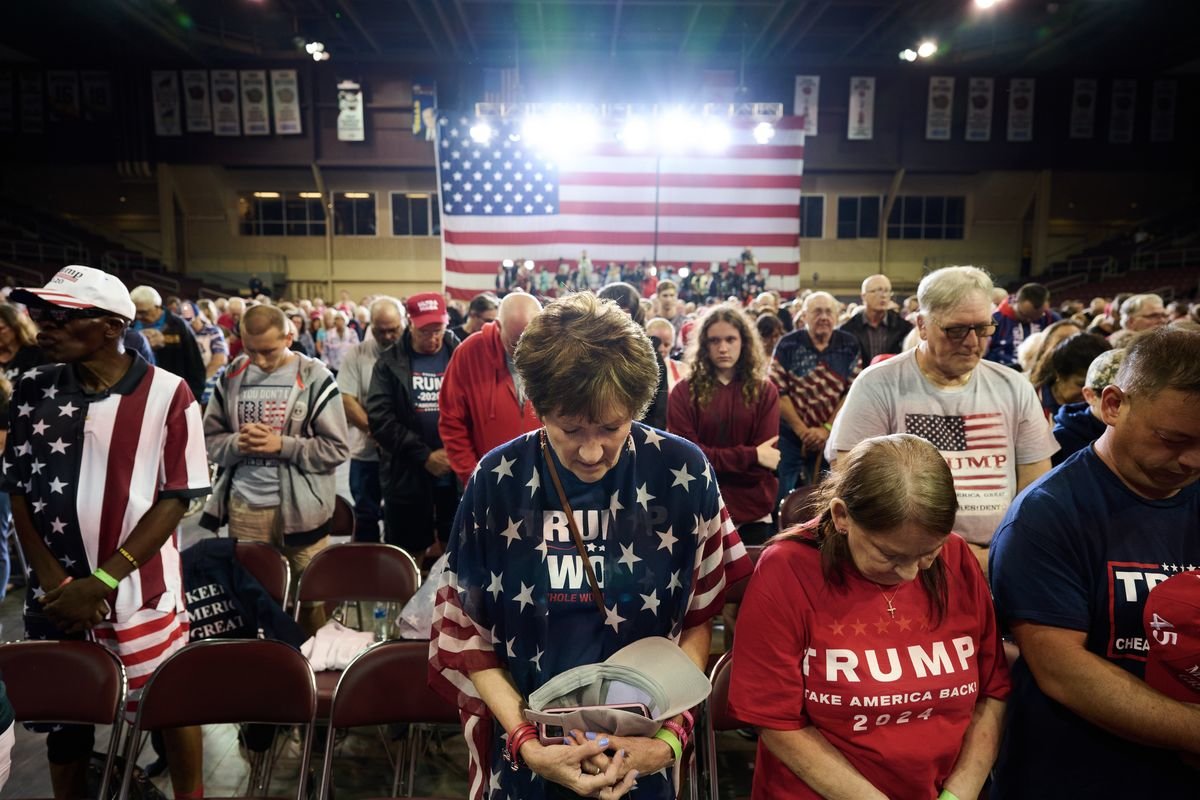
White House Plans Extended Prayer Event Highlighting Christian Heritage Debate in U.S. Politics
A proposed nine-hour religious gathering at the White House has intensified discussion over the role of faith in government and the constitutional boundaries between church and state.
ACTOR-DRIVEN political messaging around the White House has taken a new turn with plans for a large-scale, nine-hour prayer-focused event emphasizing the Christian foundations of the United States, a development that is already generating debate over constitutional norms and the visibility of religion in federal institutions.
What is confirmed in the framing of the event is that it is being organized as a public or semi-public gathering centered on prayer and religious observance, with explicit reference to the country’s Christian heritage.
The scale and duration of the program distinguish it from typical White House faith-related receptions or short ceremonial observances, placing it in a more extended and ideologically visible category of event.
The key issue emerging from the announcement is not the existence of religious expression in political spaces, which has long been part of U.S. public life, but the intensity and institutional framing of the event.
The White House has historically hosted faith leaders, prayer breakfasts, and interfaith gatherings, often emphasizing religious pluralism rather than a single tradition.
A program explicitly centered on one religious identity over several hours raises renewed questions about how the federal executive branch navigates constitutional separation principles.
Supporters of such initiatives typically argue that acknowledging the country’s historical religious influences is consistent with cultural tradition and public expression of faith.
They often point to longstanding national rituals, including congressional prayer services and the National Prayer Breakfast, as precedent for integrating religion into civic life.
Critics, by contrast, tend to focus on the constitutional implications of elevating one religious tradition within a federal executive setting, particularly in a country that formally protects freedom of religion and prohibits the establishment of an official state religion.
The concern is not simply symbolic but institutional: whether prolonged, explicitly framed religious programming at the White House signals preferential alignment rather than neutral accommodation.
The broader context includes a continuing increase in politically visible religion in U.S. governance debates, particularly around cultural identity, education policy, and judicial interpretations of religious liberty.
These tensions have grown more pronounced in recent years as political coalitions have increasingly aligned religious identity with policy positions.
The practical outcome of the planned event is likely to be measured less by immediate policy change and more by its symbolic impact on public discourse.
It reinforces the White House as a stage not only for governance but also for cultural and ideological signaling, with implications for how future administrations balance tradition, pluralism, and constitutional restraint.
What is confirmed in the framing of the event is that it is being organized as a public or semi-public gathering centered on prayer and religious observance, with explicit reference to the country’s Christian heritage.
The scale and duration of the program distinguish it from typical White House faith-related receptions or short ceremonial observances, placing it in a more extended and ideologically visible category of event.
The key issue emerging from the announcement is not the existence of religious expression in political spaces, which has long been part of U.S. public life, but the intensity and institutional framing of the event.
The White House has historically hosted faith leaders, prayer breakfasts, and interfaith gatherings, often emphasizing religious pluralism rather than a single tradition.
A program explicitly centered on one religious identity over several hours raises renewed questions about how the federal executive branch navigates constitutional separation principles.
Supporters of such initiatives typically argue that acknowledging the country’s historical religious influences is consistent with cultural tradition and public expression of faith.
They often point to longstanding national rituals, including congressional prayer services and the National Prayer Breakfast, as precedent for integrating religion into civic life.
Critics, by contrast, tend to focus on the constitutional implications of elevating one religious tradition within a federal executive setting, particularly in a country that formally protects freedom of religion and prohibits the establishment of an official state religion.
The concern is not simply symbolic but institutional: whether prolonged, explicitly framed religious programming at the White House signals preferential alignment rather than neutral accommodation.
The broader context includes a continuing increase in politically visible religion in U.S. governance debates, particularly around cultural identity, education policy, and judicial interpretations of religious liberty.
These tensions have grown more pronounced in recent years as political coalitions have increasingly aligned religious identity with policy positions.
The practical outcome of the planned event is likely to be measured less by immediate policy change and more by its symbolic impact on public discourse.
It reinforces the White House as a stage not only for governance but also for cultural and ideological signaling, with implications for how future administrations balance tradition, pluralism, and constitutional restraint.