Focus on the BIG picture.
Wednesday, Apr 22, 2026
Outside the box.

Secret White House ballroom fundraising contract exposes anonymity clause and donor protections
Recently disclosed agreement shows how hundreds of millions in private donations for a major White House ballroom project were structured to shield donor identities and limit conflict-of-interest oversight
A newly disclosed contract governing the financing of a major White House ballroom project reveals that the Trump administration arranged for hundreds of millions of dollars in private donations under terms that allow contributors to remain anonymous while significantly limiting standard ethics and conflict-of-interest safeguards.
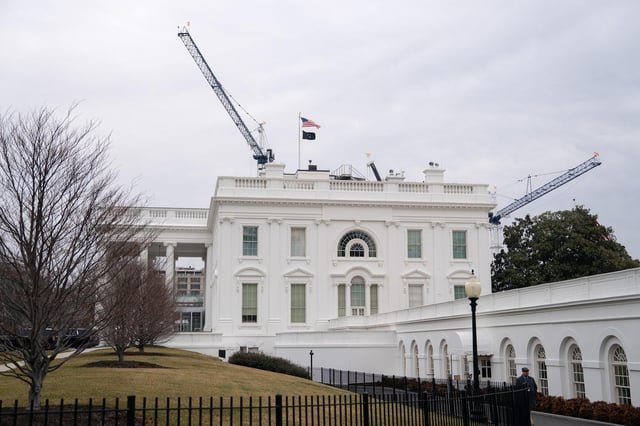
The agreement, signed in early October shortly before demolition work began on the East Wing of the White House, establishes the legal framework for a roughly $400 million construction project funded entirely through private contributions rather than public money.
The document was released only after a legal challenge by a government watchdog group compelled disclosure, shedding light on arrangements that had previously been withheld from public view.
Under the terms of the contract, donors are permitted to keep their identities confidential, a provision that applies even as many contributors are understood to be major corporations with active business before the federal government.
The White House itself is also excluded from key conflict-of-interest review mechanisms typically applied in comparable federal fundraising or construction partnerships, raising questions about transparency in the management of such a high-profile government-linked project.
The Trust for the National Mall and the National Park Service are designated as the primary entities responsible for receiving and administering the funds.
However, the agreement limits disclosure obligations and does not require the publication of a full donor list or total funds raised, with officials declining to provide comprehensive financial breakdowns.
Public reporting indicates that participating donors include large corporate entities operating in sectors such as technology and defense.
The release of the contract has intensified scrutiny of the fundraising structure, with critics arguing that the anonymity provisions reduce public visibility into who is financing a project of national symbolic importance.
Supporters of the arrangement, however, emphasize that the use of private funding avoids direct taxpayer expenditure and enables rapid delivery of a large-scale construction initiative at the White House complex.
Legal and political challenges surrounding the project continue in parallel.
A federal court has imposed restrictions on above-ground construction pending congressional review, while allowing limited preparatory work to proceed under national security considerations.
An appeals court has since permitted broader continuation of construction while litigation proceeds, keeping the project on track as legal proceedings advance.
Lawmakers have also begun proposing measures aimed at tightening disclosure requirements for privately funded federal projects, citing concerns over transparency and potential influence.
The dispute over the ballroom contract has thus become a broader test case for how privately financed infrastructure tied to the executive branch should be regulated in the future.
The agreement, signed in early October shortly before demolition work began on the East Wing of the White House, establishes the legal framework for a roughly $400 million construction project funded entirely through private contributions rather than public money.
The document was released only after a legal challenge by a government watchdog group compelled disclosure, shedding light on arrangements that had previously been withheld from public view.
Under the terms of the contract, donors are permitted to keep their identities confidential, a provision that applies even as many contributors are understood to be major corporations with active business before the federal government.
The White House itself is also excluded from key conflict-of-interest review mechanisms typically applied in comparable federal fundraising or construction partnerships, raising questions about transparency in the management of such a high-profile government-linked project.
The Trust for the National Mall and the National Park Service are designated as the primary entities responsible for receiving and administering the funds.
However, the agreement limits disclosure obligations and does not require the publication of a full donor list or total funds raised, with officials declining to provide comprehensive financial breakdowns.
Public reporting indicates that participating donors include large corporate entities operating in sectors such as technology and defense.
The release of the contract has intensified scrutiny of the fundraising structure, with critics arguing that the anonymity provisions reduce public visibility into who is financing a project of national symbolic importance.
Supporters of the arrangement, however, emphasize that the use of private funding avoids direct taxpayer expenditure and enables rapid delivery of a large-scale construction initiative at the White House complex.
Legal and political challenges surrounding the project continue in parallel.
A federal court has imposed restrictions on above-ground construction pending congressional review, while allowing limited preparatory work to proceed under national security considerations.
An appeals court has since permitted broader continuation of construction while litigation proceeds, keeping the project on track as legal proceedings advance.
Lawmakers have also begun proposing measures aimed at tightening disclosure requirements for privately funded federal projects, citing concerns over transparency and potential influence.
The dispute over the ballroom contract has thus become a broader test case for how privately financed infrastructure tied to the executive branch should be regulated in the future.