Focus on the BIG picture.
Monday, Aug 24, 2026
Outside the box.

Trump Proposes $1 Billion Fee for Permanent Membership on New Board of Peace
Draft charter for U.S.-led international organisation suggests hefty contribution secures lasting influence over post-conflict reconstruction efforts
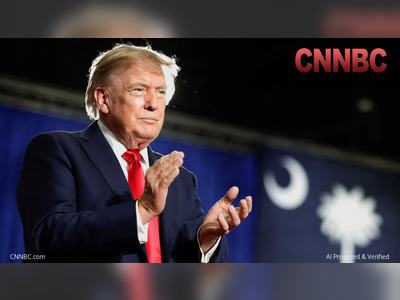
President Donald Trump has outlined plans for a newly established international body, the Board of Peace, that would oversee reconstruction and stability efforts following the Gaza conflict and potentially broader peace initiatives, with nations being asked to contribute at least one billion US dollars for permanent membership.
The draft charter circulating among world capitals — viewed by multiple media outlets and officials — sets a three-year membership term for participating states, renewable only for those that make the substantial financial contribution within the first year of the organisation’s establishment.
Under the proposal, Trump would serve as the board’s inaugural chairman with authority to oversee invitations, membership terms and the interpretation of the charter.
The Board of Peace was mandated by United Nations Security Council Resolution 2803 in November 2025 to support administration, reconstruction and economic recovery in the Gaza Strip, and Trump formally announced its establishment in January 2026. Its mission, as laid out in the draft charter, is to promote stability, restore lawful governance and secure enduring peace in areas impacted or threatened by conflict.
While the body’s initial focus is tied to Gaza, the language in the charter broadens its remit to general conflict-affected regions and seeks to create “a coalition of willing states committed to practical cooperation and effective action.”
Permanent membership on the board guarantees that a country’s representatives will not be limited to the standard three-year term, effectively giving them a lasting seat and influence over agenda-setting and strategic decisions.
Nations that do not meet the contribution threshold can still participate but only for the renewable three-year period.
The United States would lead the board, and the charter reportedly grants the chairman significant control over membership approvals and veto power over decisions, prompting debate among global diplomats.
Some prospective invitees, including India, Canada and several European and Middle Eastern states, are reviewing the terms, while others have expressed caution about the proposal’s financial requirements and governance structure.
White House officials have emphasised that the contributions are voluntary and not a condition for initial participation, framing the one-billion-dollar threshold as a demonstration of deep commitment to peace, security and shared prosperity.
They also stress that funds raised would be directed toward the practical execution of the board’s mandate, particularly the reconstruction and long-term stability of the Gaza Strip, rather than administrative overhead.
As governments digest the charter details, the initiative highlights Trump’s eagerness to lead an alternative model of international cooperation, one that he argues could be more agile and results-oriented than existing multilateral institutions.
The draft charter circulating among world capitals — viewed by multiple media outlets and officials — sets a three-year membership term for participating states, renewable only for those that make the substantial financial contribution within the first year of the organisation’s establishment.
Under the proposal, Trump would serve as the board’s inaugural chairman with authority to oversee invitations, membership terms and the interpretation of the charter.
The Board of Peace was mandated by United Nations Security Council Resolution 2803 in November 2025 to support administration, reconstruction and economic recovery in the Gaza Strip, and Trump formally announced its establishment in January 2026. Its mission, as laid out in the draft charter, is to promote stability, restore lawful governance and secure enduring peace in areas impacted or threatened by conflict.
While the body’s initial focus is tied to Gaza, the language in the charter broadens its remit to general conflict-affected regions and seeks to create “a coalition of willing states committed to practical cooperation and effective action.”
Permanent membership on the board guarantees that a country’s representatives will not be limited to the standard three-year term, effectively giving them a lasting seat and influence over agenda-setting and strategic decisions.
Nations that do not meet the contribution threshold can still participate but only for the renewable three-year period.
The United States would lead the board, and the charter reportedly grants the chairman significant control over membership approvals and veto power over decisions, prompting debate among global diplomats.
Some prospective invitees, including India, Canada and several European and Middle Eastern states, are reviewing the terms, while others have expressed caution about the proposal’s financial requirements and governance structure.
White House officials have emphasised that the contributions are voluntary and not a condition for initial participation, framing the one-billion-dollar threshold as a demonstration of deep commitment to peace, security and shared prosperity.
They also stress that funds raised would be directed toward the practical execution of the board’s mandate, particularly the reconstruction and long-term stability of the Gaza Strip, rather than administrative overhead.
As governments digest the charter details, the initiative highlights Trump’s eagerness to lead an alternative model of international cooperation, one that he argues could be more agile and results-oriented than existing multilateral institutions.