
Focus on the BIG picture.
Thursday, Jun 25, 2026
Outside the box.

Trump’s Proposed White House Helipad Signals Major Shift in Presidential Travel Logistics
A reported plan to build a permanent South Lawn helipad aims to accommodate newer Marine One helicopters but raises structural, historical, and operational concerns about the White House grounds.
SYSTEM-DRIVEN: The story is rooted in the infrastructure and operational design of the White House itself, specifically how presidential aviation logistics interact with the physical limitations of the South Lawn.
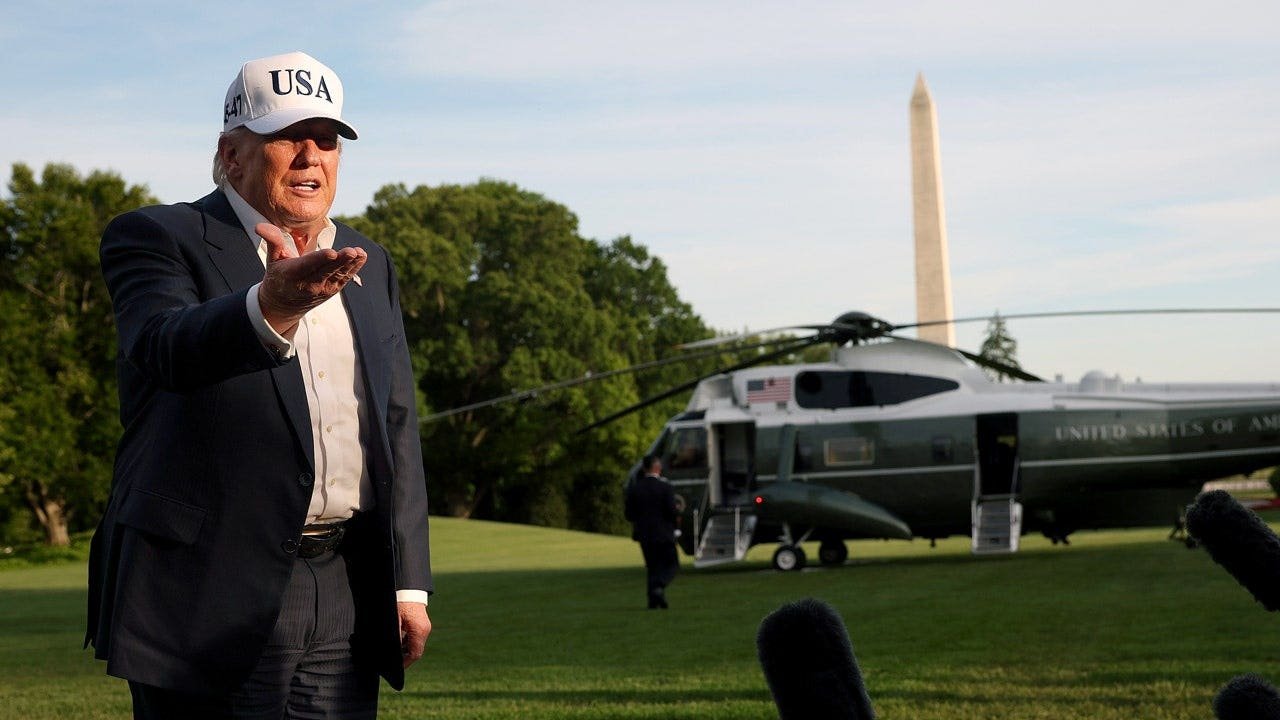
President Donald Trump is reportedly considering the construction of a permanent helipad on the South Lawn of the White House, a move that would formalize and physically reshape how presidential helicopter travel operates at the center of American executive power.
What is confirmed is that discussions around a dedicated landing surface have been underway in various forms for years, driven by a practical constraint: newer Marine One helicopters, particularly the VH-92A model, generate intense downward exhaust that can scorch or damage grass during landing.
This has led to operational limitations, including continued reliance on older aircraft and careful management of landing procedures on the South Lawn.
The emerging plan would shift from temporary landings on grass to a fixed, purpose-built surface designed to absorb heat and weight.
In practical terms, this would reduce maintenance issues, improve consistency in presidential arrivals and departures, and potentially streamline security coordination, which depends on predictable landing zones.
The White House has not released technical specifications, timelines, or cost estimates for the project.
The idea is being discussed internally as a possible summer construction initiative, though no final authorization details have been made public.
The operational rationale is straightforward: Marine One travel is one of the most visible and security-sensitive movements of the presidency.
The South Lawn is not just ceremonial space but a working aviation zone, and any degradation in surface integrity affects both safety and logistics.
A permanent pad would solve a recurring engineering problem that has become more pronounced with newer helicopter designs.
At the same time, the proposal introduces a significant physical alteration to one of the most historically recognizable landscapes in Washington.
The South Lawn has long functioned as an open ceremonial expanse used for arrivals, departures, press coverage, and official events.
A permanent helipad would reduce flexibility in how the space is used and could permanently change its visual and symbolic character.
Supporters of the idea frame it as a functional modernization consistent with other recent White House infrastructure changes, emphasizing durability, security, and operational efficiency.
Critics, including preservation-oriented voices, argue that embedding a permanent aviation structure into the lawn risks undermining the historic design integrity of the executive grounds and replacing adaptable space with fixed infrastructure.
The broader context is a series of concurrent modifications to White House grounds and adjacent facilities, reflecting a larger effort to reconfigure both ceremonial and operational aspects of the complex.
The helipad proposal fits into that pattern by prioritizing functionality and durability over historical preservation in one of the most sensitive national landmarks.
If implemented, the project would redefine a long-standing presidential ritual: Marine One arrivals and departures directly on grass.
Instead, future movements would occur on a hardened landing platform integrated into the South Lawn itself, permanently altering how the presidency physically interfaces with the White House landscape.
President Donald Trump is reportedly considering the construction of a permanent helipad on the South Lawn of the White House, a move that would formalize and physically reshape how presidential helicopter travel operates at the center of American executive power.
What is confirmed is that discussions around a dedicated landing surface have been underway in various forms for years, driven by a practical constraint: newer Marine One helicopters, particularly the VH-92A model, generate intense downward exhaust that can scorch or damage grass during landing.
This has led to operational limitations, including continued reliance on older aircraft and careful management of landing procedures on the South Lawn.
The emerging plan would shift from temporary landings on grass to a fixed, purpose-built surface designed to absorb heat and weight.
In practical terms, this would reduce maintenance issues, improve consistency in presidential arrivals and departures, and potentially streamline security coordination, which depends on predictable landing zones.
The White House has not released technical specifications, timelines, or cost estimates for the project.
The idea is being discussed internally as a possible summer construction initiative, though no final authorization details have been made public.
The operational rationale is straightforward: Marine One travel is one of the most visible and security-sensitive movements of the presidency.
The South Lawn is not just ceremonial space but a working aviation zone, and any degradation in surface integrity affects both safety and logistics.
A permanent pad would solve a recurring engineering problem that has become more pronounced with newer helicopter designs.
At the same time, the proposal introduces a significant physical alteration to one of the most historically recognizable landscapes in Washington.
The South Lawn has long functioned as an open ceremonial expanse used for arrivals, departures, press coverage, and official events.
A permanent helipad would reduce flexibility in how the space is used and could permanently change its visual and symbolic character.
Supporters of the idea frame it as a functional modernization consistent with other recent White House infrastructure changes, emphasizing durability, security, and operational efficiency.
Critics, including preservation-oriented voices, argue that embedding a permanent aviation structure into the lawn risks undermining the historic design integrity of the executive grounds and replacing adaptable space with fixed infrastructure.
The broader context is a series of concurrent modifications to White House grounds and adjacent facilities, reflecting a larger effort to reconfigure both ceremonial and operational aspects of the complex.
The helipad proposal fits into that pattern by prioritizing functionality and durability over historical preservation in one of the most sensitive national landmarks.
If implemented, the project would redefine a long-standing presidential ritual: Marine One arrivals and departures directly on grass.
Instead, future movements would occur on a hardened landing platform integrated into the South Lawn itself, permanently altering how the presidency physically interfaces with the White House landscape.