Focus on the BIG picture.
Wednesday, Mar 04, 2026
Outside the box.

Trump’s White House Transformation Set to Redefine Historic Silhouette
Extensive construction under President Trump includes a new grand ballroom and possible West Wing expansion that will permanently alter the White House’s appearance
President Donald Trump has embarked on one of the most ambitious architectural undertakings at the White House in modern history, initiating construction that is poised to alter the iconic silhouette of America’s presidential residence.
In 2025, Mr. Trump authorized the demolition of the entire East Wing of the White House complex to make way for a vast new ballroom and auxiliary facilities, a project that officials now estimate could cost upwards of four hundred million dollars and redefine the visual profile of the People’s House.
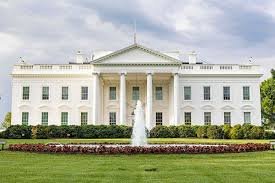
The traditional form of the Executive Residence — flanked by subordinate East and West Wings — has long been carefully calibrated so that additions remain lower and less prominent.
Mr. Trump’s plan departs from this convention by building a ballroom structure that will rise to the same height as the central mansion itself, visible from the street and materially altering the historic symmetry that has characterized the site for more than a century.
The demolition in October 2025 cleared not only the East Wing but also the East Colonnade and portions of the Jacqueline Kennedy Garden, with satellite images confirming the scale of the transformation._ While the ballroom’s footprint and internal design have shifted during planning, the latest proposals presented to the National Capital Planning Commission call for a multi-story building accommodating a grand event space capable of hosting large state functions, offices for senior staff, a commercial kitchen and an updated movie theater.
President Trump has personally overseen design choices and fundraising, asserting that the project will enhance White House functionality and provide a fitting venue for official ceremonies and inaugurations.
To balance the new massing of the eastern addition, the administration is also considering an “Upper West Wing” above the West Wing briefing room and a one-story expansion to the West Colonnade, potentially adding further height on the western side of the complex.
These discussions reflect an intent to maintain a form of symmetry around the central pavilion, even as the overall profile evolves.
The proposal has drawn legal challenges from preservation groups and scrutiny over the speed of reviews by federal oversight bodies, which are now moving through public informational meetings and reviews scheduled into March.
Mr. Trump’s supporters within the design and planning community argue that the modernization will serve future generations and increase the White House’s capacity for national events, while opponents warn that the changes will erase historic architectural norms.
As construction progresses, the White House will soon present a markedly different face — one reflecting the president’s vision of grandeur and enhanced representational space, with lasting impact on one of the world’s most recognized symbols of statecraft.
In 2025, Mr. Trump authorized the demolition of the entire East Wing of the White House complex to make way for a vast new ballroom and auxiliary facilities, a project that officials now estimate could cost upwards of four hundred million dollars and redefine the visual profile of the People’s House.
The traditional form of the Executive Residence — flanked by subordinate East and West Wings — has long been carefully calibrated so that additions remain lower and less prominent.
Mr. Trump’s plan departs from this convention by building a ballroom structure that will rise to the same height as the central mansion itself, visible from the street and materially altering the historic symmetry that has characterized the site for more than a century.
The demolition in October 2025 cleared not only the East Wing but also the East Colonnade and portions of the Jacqueline Kennedy Garden, with satellite images confirming the scale of the transformation._ While the ballroom’s footprint and internal design have shifted during planning, the latest proposals presented to the National Capital Planning Commission call for a multi-story building accommodating a grand event space capable of hosting large state functions, offices for senior staff, a commercial kitchen and an updated movie theater.
President Trump has personally overseen design choices and fundraising, asserting that the project will enhance White House functionality and provide a fitting venue for official ceremonies and inaugurations.
To balance the new massing of the eastern addition, the administration is also considering an “Upper West Wing” above the West Wing briefing room and a one-story expansion to the West Colonnade, potentially adding further height on the western side of the complex.
These discussions reflect an intent to maintain a form of symmetry around the central pavilion, even as the overall profile evolves.
The proposal has drawn legal challenges from preservation groups and scrutiny over the speed of reviews by federal oversight bodies, which are now moving through public informational meetings and reviews scheduled into March.
Mr. Trump’s supporters within the design and planning community argue that the modernization will serve future generations and increase the White House’s capacity for national events, while opponents warn that the changes will erase historic architectural norms.
As construction progresses, the White House will soon present a markedly different face — one reflecting the president’s vision of grandeur and enhanced representational space, with lasting impact on one of the world’s most recognized symbols of statecraft.