Focus on the BIG picture.
Friday, May 22, 2026
Outside the box.

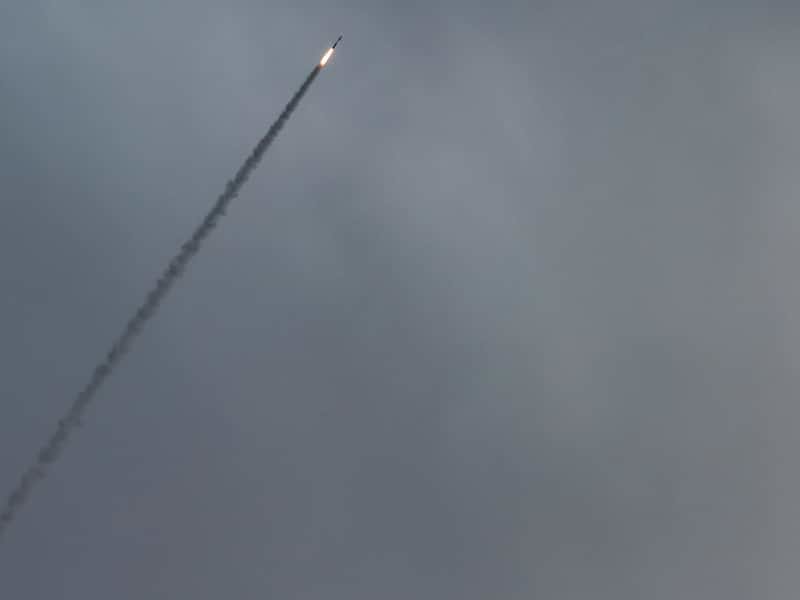
U.S. Role in Israel’s Missile Defense Exposes Rising Cost of Regional Air Warfare
Defense systems and interceptor stockpiles highlight how American resources are increasingly used to sustain Israel’s layered air defense during sustained missile and drone attacks
The expanding reliance on the United States to support Israel’s missile defense network underscores a broader shift in modern warfare: air defense is no longer a purely national capability but a shared, resource-intensive system stretched across allied supply chains and forward-deployed U.S. military assets.
What is confirmed is that Israel’s multi-layered air defense architecture depends on a combination of domestic systems and U.S.-supplied interceptors, sensor integration, and regional American military deployments.
These include systems designed to counter short-range rockets, cruise missiles, and ballistic missiles, many of which require expensive interceptors that must be continuously replenished after large-scale engagements.
The operational mechanism is straightforward but costly.
When incoming missiles or drones are detected, interception systems engage using guided munitions that are significantly more expensive than the threats they destroy.
During sustained attacks, interceptor stockpiles can be depleted quickly, forcing rapid resupply from manufacturing lines that are already constrained by global demand for precision air defense weapons.
The United States contributes to this system in multiple ways.
It supplies certain interceptor stocks, provides funding assistance through military aid frameworks, and maintains its own regional defense assets that can be used to protect forces and, in some scenarios, assist in broader interception coverage.
This creates an interdependent structure in which Israeli defense performance is partially tied to U.S. logistical capacity and industrial output.
The strategic implication is a transfer of operational burden.
While Israel operates the frontline systems, the sustainability of prolonged defense operations increasingly depends on U.S. manufacturing throughput, stockpile management, and rapid replenishment capability.
This shifts part of the cost of regional escalation from a bilateral conflict zone to the broader American defense infrastructure.
The financial and industrial stakes are significant.
Missile interceptors are among the most expensive consumables in modern warfare, and repeated high-intensity engagements accelerate depletion rates that can strain production timelines.
This raises concerns within defense planning circles about readiness, especially if similar demands emerge simultaneously in multiple regions.
The broader consequence is that air defense is becoming a shared strategic liability among allies.
The United States is not only a political partner but also a critical supply node in sustained missile defense operations, meaning prolonged regional conflict directly affects American stockpiles, budgets, and industrial priorities.
As missile warfare continues to intensify across multiple theaters, the reliance on U.S.-backed defense systems reinforces a structural reality: modern air defense is only as durable as the industrial capacity behind it, and that capacity is now being tested in real time.
What is confirmed is that Israel’s multi-layered air defense architecture depends on a combination of domestic systems and U.S.-supplied interceptors, sensor integration, and regional American military deployments.
These include systems designed to counter short-range rockets, cruise missiles, and ballistic missiles, many of which require expensive interceptors that must be continuously replenished after large-scale engagements.
The operational mechanism is straightforward but costly.
When incoming missiles or drones are detected, interception systems engage using guided munitions that are significantly more expensive than the threats they destroy.
During sustained attacks, interceptor stockpiles can be depleted quickly, forcing rapid resupply from manufacturing lines that are already constrained by global demand for precision air defense weapons.
The United States contributes to this system in multiple ways.
It supplies certain interceptor stocks, provides funding assistance through military aid frameworks, and maintains its own regional defense assets that can be used to protect forces and, in some scenarios, assist in broader interception coverage.
This creates an interdependent structure in which Israeli defense performance is partially tied to U.S. logistical capacity and industrial output.
The strategic implication is a transfer of operational burden.
While Israel operates the frontline systems, the sustainability of prolonged defense operations increasingly depends on U.S. manufacturing throughput, stockpile management, and rapid replenishment capability.
This shifts part of the cost of regional escalation from a bilateral conflict zone to the broader American defense infrastructure.
The financial and industrial stakes are significant.
Missile interceptors are among the most expensive consumables in modern warfare, and repeated high-intensity engagements accelerate depletion rates that can strain production timelines.
This raises concerns within defense planning circles about readiness, especially if similar demands emerge simultaneously in multiple regions.
The broader consequence is that air defense is becoming a shared strategic liability among allies.
The United States is not only a political partner but also a critical supply node in sustained missile defense operations, meaning prolonged regional conflict directly affects American stockpiles, budgets, and industrial priorities.
As missile warfare continues to intensify across multiple theaters, the reliance on U.S.-backed defense systems reinforces a structural reality: modern air defense is only as durable as the industrial capacity behind it, and that capacity is now being tested in real time.