Focus on the BIG picture.
Friday, May 22, 2026
Outside the box.

U.S. Rolls Back Biden-Era Refrigerant Rules, Citing Cost Relief for Consumers
White House moves to scrap climate-linked coolant restrictions, framing the decision as a measure to lower appliance and maintenance costs while industry and environmental standards shift
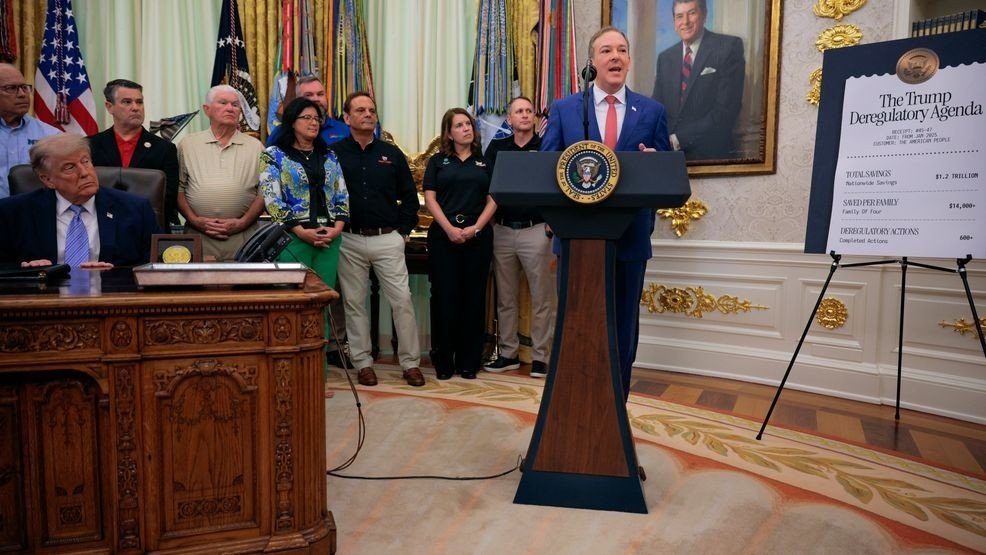
SYSTEM-DRIVEN regulatory policy in the United States has shifted as federal authorities move to roll back Biden-era rules governing refrigerants used in air conditioning, refrigeration, and other cooling systems, with the White House arguing the change will reduce costs for households and businesses.
The policy at the center of the dispute concerns hydrofluorocarbon refrigerants, chemicals widely used in cooling equipment but known for their high global warming potential.
Under previous federal rules adopted during the Biden administration, the United States began a phased restriction on these substances, encouraging a transition toward newer refrigerants with lower climate impact.
What is confirmed is that these rules were part of a broader climate strategy aligned with international agreements aimed at reducing greenhouse gas emissions.
The current rollback reverses or delays key enforcement elements of those restrictions.
The White House justification focuses on economic impact, arguing that compliance costs have been driving up prices for air conditioning units, refrigeration systems, servicing, and related consumer goods.
The administration frames the change as a cost-of-living measure, particularly relevant in regions with high dependence on cooling systems.
The policy shift highlights a structural tension between environmental regulation and consumer affordability.
Refrigerants that comply with stricter climate standards are generally more expensive and require modifications to existing equipment designs.
Manufacturers and service providers have warned that rapid regulatory transitions can increase supply chain costs and reduce equipment availability in the short term.
Environmental advocates, however, have consistently argued that delaying or weakening refrigerant restrictions risks slowing progress on emissions reductions.
Hydrofluorocarbons are significantly more potent than carbon dioxide in terms of warming impact, even if they are used in relatively small quantities.
The regulatory debate therefore centers on balancing near-term consumer costs against long-term climate targets.
For industry stakeholders, the rollback creates regulatory uncertainty.
Manufacturers must now reassess production timelines and investment decisions tied to refrigerant transitions, while retailers and service companies face shifting compliance expectations depending on final implementation rules.
The immediate consequence of the policy change is a pause or restructuring of the transition timeline away from high-global-warming refrigerants.
The next phase will depend on how federal agencies rewrite enforcement guidance and whether future administrations restore, modify, or further reverse the standards.
The policy at the center of the dispute concerns hydrofluorocarbon refrigerants, chemicals widely used in cooling equipment but known for their high global warming potential.
Under previous federal rules adopted during the Biden administration, the United States began a phased restriction on these substances, encouraging a transition toward newer refrigerants with lower climate impact.
What is confirmed is that these rules were part of a broader climate strategy aligned with international agreements aimed at reducing greenhouse gas emissions.
The current rollback reverses or delays key enforcement elements of those restrictions.
The White House justification focuses on economic impact, arguing that compliance costs have been driving up prices for air conditioning units, refrigeration systems, servicing, and related consumer goods.
The administration frames the change as a cost-of-living measure, particularly relevant in regions with high dependence on cooling systems.
The policy shift highlights a structural tension between environmental regulation and consumer affordability.
Refrigerants that comply with stricter climate standards are generally more expensive and require modifications to existing equipment designs.
Manufacturers and service providers have warned that rapid regulatory transitions can increase supply chain costs and reduce equipment availability in the short term.
Environmental advocates, however, have consistently argued that delaying or weakening refrigerant restrictions risks slowing progress on emissions reductions.
Hydrofluorocarbons are significantly more potent than carbon dioxide in terms of warming impact, even if they are used in relatively small quantities.
The regulatory debate therefore centers on balancing near-term consumer costs against long-term climate targets.
For industry stakeholders, the rollback creates regulatory uncertainty.
Manufacturers must now reassess production timelines and investment decisions tied to refrigerant transitions, while retailers and service companies face shifting compliance expectations depending on final implementation rules.
The immediate consequence of the policy change is a pause or restructuring of the transition timeline away from high-global-warming refrigerants.
The next phase will depend on how federal agencies rewrite enforcement guidance and whether future administrations restore, modify, or further reverse the standards.