Focus on the BIG picture.
Monday, May 18, 2026
Outside the box.

White House Prayer Event Sparks Debate Over Religion and American State Identity
A large-scale faith gathering tied to White House messaging highlights tensions over constitutional boundaries, political symbolism, and the role of Christianity in U.S. public life
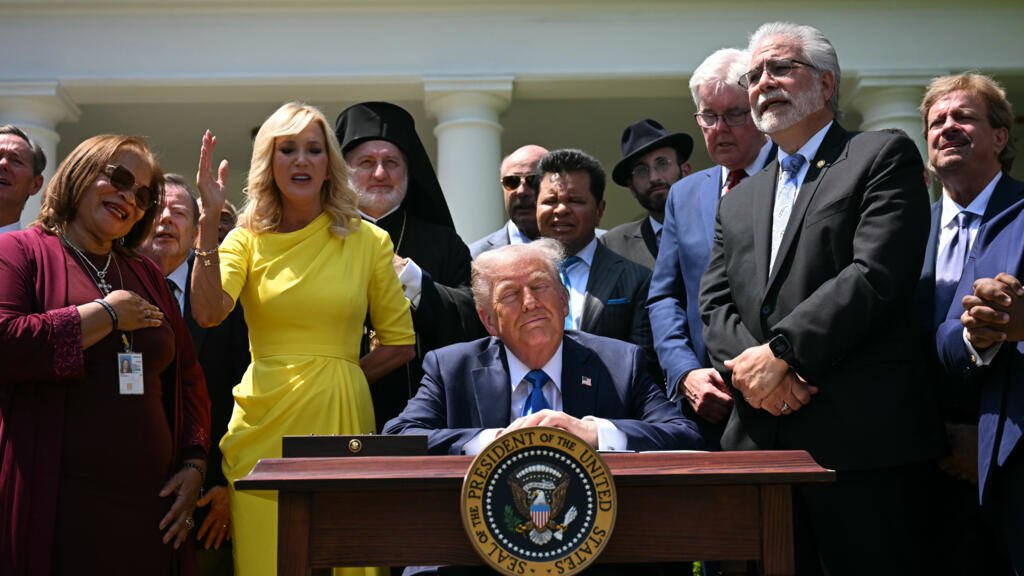
An ACTOR-DRIVEN political and religious event hosted at or supported by the White House has triggered renewed debate over the relationship between government authority and religious identity in the United States, after a mass prayer gathering emphasized themes tied to Christian foundations of the nation.
What is confirmed is that a large prayer-focused event involving Christian leaders and supporters was organized in Washington with visible association to White House communication channels and political messaging.
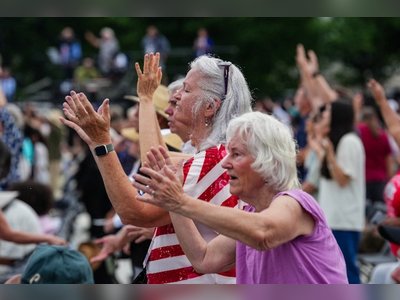
The gathering centered on worship, public prayer, and speeches that framed the United States as a nation shaped by Christian values and historical religious influence.
The key issue emerging from the event is the extent to which government-adjacent institutions can participate in or amplify explicitly religious messaging without crossing constitutional boundaries that separate church and state.
The United States Constitution prohibits the establishment of an official state religion while protecting free exercise of religion, a dual framework that has long produced legal and political debate over religious expression in government settings.
Supporters of the event argue that acknowledging the historical role of Christianity in American civic life is both accurate and culturally significant.
They contend that public prayer gatherings hosted in national spaces reflect the religious freedoms guaranteed under the Constitution and provide opportunities for civic unity and moral reflection.
Critics argue that when religious messaging is closely linked to executive branch platforms or national institutions, it risks signaling preferential treatment toward a specific faith tradition.
They warn that such events can blur the line between personal belief and state endorsement, particularly when participation or visibility is tied to official government branding or access.
The broader context is a long-standing constitutional and cultural debate in the United States over how religion intersects with governance.
While public officials regularly participate in private religious expression, the use of governmental spaces or communication channels to host or promote large-scale faith events introduces heightened scrutiny.
Legal scholars typically assess such cases through established constitutional tests that evaluate whether government action endorses, coerces, or excessively entangles itself with religion.
These standards are applied on a case-by-case basis, meaning the implications of any single event depend heavily on its structure, funding, messaging, and level of official involvement.
The political implications extend beyond legal interpretation.
In a highly polarized environment, religious symbolism has increasingly become part of broader cultural and electoral identity formation, with faith communities often acting as influential mobilizing networks in national politics.
The event underscores how religious expression in American public life continues to function both as a constitutional question and a political signal, shaping perceptions of national identity while testing long-standing institutional boundaries between state authority and religious practice.
What is confirmed is that a large prayer-focused event involving Christian leaders and supporters was organized in Washington with visible association to White House communication channels and political messaging.
The gathering centered on worship, public prayer, and speeches that framed the United States as a nation shaped by Christian values and historical religious influence.
The key issue emerging from the event is the extent to which government-adjacent institutions can participate in or amplify explicitly religious messaging without crossing constitutional boundaries that separate church and state.
The United States Constitution prohibits the establishment of an official state religion while protecting free exercise of religion, a dual framework that has long produced legal and political debate over religious expression in government settings.
Supporters of the event argue that acknowledging the historical role of Christianity in American civic life is both accurate and culturally significant.
They contend that public prayer gatherings hosted in national spaces reflect the religious freedoms guaranteed under the Constitution and provide opportunities for civic unity and moral reflection.
Critics argue that when religious messaging is closely linked to executive branch platforms or national institutions, it risks signaling preferential treatment toward a specific faith tradition.
They warn that such events can blur the line between personal belief and state endorsement, particularly when participation or visibility is tied to official government branding or access.
The broader context is a long-standing constitutional and cultural debate in the United States over how religion intersects with governance.
While public officials regularly participate in private religious expression, the use of governmental spaces or communication channels to host or promote large-scale faith events introduces heightened scrutiny.
Legal scholars typically assess such cases through established constitutional tests that evaluate whether government action endorses, coerces, or excessively entangles itself with religion.
These standards are applied on a case-by-case basis, meaning the implications of any single event depend heavily on its structure, funding, messaging, and level of official involvement.
The political implications extend beyond legal interpretation.
In a highly polarized environment, religious symbolism has increasingly become part of broader cultural and electoral identity formation, with faith communities often acting as influential mobilizing networks in national politics.
The event underscores how religious expression in American public life continues to function both as a constitutional question and a political signal, shaping perceptions of national identity while testing long-standing institutional boundaries between state authority and religious practice.