Focus on the BIG picture.
Thursday, Aug 27, 2026
Outside the box.

Billionaire Ken Griffin, a GOP Donor, Publicly Rebukes Trump White House for Alleged Self-Enrichment
Citadel CEO criticises perceived preferential treatment and business deals benefiting administration families, prompting a White House defence
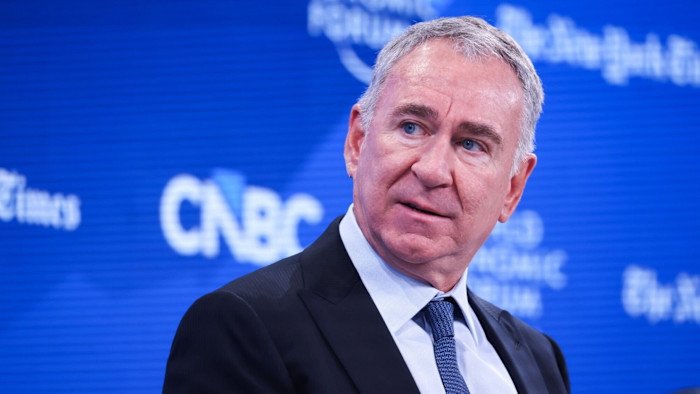
Billionaire hedge fund manager and longtime Republican donor Ken Griffin has delivered a rare and pointed public rebuke of the Trump White House, accusing senior officials and their families of profiting from government actions in ways he says call into question the public interest.
Speaking at a Wall Street Journal conference in Florida, Griffin said the administration’s decisions have “definitely made missteps in choosing decisions or courses that have been very, very enriching to the families of those in the administration,” adding that such outcomes raise serious ethical questions about whether government policy is serving the broader public or narrower private interests.
Griffin, founder and chief executive of Citadel, emphasised that his concern stems from principles of good governance and market fairness rather than simple partisan disagreement.
He described actions by the U.S. government that appear to favour certain business interests or connected individuals as “distasteful,” and said many chief executives he knows find the prospect of corporate America engaging with political power in that manner deeply troubling.
His remarks reflect a broader unease among some business leaders about the intersection of government policy and private gain and underscore his belief that corporate leaders should compete on merit rather than through political patronage.
Among the examples Griffin cited was a reported $500 million investment by a member of an Emirati royal family into World Liberty Financial, a cryptocurrency company associated with Trump’s family, shortly before the president’s inauguration — a deal he said “bothers” him.
He also referenced favourable policy conditions that appear to have benefited Trump’s sons, Donald Jr. and Eric Trump, whose business activities have expanded significantly since the president’s re-election, despite their assertions of strict separation between their private ventures and official duties.
Despite his criticisms, Griffin reaffirmed his support for certain Trump policy priorities, including enhanced border security and the nomination of Kevin Warsh to lead the Federal Reserve, underscoring that his stance does not equate to wholesale opposition to the administration’s agenda.
Griffin, who did not contribute to Trump’s 2024 re-election campaign but later donated $1 million to the inaugural committee, also hinted at the possibility of pursuing public service in the future, a move that would mark a notable shift in his career from private sector leadership to potential political engagement.
The White House responded to Griffin’s criticism through a spokesperson who stressed that the administration’s decisions are guided by what it views as the best interests of the American people, pointing to strong economic indicators such as robust stock markets, wage growth and cooling inflation as evidence of its commitment to broad prosperity.
The exchange highlights a moment of tension between a significant GOP donor and the president’s leadership team, illustrating the complexities of political alliances and the ongoing debate over how public office and private enterprise should intersect in the United States.
Speaking at a Wall Street Journal conference in Florida, Griffin said the administration’s decisions have “definitely made missteps in choosing decisions or courses that have been very, very enriching to the families of those in the administration,” adding that such outcomes raise serious ethical questions about whether government policy is serving the broader public or narrower private interests.
Griffin, founder and chief executive of Citadel, emphasised that his concern stems from principles of good governance and market fairness rather than simple partisan disagreement.
He described actions by the U.S. government that appear to favour certain business interests or connected individuals as “distasteful,” and said many chief executives he knows find the prospect of corporate America engaging with political power in that manner deeply troubling.
His remarks reflect a broader unease among some business leaders about the intersection of government policy and private gain and underscore his belief that corporate leaders should compete on merit rather than through political patronage.
Among the examples Griffin cited was a reported $500 million investment by a member of an Emirati royal family into World Liberty Financial, a cryptocurrency company associated with Trump’s family, shortly before the president’s inauguration — a deal he said “bothers” him.
He also referenced favourable policy conditions that appear to have benefited Trump’s sons, Donald Jr. and Eric Trump, whose business activities have expanded significantly since the president’s re-election, despite their assertions of strict separation between their private ventures and official duties.
Despite his criticisms, Griffin reaffirmed his support for certain Trump policy priorities, including enhanced border security and the nomination of Kevin Warsh to lead the Federal Reserve, underscoring that his stance does not equate to wholesale opposition to the administration’s agenda.
Griffin, who did not contribute to Trump’s 2024 re-election campaign but later donated $1 million to the inaugural committee, also hinted at the possibility of pursuing public service in the future, a move that would mark a notable shift in his career from private sector leadership to potential political engagement.
The White House responded to Griffin’s criticism through a spokesperson who stressed that the administration’s decisions are guided by what it views as the best interests of the American people, pointing to strong economic indicators such as robust stock markets, wage growth and cooling inflation as evidence of its commitment to broad prosperity.
The exchange highlights a moment of tension between a significant GOP donor and the president’s leadership team, illustrating the complexities of political alliances and the ongoing debate over how public office and private enterprise should intersect in the United States.