Focus on the BIG picture.
Friday, Mar 13, 2026
Outside the box.

United States Orders Release of 172 Million Barrels from Strategic Petroleum Reserve to Counter Global Oil Shock
Trump administration authorizes major emergency drawdown as part of a coordinated 400-million-barrel global release following attacks on shipping and infrastructure in the Strait of Hormuz
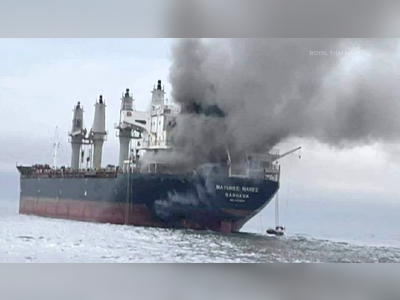
The United States has ordered the release of 172 million barrels of crude oil from its Strategic Petroleum Reserve in an effort to stabilize fuel markets after a sharp surge in global prices triggered by attacks on energy infrastructure and tanker traffic in the Strait of Hormuz.
The Department of Energy confirmed that the drawdown will begin next week and continue for approximately one hundred and twenty days, with oil entering the market at a rate of roughly 1.4 million barrels per day.
The move was authorized by President Donald Trump after crude prices climbed above one hundred and nineteen dollars per barrel amid escalating disruptions to global supply routes.
The release forms the largest portion of a coordinated emergency response led by the International Energy Agency, whose member states collectively pledged to supply around four hundred million barrels from strategic reserves.
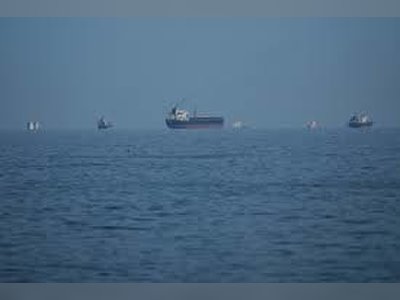
The unprecedented intervention aims to offset the sudden loss of oil flows through the Strait of Hormuz, a maritime chokepoint that typically carries roughly one-fifth of the world’s seaborne crude shipments.
Energy officials said the measure is designed to reassure markets and protect consumers while military and diplomatic efforts continue to secure regional energy routes.
The United States remains the world’s largest oil producer, yet global prices have been pushed higher by supply fears after attacks on tankers and energy facilities disrupted shipping across the Gulf region.
The Strategic Petroleum Reserve, created after the oil shocks of the 1970s, currently holds roughly four hundred fifteen million barrels stored in underground salt caverns along the U.S. Gulf Coast.
The planned release represents about forty percent of the stockpile, making it one of the largest emergency deployments in the reserve’s history.
Energy Secretary Chris Wright said the decision reflects the administration’s determination to defend global energy stability and shield American consumers from extreme price volatility.
The administration has also emphasized its broader goal of restoring the reserve over time while maintaining the flexibility to respond to major international disruptions.
Oil markets initially reacted cautiously to the announcement.
Futures briefly stabilized before rising again as traders weighed the scale of supply disruptions in the Middle East and the uncertainty surrounding shipping through the Strait of Hormuz.
Some lawmakers have argued that domestic market dynamics may also be contributing to price increases.
Representative Tim Burchett said additional scrutiny of domestic fuel pricing practices may be warranted, suggesting that factors beyond global supply constraints could be influencing costs at the pump.
Energy analysts broadly view the reserve release as a temporary buffer rather than a permanent solution.
While the additional supply may help moderate prices and stabilize expectations in the near term, long-term market stability is expected to depend largely on restoring safe transit through the Strait of Hormuz and ensuring consistent global production levels.
The Department of Energy confirmed that the drawdown will begin next week and continue for approximately one hundred and twenty days, with oil entering the market at a rate of roughly 1.4 million barrels per day.
The move was authorized by President Donald Trump after crude prices climbed above one hundred and nineteen dollars per barrel amid escalating disruptions to global supply routes.
The release forms the largest portion of a coordinated emergency response led by the International Energy Agency, whose member states collectively pledged to supply around four hundred million barrels from strategic reserves.
The unprecedented intervention aims to offset the sudden loss of oil flows through the Strait of Hormuz, a maritime chokepoint that typically carries roughly one-fifth of the world’s seaborne crude shipments.
Energy officials said the measure is designed to reassure markets and protect consumers while military and diplomatic efforts continue to secure regional energy routes.
The United States remains the world’s largest oil producer, yet global prices have been pushed higher by supply fears after attacks on tankers and energy facilities disrupted shipping across the Gulf region.
The Strategic Petroleum Reserve, created after the oil shocks of the 1970s, currently holds roughly four hundred fifteen million barrels stored in underground salt caverns along the U.S. Gulf Coast.
The planned release represents about forty percent of the stockpile, making it one of the largest emergency deployments in the reserve’s history.
Energy Secretary Chris Wright said the decision reflects the administration’s determination to defend global energy stability and shield American consumers from extreme price volatility.
The administration has also emphasized its broader goal of restoring the reserve over time while maintaining the flexibility to respond to major international disruptions.
Oil markets initially reacted cautiously to the announcement.
Futures briefly stabilized before rising again as traders weighed the scale of supply disruptions in the Middle East and the uncertainty surrounding shipping through the Strait of Hormuz.
Some lawmakers have argued that domestic market dynamics may also be contributing to price increases.
Representative Tim Burchett said additional scrutiny of domestic fuel pricing practices may be warranted, suggesting that factors beyond global supply constraints could be influencing costs at the pump.
Energy analysts broadly view the reserve release as a temporary buffer rather than a permanent solution.
While the additional supply may help moderate prices and stabilize expectations in the near term, long-term market stability is expected to depend largely on restoring safe transit through the Strait of Hormuz and ensuring consistent global production levels.