
Focus on the BIG picture.
Sunday, Oct 25, 2026
Outside the box.

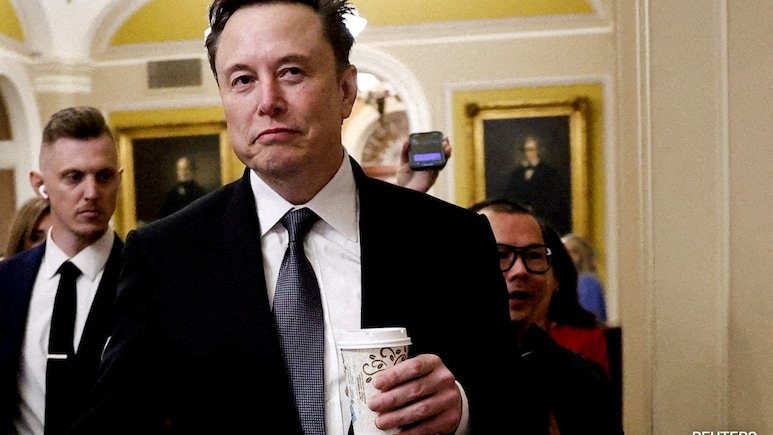
Elon Musk Criticizes US Government Payment Systems, Asserts $100 Billion in Annual Fraud.
The CEO of Tesla and SpaceX expresses worries about the shortcomings in federal payment systems, advocating for reforms and better auditing practices.
Elon Musk, the CEO of Tesla and SpaceX, voiced serious concerns about the inefficiencies he sees in the U.S. government's payment systems, claiming potential fraud exceeding $100 billion each year.
Musk utilized X (formerly Twitter) to announce a collaboration between the Treasury Department and his own Department of Government Efficiency, which seeks to implement stricter reporting requirements for all government payouts.
He pointed out that among the new stipulations, all payments must include a payment categorization code, which is essential for effective financial audits.
Musk remarked that this code is frequently left out, creating difficulties in conducting proper audits.
He stressed the importance of requiring a brief justification for payments, indicating that many entries are submitted without any explanation.
He stated, "We are not yet applying ANY judgment to this rationale, but simply requiring that SOME attempt be made to explain the payment more than NOTHING!"
In his statements, Musk also pushed for enhancements to the DO-NOT-PAY list, a resource used to pinpoint entities engaged in fraudulent activities.
He advocated that this list be refreshed weekly, if not daily, to ensure that funds do not end up in the hands of fraudsters.
Musk pointed out that it currently takes a long time—up to a year—for an entity to be included on the DO-NOT-PAY list, signaling the need for a faster process to improve the integrity of federal payments.
Highlighting specific worries about entitlement payments, Musk claimed that more than $100 billion each year is allocated to individuals lacking a Social Security Number or a temporary identification, which he deemed "extremely suspicious."
Musk alleged that conversations with Treasury officials indicated that approximately half of this amount could clearly be attributed to fraud, equating to a potential loss of $50 billion annually.
He described the scenario as "utterly insane" and urged immediate measures to address what he sees as rampant fraud in the payment systems, asserting that taxpayer funds must be safeguarded.
The dialogue regarding government payment systems and oversight has taken place independently of his cryptocurrency endeavors, as Musk clarified that these changes are being carried out by long-serving government professionals rather than individuals associated with his businesses.
Through his social media account, Musk shared a chart titled "Federal Government: Waste, Fraud, Abuse," further emphasizing his worries about the perceived extent of fraud in government spending.
To date, the Treasury Department has not publicly addressed Musk's allegations or the reforms he proposed.
Musk utilized X (formerly Twitter) to announce a collaboration between the Treasury Department and his own Department of Government Efficiency, which seeks to implement stricter reporting requirements for all government payouts.
He pointed out that among the new stipulations, all payments must include a payment categorization code, which is essential for effective financial audits.
Musk remarked that this code is frequently left out, creating difficulties in conducting proper audits.
He stressed the importance of requiring a brief justification for payments, indicating that many entries are submitted without any explanation.
He stated, "We are not yet applying ANY judgment to this rationale, but simply requiring that SOME attempt be made to explain the payment more than NOTHING!"
In his statements, Musk also pushed for enhancements to the DO-NOT-PAY list, a resource used to pinpoint entities engaged in fraudulent activities.
He advocated that this list be refreshed weekly, if not daily, to ensure that funds do not end up in the hands of fraudsters.
Musk pointed out that it currently takes a long time—up to a year—for an entity to be included on the DO-NOT-PAY list, signaling the need for a faster process to improve the integrity of federal payments.
Highlighting specific worries about entitlement payments, Musk claimed that more than $100 billion each year is allocated to individuals lacking a Social Security Number or a temporary identification, which he deemed "extremely suspicious."
Musk alleged that conversations with Treasury officials indicated that approximately half of this amount could clearly be attributed to fraud, equating to a potential loss of $50 billion annually.
He described the scenario as "utterly insane" and urged immediate measures to address what he sees as rampant fraud in the payment systems, asserting that taxpayer funds must be safeguarded.
The dialogue regarding government payment systems and oversight has taken place independently of his cryptocurrency endeavors, as Musk clarified that these changes are being carried out by long-serving government professionals rather than individuals associated with his businesses.
Through his social media account, Musk shared a chart titled "Federal Government: Waste, Fraud, Abuse," further emphasizing his worries about the perceived extent of fraud in government spending.
To date, the Treasury Department has not publicly addressed Musk's allegations or the reforms he proposed.