
Focus on the BIG picture.
Saturday, Jun 27, 2026
Outside the box.

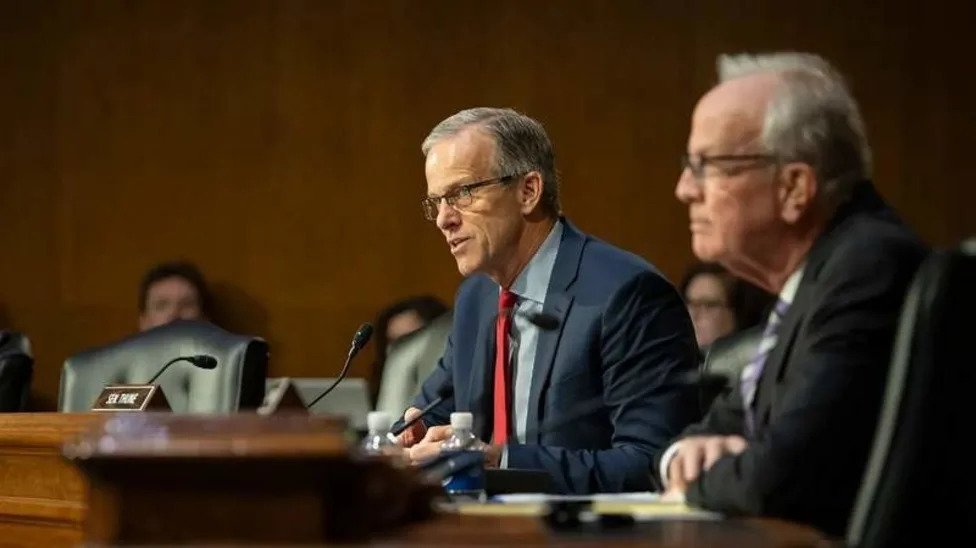
Republicans Rush to Salvage White House Ballroom Security Funding After Procedural Block
A Senate ruling threatens a $1 billion plan tied to Trump’s White House ballroom project, forcing Republicans to rewrite a key part of their broader spending package.
ACTOR-DRIVEN: The story is driven by congressional Republicans and the White House attempting to preserve funding linked to security upgrades for President Donald Trump’s planned White House ballroom, after a procedural ruling blocked the current version of the proposal.
Republicans in Congress are moving quickly to rewrite a major component of a $72 billion spending package after the Senate parliamentarian ruled that a $1 billion allocation for White House security upgrades tied to the East Wing modernization project cannot proceed under fast-track budget reconciliation rules.
What is confirmed is that the disputed funding is formally framed as security spending for the U.S. Secret Service, including upgrades to perimeter defenses, visitor screening, hardened infrastructure, and protective systems associated with the redevelopment of the White House East Wing into a large state ballroom.
The ballroom itself is not directly funded in the provision, but the security work is explicitly linked to the construction site.
The parliamentarian’s ruling blocks the measure from being included in reconciliation because it does not meet procedural requirements that limit such bills to provisions with direct budgetary effects.
As a result, the funding would need to survive a standard Senate vote threshold, requiring broader bipartisan support that is currently not in place.
The broader political strategy behind the package is tied to Republican efforts to advance a large immigration enforcement funding bill without Democratic votes.
The White House-aligned security proposal is embedded within that larger legislative vehicle, which includes funding for border enforcement agencies and Homeland Security operations.
At the center of the dispute is how the $1 billion is structured.
The administration and Republican sponsors describe it as necessary security reinforcement for a high-profile federal construction project on the White House grounds.
Critics argue that the structure effectively routes taxpayer funds toward infrastructure connected to a controversial private ballroom project that was initially presented as privately financed.
Public reporting and legislative breakdowns indicate that only a portion of the security request is directly tied to hardening the ballroom itself, while the remainder would fund broader White House security upgrades, including training, event protection systems, and infrastructure improvements across the complex.
The political tension is now twofold.
First, Republicans must decide whether to revise the bill to satisfy procedural rules or attempt to reintroduce the funding through another legislative pathway.
Second, they must manage internal divisions over whether taxpayer funds should support security tied to a project originally described as privately financed.
Democrats have signaled firm opposition, arguing that the proposal blurs the line between public security spending and support for a politically symbolic construction project.
Republicans counter that the White House requires enhanced security infrastructure due to heightened threat levels and the need for controlled, secure venues for official events.
The immediate consequence of the ruling is procedural blockage, forcing the funding out of its current fast-track vehicle and compelling Republicans to either redesign the proposal or abandon the reconciliation strategy for this portion of the plan.
The broader spending package continues to move forward, but without guaranteed inclusion of the White House security allocation in its current form.
Republicans in Congress are moving quickly to rewrite a major component of a $72 billion spending package after the Senate parliamentarian ruled that a $1 billion allocation for White House security upgrades tied to the East Wing modernization project cannot proceed under fast-track budget reconciliation rules.
What is confirmed is that the disputed funding is formally framed as security spending for the U.S. Secret Service, including upgrades to perimeter defenses, visitor screening, hardened infrastructure, and protective systems associated with the redevelopment of the White House East Wing into a large state ballroom.
The ballroom itself is not directly funded in the provision, but the security work is explicitly linked to the construction site.
The parliamentarian’s ruling blocks the measure from being included in reconciliation because it does not meet procedural requirements that limit such bills to provisions with direct budgetary effects.
As a result, the funding would need to survive a standard Senate vote threshold, requiring broader bipartisan support that is currently not in place.
The broader political strategy behind the package is tied to Republican efforts to advance a large immigration enforcement funding bill without Democratic votes.
The White House-aligned security proposal is embedded within that larger legislative vehicle, which includes funding for border enforcement agencies and Homeland Security operations.
At the center of the dispute is how the $1 billion is structured.
The administration and Republican sponsors describe it as necessary security reinforcement for a high-profile federal construction project on the White House grounds.
Critics argue that the structure effectively routes taxpayer funds toward infrastructure connected to a controversial private ballroom project that was initially presented as privately financed.
Public reporting and legislative breakdowns indicate that only a portion of the security request is directly tied to hardening the ballroom itself, while the remainder would fund broader White House security upgrades, including training, event protection systems, and infrastructure improvements across the complex.
The political tension is now twofold.
First, Republicans must decide whether to revise the bill to satisfy procedural rules or attempt to reintroduce the funding through another legislative pathway.
Second, they must manage internal divisions over whether taxpayer funds should support security tied to a project originally described as privately financed.
Democrats have signaled firm opposition, arguing that the proposal blurs the line between public security spending and support for a politically symbolic construction project.
Republicans counter that the White House requires enhanced security infrastructure due to heightened threat levels and the need for controlled, secure venues for official events.
The immediate consequence of the ruling is procedural blockage, forcing the funding out of its current fast-track vehicle and compelling Republicans to either redesign the proposal or abandon the reconciliation strategy for this portion of the plan.
The broader spending package continues to move forward, but without guaranteed inclusion of the White House security allocation in its current form.