Focus on the BIG picture.
Friday, May 08, 2026
Outside the box.

Saudi Airspace Emerges as Strategic Pressure Point in U.S.–Iran Tensions
Shifts in Gulf airspace access are reshaping U.S. military flexibility and complicating any future strategy toward Iran amid rising regional instability
SYSTEM-DRIVEN: The story is fundamentally driven by the evolving security and logistical architecture of Middle Eastern airspace, where access agreements, military basing rights, and regional alignment determine how the United States can project power in relation to Iran.
Saudi Arabia’s airspace and broader military cooperation framework has emerged as a critical variable in the strategic balance between Washington and Tehran.
What is confirmed is that Gulf airspace access is not merely a technical aviation issue but a core component of how the United States conducts surveillance, deterrence, and rapid-response operations across the region.
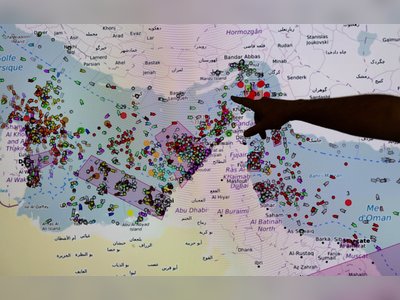
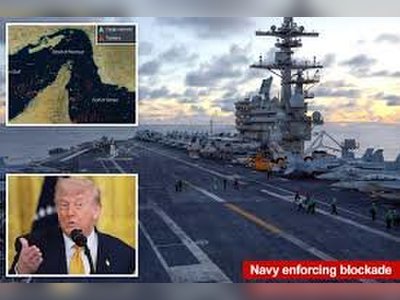
The United States relies heavily on regional air corridors and basing agreements to sustain operational reach over the Gulf, the Strait of Hormuz, and parts of the wider Middle East.
Any change in access—whether formal restrictions or informal limitations—directly affects the speed, scale, and survivability of military deployments in the region.
Saudi Arabia, as one of the largest and most strategically located Gulf states, occupies a central position in this system.
Its airspace provides routing advantages for surveillance aircraft, refueling missions, and rapid deployment paths toward the Gulf of Oman and Iranian air defense perimeters.
Even small adjustments in coordination or clearance protocols can materially affect U.S. operational planning.
The strategic tension described in current reporting reflects a broader pattern: Gulf states are increasingly balancing between their security partnership with the United States and their interest in avoiding direct entanglement in a confrontation with Iran.
This balancing act has grown more complex as regional conflicts intensify and the risk of escalation increases.
From a military planning perspective, airspace access determines not only where aircraft can fly, but also how predictable and survivable operations are in a contested environment.
Restrictions or delays can force longer routes, reduce sortie frequency, and limit the ability to respond quickly to maritime or missile threats.
Iran, meanwhile, treats expanded Western military coordination in nearby airspace as part of a broader containment posture.
That perception shapes its deterrence strategy, including missile deployments, drone capabilities, and asymmetric pressure in maritime chokepoints such as the Strait of Hormuz.
For U.S. policymakers, the challenge is structural rather than episodic.
Maintaining credible deterrence against Iran depends on sustained regional access, but that access is increasingly influenced by Gulf states’ calculations about escalation risk and domestic political constraints.
The result is a fragmented but interdependent security environment.
The United States cannot easily project power without Gulf cooperation, Gulf states cannot fully insulate themselves from regional spillover, and Iran leverages both dynamics to preserve strategic leverage.
What is emerging is not a single policy shift but a long-term recalibration of how airspace, basing rights, and alliance management interact in a high-tension region.
Saudi Arabia’s role in this system makes its decisions on access and coordination a defining factor in how any future U.S. strategy toward Iran is executed in practice.
Saudi Arabia’s airspace and broader military cooperation framework has emerged as a critical variable in the strategic balance between Washington and Tehran.
What is confirmed is that Gulf airspace access is not merely a technical aviation issue but a core component of how the United States conducts surveillance, deterrence, and rapid-response operations across the region.
The United States relies heavily on regional air corridors and basing agreements to sustain operational reach over the Gulf, the Strait of Hormuz, and parts of the wider Middle East.
Any change in access—whether formal restrictions or informal limitations—directly affects the speed, scale, and survivability of military deployments in the region.
Saudi Arabia, as one of the largest and most strategically located Gulf states, occupies a central position in this system.
Its airspace provides routing advantages for surveillance aircraft, refueling missions, and rapid deployment paths toward the Gulf of Oman and Iranian air defense perimeters.
Even small adjustments in coordination or clearance protocols can materially affect U.S. operational planning.
The strategic tension described in current reporting reflects a broader pattern: Gulf states are increasingly balancing between their security partnership with the United States and their interest in avoiding direct entanglement in a confrontation with Iran.
This balancing act has grown more complex as regional conflicts intensify and the risk of escalation increases.
From a military planning perspective, airspace access determines not only where aircraft can fly, but also how predictable and survivable operations are in a contested environment.
Restrictions or delays can force longer routes, reduce sortie frequency, and limit the ability to respond quickly to maritime or missile threats.
Iran, meanwhile, treats expanded Western military coordination in nearby airspace as part of a broader containment posture.
That perception shapes its deterrence strategy, including missile deployments, drone capabilities, and asymmetric pressure in maritime chokepoints such as the Strait of Hormuz.
For U.S. policymakers, the challenge is structural rather than episodic.
Maintaining credible deterrence against Iran depends on sustained regional access, but that access is increasingly influenced by Gulf states’ calculations about escalation risk and domestic political constraints.
The result is a fragmented but interdependent security environment.
The United States cannot easily project power without Gulf cooperation, Gulf states cannot fully insulate themselves from regional spillover, and Iran leverages both dynamics to preserve strategic leverage.
What is emerging is not a single policy shift but a long-term recalibration of how airspace, basing rights, and alliance management interact in a high-tension region.
Saudi Arabia’s role in this system makes its decisions on access and coordination a defining factor in how any future U.S. strategy toward Iran is executed in practice.