
Focus on the BIG picture.
Sunday, Jun 28, 2026
Outside the box.

Trump Showcases Fortress-Like White House Ballroom With Deep Underground Security Features
The president unveiled new details of a controversial $400 million White House ballroom, describing it as a hardened structure with underground facilities, drone defenses, and military-grade protection amid legal and political backlash.
A major redesign of the White House campus centered on a new ballroom project has escalated into a broader debate over security, presidential power, and the physical transformation of the seat of the U.S. government.
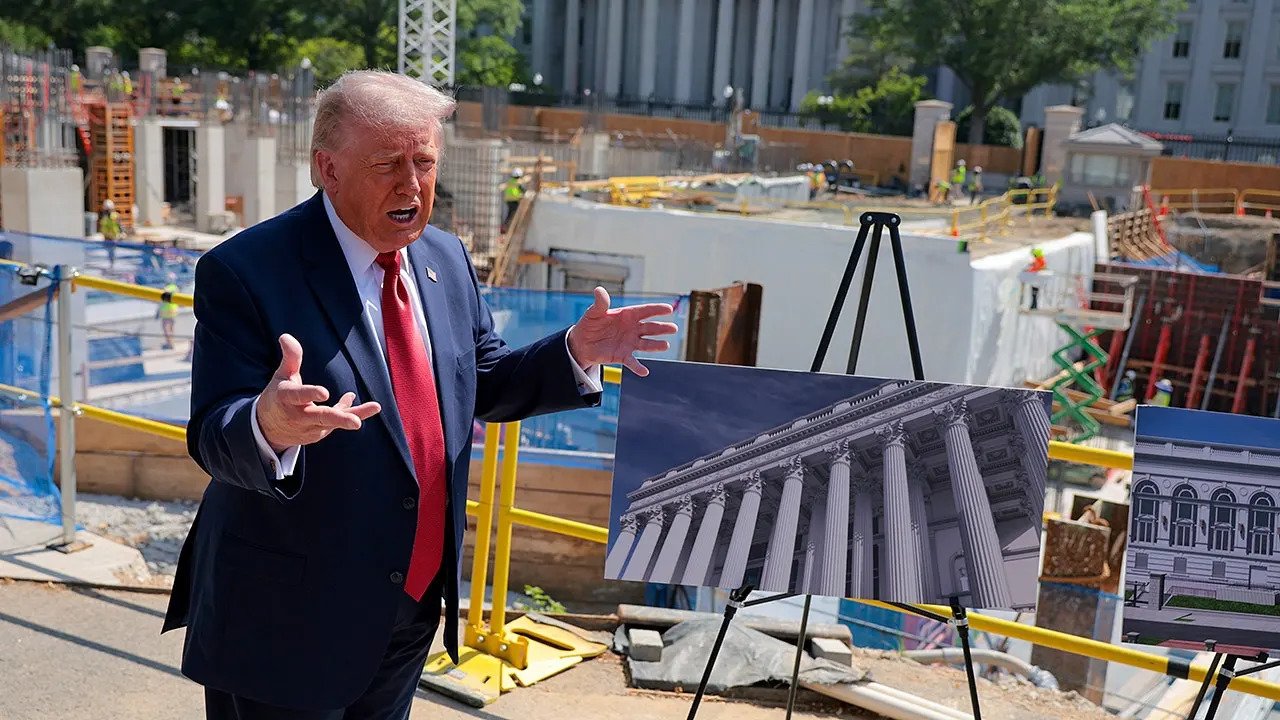
President Donald Trump personally guided reporters through the construction site of the planned White House ballroom, presenting it not only as an event space but as a fortified structure designed to function as a security asset for future administrations.
The project, estimated at roughly four hundred million dollars and built on the site of the former East Wing, has already involved significant demolition and deep excavation work.
What is confirmed is that the structure extends multiple levels below ground, with Trump describing foundations reaching as deep as six stories.
He characterized the design as unusually reinforced for a ceremonial venue, emphasizing steel construction, thick protective glass, and a layered underground system intended to support secure operations beneath the main building.
The security framing of the project is central to how it is being justified.
Trump described the ballroom as part of a hardened complex that could include military medical facilities, research spaces, and command-related infrastructure beneath the main structure.
He also referenced elevated rooftop capabilities intended for surveillance and defensive use, including drone operations and positions for armed security personnel.
The administration has previously argued that these features are not optional embellishments but necessary safeguards, particularly given concerns about modern threats such as aerial drones and potential attacks targeting high-profile government sites.
The White House has also characterized delays in construction as a potential security risk, a position used to defend continued work despite legal challenges.
The project is politically contentious on multiple fronts.
Critics argue that demolishing the East Wing and replacing it with a heavily fortified private-style complex represents an unprecedented alteration of the White House’s historic architecture.
Preservation groups have pursued legal action questioning whether the scope of demolition and construction required congressional authorization.
At various points, courts have paused parts of the project, while appeals processes have allowed limited continuation of underground work.
Funding has also become a source of dispute.
Trump has stated that the ballroom itself is being financed through private donations, while separate proposals in Congress have sought public funding for associated security upgrades.
Those efforts have faced procedural barriers and opposition, with lawmakers divided over whether taxpayer money should be tied to a project that blends ceremonial, residential, and defense-related functions.
Supporters of the project describe it as a long-term modernization of White House infrastructure designed to meet contemporary security standards and accommodate large-scale diplomatic and ceremonial events.
Critics counter that the scale of fortification effectively redefines the symbolic openness of the presidency, turning parts of the White House into restricted, bunker-like spaces with expanded surveillance and defensive capabilities.
Beyond immediate politics, the project signals a broader shift in how executive security architecture is being conceptualized in Washington.
The integration of deep underground construction, drone systems, and hardened materials into a traditionally ceremonial venue reflects a merging of public-facing state functions with permanent defensive infrastructure.
As construction continues under legal scrutiny and political debate, the ballroom has become more than a building project.
It now functions as a test case for how far executive branch redesign can go when security, legacy, and political authority converge at the center of the U.S. capital.
President Donald Trump personally guided reporters through the construction site of the planned White House ballroom, presenting it not only as an event space but as a fortified structure designed to function as a security asset for future administrations.
The project, estimated at roughly four hundred million dollars and built on the site of the former East Wing, has already involved significant demolition and deep excavation work.
What is confirmed is that the structure extends multiple levels below ground, with Trump describing foundations reaching as deep as six stories.
He characterized the design as unusually reinforced for a ceremonial venue, emphasizing steel construction, thick protective glass, and a layered underground system intended to support secure operations beneath the main building.
The security framing of the project is central to how it is being justified.
Trump described the ballroom as part of a hardened complex that could include military medical facilities, research spaces, and command-related infrastructure beneath the main structure.
He also referenced elevated rooftop capabilities intended for surveillance and defensive use, including drone operations and positions for armed security personnel.
The administration has previously argued that these features are not optional embellishments but necessary safeguards, particularly given concerns about modern threats such as aerial drones and potential attacks targeting high-profile government sites.
The White House has also characterized delays in construction as a potential security risk, a position used to defend continued work despite legal challenges.
The project is politically contentious on multiple fronts.
Critics argue that demolishing the East Wing and replacing it with a heavily fortified private-style complex represents an unprecedented alteration of the White House’s historic architecture.
Preservation groups have pursued legal action questioning whether the scope of demolition and construction required congressional authorization.
At various points, courts have paused parts of the project, while appeals processes have allowed limited continuation of underground work.
Funding has also become a source of dispute.
Trump has stated that the ballroom itself is being financed through private donations, while separate proposals in Congress have sought public funding for associated security upgrades.
Those efforts have faced procedural barriers and opposition, with lawmakers divided over whether taxpayer money should be tied to a project that blends ceremonial, residential, and defense-related functions.
Supporters of the project describe it as a long-term modernization of White House infrastructure designed to meet contemporary security standards and accommodate large-scale diplomatic and ceremonial events.
Critics counter that the scale of fortification effectively redefines the symbolic openness of the presidency, turning parts of the White House into restricted, bunker-like spaces with expanded surveillance and defensive capabilities.
Beyond immediate politics, the project signals a broader shift in how executive security architecture is being conceptualized in Washington.
The integration of deep underground construction, drone systems, and hardened materials into a traditionally ceremonial venue reflects a merging of public-facing state functions with permanent defensive infrastructure.
As construction continues under legal scrutiny and political debate, the ballroom has become more than a building project.
It now functions as a test case for how far executive branch redesign can go when security, legacy, and political authority converge at the center of the U.S. capital.