Focus on the BIG picture.
Wednesday, Aug 26, 2026
Outside the box.

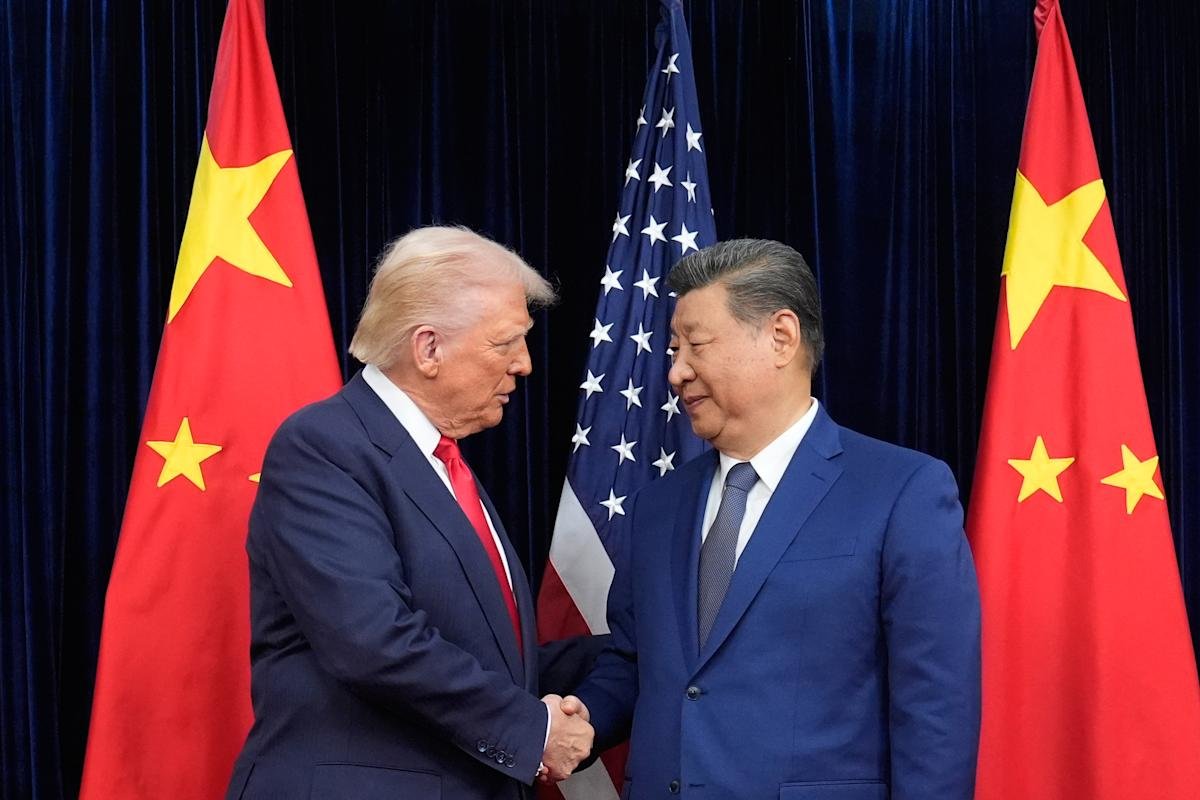
U.S. and China Reach Framework Averting Rare-Earth Export Clash
White House says Beijing will suspend certain rare-earth curbs and drop probe of U.S. chip firms under new trade accord
The White House has announced that the People’s Republic of China will suspend the implementation of fresh export controls on rare-earth metals and terminate investigations targeting U.S. semiconductor firms as part of a newly agreed trade framework.
The accord, disclosed by the U.S. Treasury Secretary ahead of the summit between President Donald Trump and President Xi Jinping, signals a de-escalation of the bilateral industrial standoff and offers relief to high-tech supply chains.
Under the terms agreed by both parties, China will ease curbs on key minerals such as rare-earth elements, graphite and permanent magnets, which had been restricted under the country’s tightened export controls of late.
Concurrently, the United States will forego the immediate imposition of a threatened one-hundred-percent tariff on Chinese goods and lift certain restrictions on Chinese tech-investment flows and student-visa access.
The rare-earth sector is a strategic foil in the contest between Washington and Beijing.
Earlier in 2025 China had added heavy rare-earth elements and related magnet technologies to its export-control list, citing national-security concerns—moves which prompted urgent warnings in Washington that U.S. defence and semiconductor supply chains were at risk.
The new agreement thus removes a key flashpoint in the trade-tech rivalry and allows industries reliant on these materials to breathe easier.
Officials on both sides emphasised the wider ambitions of the deal: China committed to large purchases of U.S. agricultural goods and cooperation on precursor-chemicals tied to fentanyl trafficking, while the United States reaffirmed openness to broader dialogue on technology, security and economic cooperation.
Treasury officials described the framework as “substantial” and praised the leverage secured by the Trump administration in preventing further escalation.
While the agreement does not yet represent a full trade treaty—specific tariffs remain in place and China retains the legal apparatus of its export-licensing system—the understanding is widely regarded as a major step in stabilising the U.S.–China relationship.
Growth-sensitive industries, from electric vehicles to defence manufacturing, welcomed the signal of renewed access to critical materials, even as analysts caution that implementation and verification now become the most important tests.
The accord, disclosed by the U.S. Treasury Secretary ahead of the summit between President Donald Trump and President Xi Jinping, signals a de-escalation of the bilateral industrial standoff and offers relief to high-tech supply chains.
Under the terms agreed by both parties, China will ease curbs on key minerals such as rare-earth elements, graphite and permanent magnets, which had been restricted under the country’s tightened export controls of late.
Concurrently, the United States will forego the immediate imposition of a threatened one-hundred-percent tariff on Chinese goods and lift certain restrictions on Chinese tech-investment flows and student-visa access.
The rare-earth sector is a strategic foil in the contest between Washington and Beijing.
Earlier in 2025 China had added heavy rare-earth elements and related magnet technologies to its export-control list, citing national-security concerns—moves which prompted urgent warnings in Washington that U.S. defence and semiconductor supply chains were at risk.
The new agreement thus removes a key flashpoint in the trade-tech rivalry and allows industries reliant on these materials to breathe easier.
Officials on both sides emphasised the wider ambitions of the deal: China committed to large purchases of U.S. agricultural goods and cooperation on precursor-chemicals tied to fentanyl trafficking, while the United States reaffirmed openness to broader dialogue on technology, security and economic cooperation.
Treasury officials described the framework as “substantial” and praised the leverage secured by the Trump administration in preventing further escalation.
While the agreement does not yet represent a full trade treaty—specific tariffs remain in place and China retains the legal apparatus of its export-licensing system—the understanding is widely regarded as a major step in stabilising the U.S.–China relationship.
Growth-sensitive industries, from electric vehicles to defence manufacturing, welcomed the signal of renewed access to critical materials, even as analysts caution that implementation and verification now become the most important tests.