Focus on the BIG picture.
Wednesday, Mar 11, 2026
Outside the box.

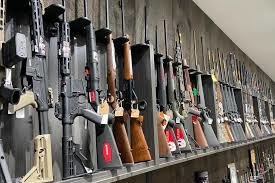
Washington’s Assault-Weapon Sale Ban Upheld Once Again by Federal Court
Judge rejects latest challenge, marking the fourth time courts have shielded the 2023 law from injunctions
A federal judge in Washington has rejected the most recent attempt to block the state’s ban on the sale of assault-style weapons, allowing the law to remain fully in force as legal challenges proceed.
The ruling, issued in late September, is the fourth time since the law’s passage in April 2023 that courts have declined to grant injunctive relief to plaintiffs seeking to halt enforcement.
The statute, signed as House Bill 1240, prohibits the manufacture, import, sale and distribution of firearms defined as “assault weapons.” It does not ban possession of such weapons already owned, but bars future sales — a provision originally proposed in response to a 2016 mass-shooting.
Legal challenges began immediately, with multiple gun dealers and advocacy groups arguing the ban violates state and federal constitutional protections.
In the latest case, plaintiffs sought a preliminary injunction to suspend the law pending a full trial.
But U.S. District Court Judge Mary Dimke ruled that they had not met the onerous standard required for such relief.
The judge found that the state had shown a “strong likelihood” of prevailing and that lifting the ban while litigation continues would risk public safety.
Washington’s Attorney General and the law’s backers welcomed the decision as a reaffirmation of the state’s commitment to safeguarding communities from weapons designed for mass harm.
Supporters argue the repeated court victories underscore that the law is a measured, constitutional exercise of the state’s power to regulate firearms for public safety.
Defenders of the law say it marks a critical step in curbing gun violence across Washington communities.
The decision leaves intact not only the sales ban, but also earlier rulings that upheld related controls on high-capacity magazines.
With multiple courts consistently affirming the law’s validity, it appears likely to survive until at least the final appeals — and possibly much longer.
The legal challenge is ongoing, but for now the ban stands firm.
The ruling, issued in late September, is the fourth time since the law’s passage in April 2023 that courts have declined to grant injunctive relief to plaintiffs seeking to halt enforcement.
The statute, signed as House Bill 1240, prohibits the manufacture, import, sale and distribution of firearms defined as “assault weapons.” It does not ban possession of such weapons already owned, but bars future sales — a provision originally proposed in response to a 2016 mass-shooting.
Legal challenges began immediately, with multiple gun dealers and advocacy groups arguing the ban violates state and federal constitutional protections.
In the latest case, plaintiffs sought a preliminary injunction to suspend the law pending a full trial.
But U.S. District Court Judge Mary Dimke ruled that they had not met the onerous standard required for such relief.
The judge found that the state had shown a “strong likelihood” of prevailing and that lifting the ban while litigation continues would risk public safety.
Washington’s Attorney General and the law’s backers welcomed the decision as a reaffirmation of the state’s commitment to safeguarding communities from weapons designed for mass harm.
Supporters argue the repeated court victories underscore that the law is a measured, constitutional exercise of the state’s power to regulate firearms for public safety.
Defenders of the law say it marks a critical step in curbing gun violence across Washington communities.
The decision leaves intact not only the sales ban, but also earlier rulings that upheld related controls on high-capacity magazines.
With multiple courts consistently affirming the law’s validity, it appears likely to survive until at least the final appeals — and possibly much longer.
The legal challenge is ongoing, but for now the ban stands firm.