Focus on the BIG picture.
Sunday, May 24, 2026
Outside the box.

Washington Township Freezes Data Center Decisions as U.S. Communities Push Back on AI Infrastructure Boom
A six-month moratorium reflects growing national resistance to large-scale data centers over power demand, water use, zoning conflicts and local control
Local government regulation has become the central battleground in the accelerating fight over artificial intelligence infrastructure, and Washington Township’s decision to impose a six-month pause on data center action reflects a rapidly expanding national pattern.
Washington Township officials moved to halt or delay action tied to proposed data center development while they rewrite zoning rules and study the long-term impact of hyperscale computing facilities.
The decision follows mounting resident opposition, legal concerns and broader uncertainty about how local communities should manage industrial-scale digital infrastructure that consumes enormous quantities of electricity, land and water.
The immediate dispute centers on proposals connected to large tracts of land targeted for technology and industrial redevelopment.
Township officials have publicly acknowledged that existing zoning ordinances were not designed for modern artificial intelligence-era data centers, which operate more like utility-intensive industrial campuses than conventional office developments.
Local attorneys warned officials that approving projects without updated rules could expose the township to litigation and weaken its ability to regulate future construction.
What is confirmed is that the township used the moratorium period to review industrial zoning language, environmental safeguards, infrastructure requirements and land-use compatibility standards.
Officials also delayed or reconsidered rezoning requests linked to major proposed developments while planners evaluated how data centers would affect surrounding residential and agricultural areas.
The conflict in Washington Township is part of a much larger national shift.
Across the United States, municipalities are increasingly slowing or blocking data center expansion after years of largely welcoming such projects as economic development opportunities.
Communities in Michigan, Illinois, Ohio, Minnesota and other states have recently approved temporary bans, moratoriums or emergency zoning reviews tied to proposed server campuses.
The key issue is the scale of modern artificial intelligence infrastructure.
New data centers designed for AI model training and cloud computing consume far more electricity than earlier generations of server facilities.
Many also require extensive water systems for cooling.
Utility planners, environmental groups and residents have raised concerns about pressure on electrical grids, increased utility costs, groundwater use, diesel backup generators, noise pollution and the industrialization of rural land.
Developers and technology companies argue the projects create tax revenue, infrastructure investment and strategic computing capacity needed for economic competitiveness.
They also contend that AI-driven demand for computing power is expanding so quickly that delays in construction could create supply bottlenecks across multiple industries.
Opponents counter that the economic benefits are often overstated because modern data centers employ relatively small permanent workforces compared with their physical footprint and infrastructure demands.
In multiple communities, residents have questioned whether local taxpayers assume disproportionate environmental and infrastructure risks while large technology firms capture most long-term gains.
Washington Township’s case illustrates how local governments are struggling to regulate an industry evolving faster than municipal planning systems.
Traditional zoning categories often fail to address the unique operational characteristics of hyperscale computing campuses, including substation construction, cooling systems, fiber connectivity, backup power generation and twenty-four-hour industrial operations.
The political pressure surrounding these projects has intensified as artificial intelligence investment accelerates nationwide.
Major technology firms and real estate developers are racing to secure land near transmission infrastructure and high-capacity power access.
That has pushed data center expansion into suburban and rural communities that previously had limited exposure to large-scale digital infrastructure projects.
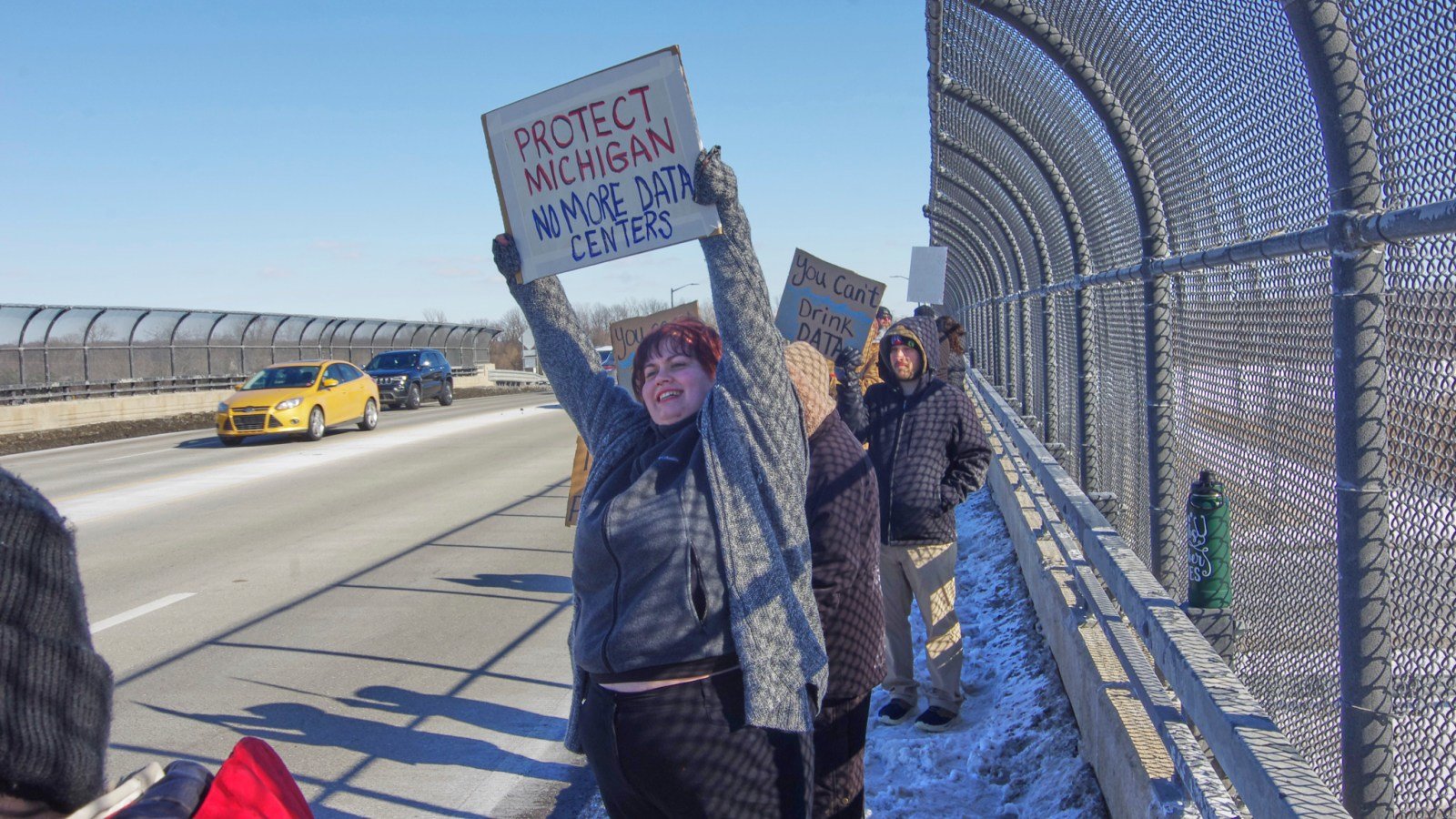
Public resistance has become increasingly organized.
Residents in several communities have formed advocacy groups focused on environmental impact, transparency requirements and local oversight.
Public hearings on data center proposals have drawn unusually large crowds, with residents demanding stricter regulation or outright rejection of projects.
Washington Township officials have framed the moratorium as a planning and governance measure rather than a permanent ban.
The pause gives the township time to establish formal rules governing where data centers can be located, how utilities are managed, what environmental protections apply and whether additional conditions should be imposed before approvals are granted.
The practical consequence is that developers face a slower and more politically contested approval process in many parts of the United States.
Data center expansion is no longer treated as a routine industrial project.
It is increasingly being regulated as critical infrastructure with significant environmental, economic and social implications.
The broader implication extends beyond one township.
As artificial intelligence systems drive unprecedented demand for computing power, local governments are emerging as decisive gatekeepers in determining where and how the next generation of digital infrastructure gets built.
Washington Township officials moved to halt or delay action tied to proposed data center development while they rewrite zoning rules and study the long-term impact of hyperscale computing facilities.
The decision follows mounting resident opposition, legal concerns and broader uncertainty about how local communities should manage industrial-scale digital infrastructure that consumes enormous quantities of electricity, land and water.
The immediate dispute centers on proposals connected to large tracts of land targeted for technology and industrial redevelopment.
Township officials have publicly acknowledged that existing zoning ordinances were not designed for modern artificial intelligence-era data centers, which operate more like utility-intensive industrial campuses than conventional office developments.
Local attorneys warned officials that approving projects without updated rules could expose the township to litigation and weaken its ability to regulate future construction.
What is confirmed is that the township used the moratorium period to review industrial zoning language, environmental safeguards, infrastructure requirements and land-use compatibility standards.
Officials also delayed or reconsidered rezoning requests linked to major proposed developments while planners evaluated how data centers would affect surrounding residential and agricultural areas.
The conflict in Washington Township is part of a much larger national shift.
Across the United States, municipalities are increasingly slowing or blocking data center expansion after years of largely welcoming such projects as economic development opportunities.
Communities in Michigan, Illinois, Ohio, Minnesota and other states have recently approved temporary bans, moratoriums or emergency zoning reviews tied to proposed server campuses.
The key issue is the scale of modern artificial intelligence infrastructure.
New data centers designed for AI model training and cloud computing consume far more electricity than earlier generations of server facilities.
Many also require extensive water systems for cooling.
Utility planners, environmental groups and residents have raised concerns about pressure on electrical grids, increased utility costs, groundwater use, diesel backup generators, noise pollution and the industrialization of rural land.
Developers and technology companies argue the projects create tax revenue, infrastructure investment and strategic computing capacity needed for economic competitiveness.
They also contend that AI-driven demand for computing power is expanding so quickly that delays in construction could create supply bottlenecks across multiple industries.
Opponents counter that the economic benefits are often overstated because modern data centers employ relatively small permanent workforces compared with their physical footprint and infrastructure demands.
In multiple communities, residents have questioned whether local taxpayers assume disproportionate environmental and infrastructure risks while large technology firms capture most long-term gains.
Washington Township’s case illustrates how local governments are struggling to regulate an industry evolving faster than municipal planning systems.
Traditional zoning categories often fail to address the unique operational characteristics of hyperscale computing campuses, including substation construction, cooling systems, fiber connectivity, backup power generation and twenty-four-hour industrial operations.
The political pressure surrounding these projects has intensified as artificial intelligence investment accelerates nationwide.
Major technology firms and real estate developers are racing to secure land near transmission infrastructure and high-capacity power access.
That has pushed data center expansion into suburban and rural communities that previously had limited exposure to large-scale digital infrastructure projects.
Public resistance has become increasingly organized.
Residents in several communities have formed advocacy groups focused on environmental impact, transparency requirements and local oversight.
Public hearings on data center proposals have drawn unusually large crowds, with residents demanding stricter regulation or outright rejection of projects.
Washington Township officials have framed the moratorium as a planning and governance measure rather than a permanent ban.
The pause gives the township time to establish formal rules governing where data centers can be located, how utilities are managed, what environmental protections apply and whether additional conditions should be imposed before approvals are granted.
The practical consequence is that developers face a slower and more politically contested approval process in many parts of the United States.
Data center expansion is no longer treated as a routine industrial project.
It is increasingly being regulated as critical infrastructure with significant environmental, economic and social implications.
The broader implication extends beyond one township.
As artificial intelligence systems drive unprecedented demand for computing power, local governments are emerging as decisive gatekeepers in determining where and how the next generation of digital infrastructure gets built.