Focus on the BIG picture.
Tuesday, Jan 27, 2026
Outside the box.

White House Intensifies Political Pressure on Minnesota Democrats Amid ICE Controversy
Administration amplifies public criticism of Minnesota leaders even after President Trump’s conciliatory call with Gov. Walz
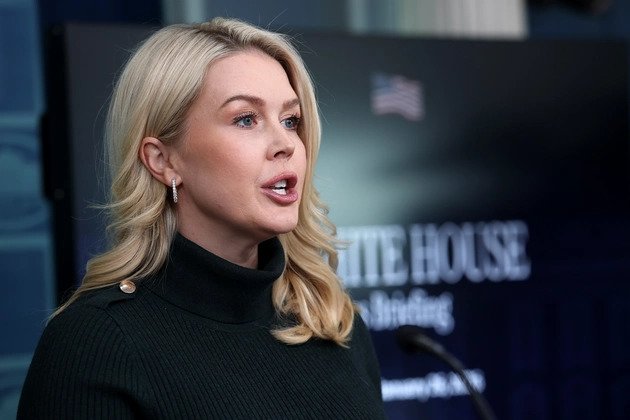
The White House has escalated its public pressure on Minnesota Democrats, sharply criticising state leaders over immigration enforcement even as President Donald Trump spoke with Governor Tim Walz in a bid to ease tensions following recent federal actions and deadly incidents.
Press Secretary Karoline Leavitt accused Walz of “spreading lies” about federal operations in the state, underscoring the administration’s increasingly combative posture.
Leavitt’s remarks came after Trump described his conversation with Walz as being on a “similar wavelength” regarding federal and state cooperation on immigration matters, a comment that followed days of political and public turmoil in Minneapolis and throughout Minnesota.
The backdrop to the pressure campaign is an intensifying controversy over “Operation Metro Surge,” a federal immigration enforcement initiative that has deployed thousands of ICE and Border Patrol agents to Minnesota.
The operation has provoked fierce criticism from state and local officials, community organisations and civil rights advocates—particularly after the fatal shooting of 37-year-old nurse Alex Pretti by federal agents during an ICE action in Minneapolis.
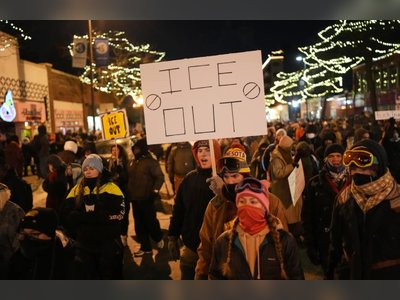
That incident has ignited nationwide protests and calls for more stringent oversight of immigration enforcement tactics.
Despite the apparent diplomatic tone struck in the president’s call with Walz, the White House continues to publicly fault Minnesota’s Democratic leadership for resisting federal enforcement efforts.
Trump has used social media to blame state officials, including Walz and Minneapolis Mayor Jacob Frey, for enabling what he describes as disorder and for failing to hand over undocumented immigrants to federal custody.
He has also called on Congress to pass legislation to abolish sanctuary city policies, which he says undermine law enforcement’s ability to uphold immigration laws.
Meanwhile, the federal push has generated legal and political pushback.
A federal court in Minneapolis is considering whether the deployment of ICE agents constitutes an unconstitutional occupation of the state, with Minnesota and city governments arguing the operation punishes local sanctuary policies and oversteps constitutional boundaries.
The judicial review adds another layer of complexity to the tensions between federal authority and state autonomy.
Minnesota’s Democratic leaders have defended their policies while condemning federal actions.
Walz has described the shooting of Pretti as “sickening” and said the federal presence must end, even activating the National Guard to support local safety efforts.
Prominent Democratic senators from Minnesota have echoed calls for transparency and accountability, while critics from across the political spectrum debate the balance between enforcing immigration laws and maintaining civil liberties.
The White House’s intensified messaging against Minnesota Democrats comes as the broader national debate over immigration enforcement, state rights and federal power continues to unfold against the backdrop of protests, legal challenges and political positioning ahead of the 2026 election cycle.
Press Secretary Karoline Leavitt accused Walz of “spreading lies” about federal operations in the state, underscoring the administration’s increasingly combative posture.
Leavitt’s remarks came after Trump described his conversation with Walz as being on a “similar wavelength” regarding federal and state cooperation on immigration matters, a comment that followed days of political and public turmoil in Minneapolis and throughout Minnesota.
The backdrop to the pressure campaign is an intensifying controversy over “Operation Metro Surge,” a federal immigration enforcement initiative that has deployed thousands of ICE and Border Patrol agents to Minnesota.
The operation has provoked fierce criticism from state and local officials, community organisations and civil rights advocates—particularly after the fatal shooting of 37-year-old nurse Alex Pretti by federal agents during an ICE action in Minneapolis.
That incident has ignited nationwide protests and calls for more stringent oversight of immigration enforcement tactics.
Despite the apparent diplomatic tone struck in the president’s call with Walz, the White House continues to publicly fault Minnesota’s Democratic leadership for resisting federal enforcement efforts.
Trump has used social media to blame state officials, including Walz and Minneapolis Mayor Jacob Frey, for enabling what he describes as disorder and for failing to hand over undocumented immigrants to federal custody.
He has also called on Congress to pass legislation to abolish sanctuary city policies, which he says undermine law enforcement’s ability to uphold immigration laws.
Meanwhile, the federal push has generated legal and political pushback.
A federal court in Minneapolis is considering whether the deployment of ICE agents constitutes an unconstitutional occupation of the state, with Minnesota and city governments arguing the operation punishes local sanctuary policies and oversteps constitutional boundaries.
The judicial review adds another layer of complexity to the tensions between federal authority and state autonomy.
Minnesota’s Democratic leaders have defended their policies while condemning federal actions.
Walz has described the shooting of Pretti as “sickening” and said the federal presence must end, even activating the National Guard to support local safety efforts.
Prominent Democratic senators from Minnesota have echoed calls for transparency and accountability, while critics from across the political spectrum debate the balance between enforcing immigration laws and maintaining civil liberties.
The White House’s intensified messaging against Minnesota Democrats comes as the broader national debate over immigration enforcement, state rights and federal power continues to unfold against the backdrop of protests, legal challenges and political positioning ahead of the 2026 election cycle.