Focus on the BIG picture.
Wednesday, May 06, 2026
Outside the box.

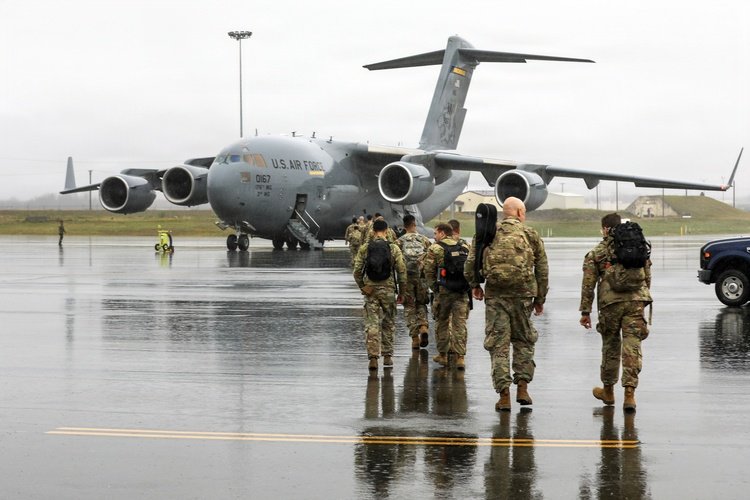
Alaska National Guard Deploys Personnel to Washington, D.C. Under Federal Support Mission
Twenty-five service members are being sent to the capital as part of a broader National Guard support role focused on security and operational assistance
EVENT-DRIVEN federal deployment activity within the United States National Guard system has led to the activation of personnel from Alaska for assignment in Washington, D.C., reflecting ongoing reliance on state-based military units to support federal security and operational needs in the capital.
What is confirmed is that approximately twenty-five members of the Alaska National Guard have been ordered to deploy to Washington, D.C. The deployment places them under federal coordination for a mission that typically involves logistical, administrative, or security-related support functions rather than combat operations.
Such deployments are part of the National Guard’s dual state-federal structure, which allows units to be activated for federal missions when authorized.
The National Guard operates under a hybrid command system in which units normally report to state governors but can be placed under federal control for specific missions.
Deployments to Washington, D.C. are frequently associated with support for civil authorities, infrastructure protection, or large-scale national events requiring additional manpower.
The capital’s unique security environment often results in the temporary reassignment of Guard units from multiple states.
The Alaska contingent’s size—twenty-five personnel—indicates a limited but targeted support role rather than a large-scale operational surge.
Such small detachments are typically integrated into broader multi-state deployments, where combined forces from different jurisdictions contribute to a unified federal mission.
The decision to deploy National Guard personnel from Alaska reflects broader patterns of resource distribution across the United States military support structure.
When demand rises in Washington, D.C., due to security requirements or planned national events, the federal system can request assistance from geographically distant states, redistributing manpower to meet operational needs without permanently increasing federal troop levels in the capital.
For the service members involved, deployments of this type generally involve temporary reassignment away from their home state duties.
These assignments can include coordination with federal agencies, support for local law enforcement structures, and assistance with logistical operations depending on mission classification.
The broader implication of such deployments is the continued normalization of National Guard involvement in federal capital operations.
While the Guard’s primary role remains state-level emergency response, its increasing integration into federal missions underscores its function as a flexible reserve force capable of responding to both domestic emergencies and national security requirements.
The deployment of Alaska National Guard personnel to Washington, D.C. will proceed under established federal activation procedures, with units expected to integrate into existing operational frameworks upon arrival and remain in place for the duration of the assigned mission period.
What is confirmed is that approximately twenty-five members of the Alaska National Guard have been ordered to deploy to Washington, D.C. The deployment places them under federal coordination for a mission that typically involves logistical, administrative, or security-related support functions rather than combat operations.
Such deployments are part of the National Guard’s dual state-federal structure, which allows units to be activated for federal missions when authorized.
The National Guard operates under a hybrid command system in which units normally report to state governors but can be placed under federal control for specific missions.
Deployments to Washington, D.C. are frequently associated with support for civil authorities, infrastructure protection, or large-scale national events requiring additional manpower.
The capital’s unique security environment often results in the temporary reassignment of Guard units from multiple states.
The Alaska contingent’s size—twenty-five personnel—indicates a limited but targeted support role rather than a large-scale operational surge.
Such small detachments are typically integrated into broader multi-state deployments, where combined forces from different jurisdictions contribute to a unified federal mission.
The decision to deploy National Guard personnel from Alaska reflects broader patterns of resource distribution across the United States military support structure.
When demand rises in Washington, D.C., due to security requirements or planned national events, the federal system can request assistance from geographically distant states, redistributing manpower to meet operational needs without permanently increasing federal troop levels in the capital.
For the service members involved, deployments of this type generally involve temporary reassignment away from their home state duties.
These assignments can include coordination with federal agencies, support for local law enforcement structures, and assistance with logistical operations depending on mission classification.
The broader implication of such deployments is the continued normalization of National Guard involvement in federal capital operations.
While the Guard’s primary role remains state-level emergency response, its increasing integration into federal missions underscores its function as a flexible reserve force capable of responding to both domestic emergencies and national security requirements.
The deployment of Alaska National Guard personnel to Washington, D.C. will proceed under established federal activation procedures, with units expected to integrate into existing operational frameworks upon arrival and remain in place for the duration of the assigned mission period.