Focus on the BIG picture.
Thursday, Apr 30, 2026
Outside the box.

Leaked UK Diplomatic Audio Raises Questions Over US ‘Special Relationship’ Focus
A reported recording of a UK envoy suggesting Washington prioritises another ally over Britain has triggered diplomatic scrutiny, though officials have not confirmed authenticity or context.
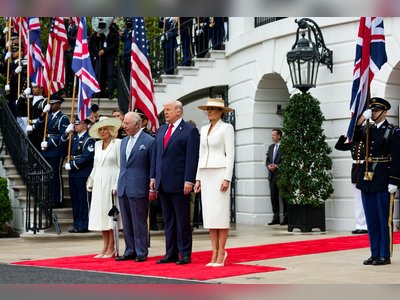
An event-driven diplomatic controversy has emerged in the United Kingdom after a reported leaked audio recording allegedly captured a senior UK envoy questioning the long-standing notion of a US–UK “special relationship,” and suggesting that Washington’s closest strategic alignment may lie elsewhere.
What is confirmed is that the recording has circulated within political and media circles and prompted public discussion about the state of UK–US relations.
The content attributed to the envoy reportedly implies that the United States may prioritise another key international partner over Britain in certain strategic and security contexts.
However, the authenticity, full context, and exact wording of the recording have not been independently established in a way that resolves all doubts.
Officials have not publicly verified the circumstances under which the audio was recorded, nor whether it reflects a private strategic assessment, a broader institutional view, or a misrepresentation of internal diplomatic commentary.
The UK–US relationship, often referred to as the “special relationship,” is a longstanding framework of military, intelligence, economic, and diplomatic cooperation.
It includes deep intelligence-sharing arrangements, joint military operations, and coordinated foreign policy positions across multiple global theatres.
Despite this structural closeness, the relationship has periodically experienced strain over burden-sharing, trade alignment, and strategic priorities.
The alleged remarks, if accurately represented, would reflect a perception within parts of the diplomatic community that US foreign policy priorities are increasingly shaped by a wider set of global partnerships rather than a single dominant bilateral alignment.
Analysts have long noted that US strategic focus has diversified across Europe, the Indo-Pacific, and the Middle East, leading to competing perceptions among allies about relative importance.
The reaction to the leak has been politically sensitive because it touches on the symbolic foundation of UK foreign policy.
Successive British governments have emphasised the US relationship as central to national security strategy, particularly in intelligence cooperation through long-established alliances.
If authenticated and contextualised as an official assessment, the recording could intensify debate in the UK about its global strategic positioning, especially at a time when defence spending, NATO commitments, and Indo-Pacific engagement are under active review.
At the same time, diplomatic protocol typically treats private assessments between officials as separate from formal state policy.
Without confirmed context, the recording remains an unresolved piece of evidence whose significance depends heavily on verification of authorship, intent, and completeness.
The immediate consequence is political scrutiny and renewed media focus on the balance of power within US alliances.
The longer-term impact will depend on whether the recording is formally acknowledged, clarified, or dismissed through official channels, and whether it reflects an isolated opinion or a broader strategic reassessment within diplomatic circles.
What is confirmed is that the recording has circulated within political and media circles and prompted public discussion about the state of UK–US relations.
The content attributed to the envoy reportedly implies that the United States may prioritise another key international partner over Britain in certain strategic and security contexts.
However, the authenticity, full context, and exact wording of the recording have not been independently established in a way that resolves all doubts.
Officials have not publicly verified the circumstances under which the audio was recorded, nor whether it reflects a private strategic assessment, a broader institutional view, or a misrepresentation of internal diplomatic commentary.
The UK–US relationship, often referred to as the “special relationship,” is a longstanding framework of military, intelligence, economic, and diplomatic cooperation.
It includes deep intelligence-sharing arrangements, joint military operations, and coordinated foreign policy positions across multiple global theatres.
Despite this structural closeness, the relationship has periodically experienced strain over burden-sharing, trade alignment, and strategic priorities.
The alleged remarks, if accurately represented, would reflect a perception within parts of the diplomatic community that US foreign policy priorities are increasingly shaped by a wider set of global partnerships rather than a single dominant bilateral alignment.
Analysts have long noted that US strategic focus has diversified across Europe, the Indo-Pacific, and the Middle East, leading to competing perceptions among allies about relative importance.
The reaction to the leak has been politically sensitive because it touches on the symbolic foundation of UK foreign policy.
Successive British governments have emphasised the US relationship as central to national security strategy, particularly in intelligence cooperation through long-established alliances.
If authenticated and contextualised as an official assessment, the recording could intensify debate in the UK about its global strategic positioning, especially at a time when defence spending, NATO commitments, and Indo-Pacific engagement are under active review.
At the same time, diplomatic protocol typically treats private assessments between officials as separate from formal state policy.
Without confirmed context, the recording remains an unresolved piece of evidence whose significance depends heavily on verification of authorship, intent, and completeness.
The immediate consequence is political scrutiny and renewed media focus on the balance of power within US alliances.
The longer-term impact will depend on whether the recording is formally acknowledged, clarified, or dismissed through official channels, and whether it reflects an isolated opinion or a broader strategic reassessment within diplomatic circles.