Focus on the BIG picture.
Thursday, Apr 30, 2026
Outside the box.

U.S. Aircraft Carrier Withdrawal Signals Tactical Shift in Middle East Naval Pressure on Iran
The USS Gerald R. Ford is set to end a record-long deployment in the region, reducing U.S. naval firepower even as tensions with Iran remain elevated and maritime enforcement operations continue.
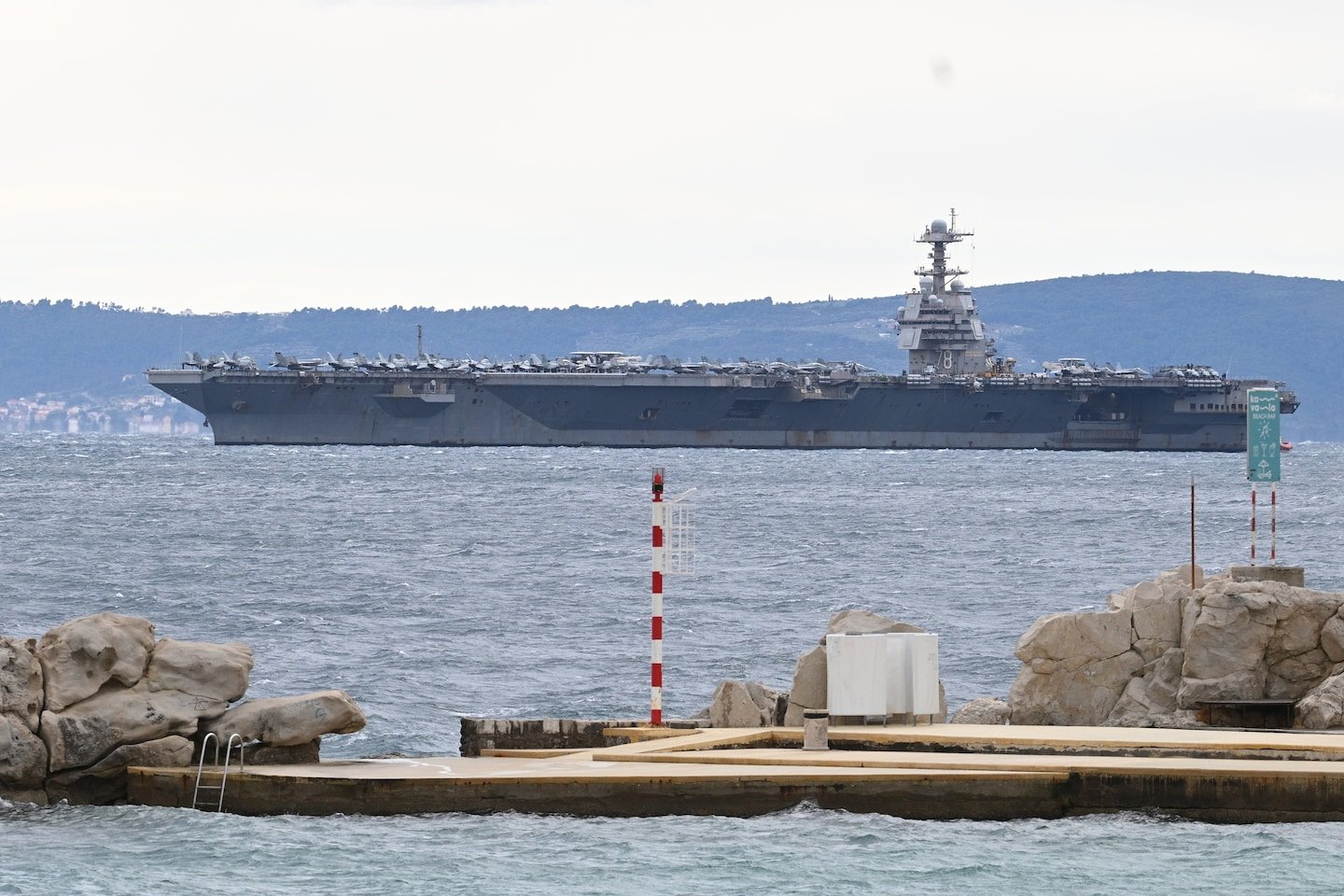
A SYSTEM-DRIVEN military adjustment in U.S. force posture is unfolding in the Middle East as the aircraft carrier USS Gerald R. Ford prepares to leave the region after an exceptionally long deployment, reducing American naval firepower at a moment of sustained tension with Iran.
What is confirmed is that the USS Gerald R. Ford, the U.S. Navy’s newest and most advanced aircraft carrier, is returning to its home port in Virginia after approximately 309 days at sea.
This represents one of the longest modern carrier deployments in recent history and follows sustained operations spanning multiple theaters, including the Atlantic, Caribbean, and Middle East.
Its departure is expected within days, with arrival projected in mid-May.
The carrier has been operating in a high-intensity maritime environment in the Red Sea as part of broader U.S. naval efforts to enforce restrictions on shipping linked to Iranian oil and goods.
Alongside other deployed carrier strike groups, it has contributed to maritime interception operations aimed at limiting Tehran’s ability to generate revenue and project influence through shipping routes.
The key issue is not only the withdrawal of a single vessel but the strategic balance it leaves behind.
The Ford is one of three U.S. aircraft carriers operating in the wider region.
After its departure, the remaining force will consist of two carriers positioned in adjacent operational zones in the Arabian Sea, continuing enforcement missions and regional deterrence activities.
The decision follows extended operational strain on the ship and its crew.
The vessel has experienced maintenance challenges during its deployment, including onboard damage and recurring system issues typical of prolonged high-tempo operations.
The unusually long assignment has also drawn scrutiny over readiness impacts, as standard carrier deployments are significantly shorter to preserve maintenance cycles and operational sustainability.
At the same time, broader U.S.–Iran tensions remain unresolved.
Diplomatic engagement has stalled, and maritime enforcement operations continue to intersect with broader regional instability.
The carrier’s withdrawal therefore occurs not in a de-escalating environment but amid ongoing pressure campaigns, contested shipping lanes, and persistent military signaling.
The strategic consequence is a measurable reduction in immediate U.S. carrier-based airpower in the region, even as the broader force structure remains substantial.
The Navy is expected to shift toward maintenance and rotation cycles for the returning vessel while sustaining forward presence with remaining carrier groups, preserving deterrence without maintaining peak surge posture.
The transition marks a recalibration rather than a disengagement: sustained pressure on Iranian-linked maritime activity continues, but with fewer frontline carrier assets temporarily in theater as long-deployment capacity is reset.
What is confirmed is that the USS Gerald R. Ford, the U.S. Navy’s newest and most advanced aircraft carrier, is returning to its home port in Virginia after approximately 309 days at sea.
This represents one of the longest modern carrier deployments in recent history and follows sustained operations spanning multiple theaters, including the Atlantic, Caribbean, and Middle East.
Its departure is expected within days, with arrival projected in mid-May.
The carrier has been operating in a high-intensity maritime environment in the Red Sea as part of broader U.S. naval efforts to enforce restrictions on shipping linked to Iranian oil and goods.
Alongside other deployed carrier strike groups, it has contributed to maritime interception operations aimed at limiting Tehran’s ability to generate revenue and project influence through shipping routes.
The key issue is not only the withdrawal of a single vessel but the strategic balance it leaves behind.
The Ford is one of three U.S. aircraft carriers operating in the wider region.
After its departure, the remaining force will consist of two carriers positioned in adjacent operational zones in the Arabian Sea, continuing enforcement missions and regional deterrence activities.
The decision follows extended operational strain on the ship and its crew.
The vessel has experienced maintenance challenges during its deployment, including onboard damage and recurring system issues typical of prolonged high-tempo operations.
The unusually long assignment has also drawn scrutiny over readiness impacts, as standard carrier deployments are significantly shorter to preserve maintenance cycles and operational sustainability.
At the same time, broader U.S.–Iran tensions remain unresolved.
Diplomatic engagement has stalled, and maritime enforcement operations continue to intersect with broader regional instability.
The carrier’s withdrawal therefore occurs not in a de-escalating environment but amid ongoing pressure campaigns, contested shipping lanes, and persistent military signaling.
The strategic consequence is a measurable reduction in immediate U.S. carrier-based airpower in the region, even as the broader force structure remains substantial.
The Navy is expected to shift toward maintenance and rotation cycles for the returning vessel while sustaining forward presence with remaining carrier groups, preserving deterrence without maintaining peak surge posture.
The transition marks a recalibration rather than a disengagement: sustained pressure on Iranian-linked maritime activity continues, but with fewer frontline carrier assets temporarily in theater as long-deployment capacity is reset.