Focus on the BIG picture.
Thursday, Apr 30, 2026
Outside the box.

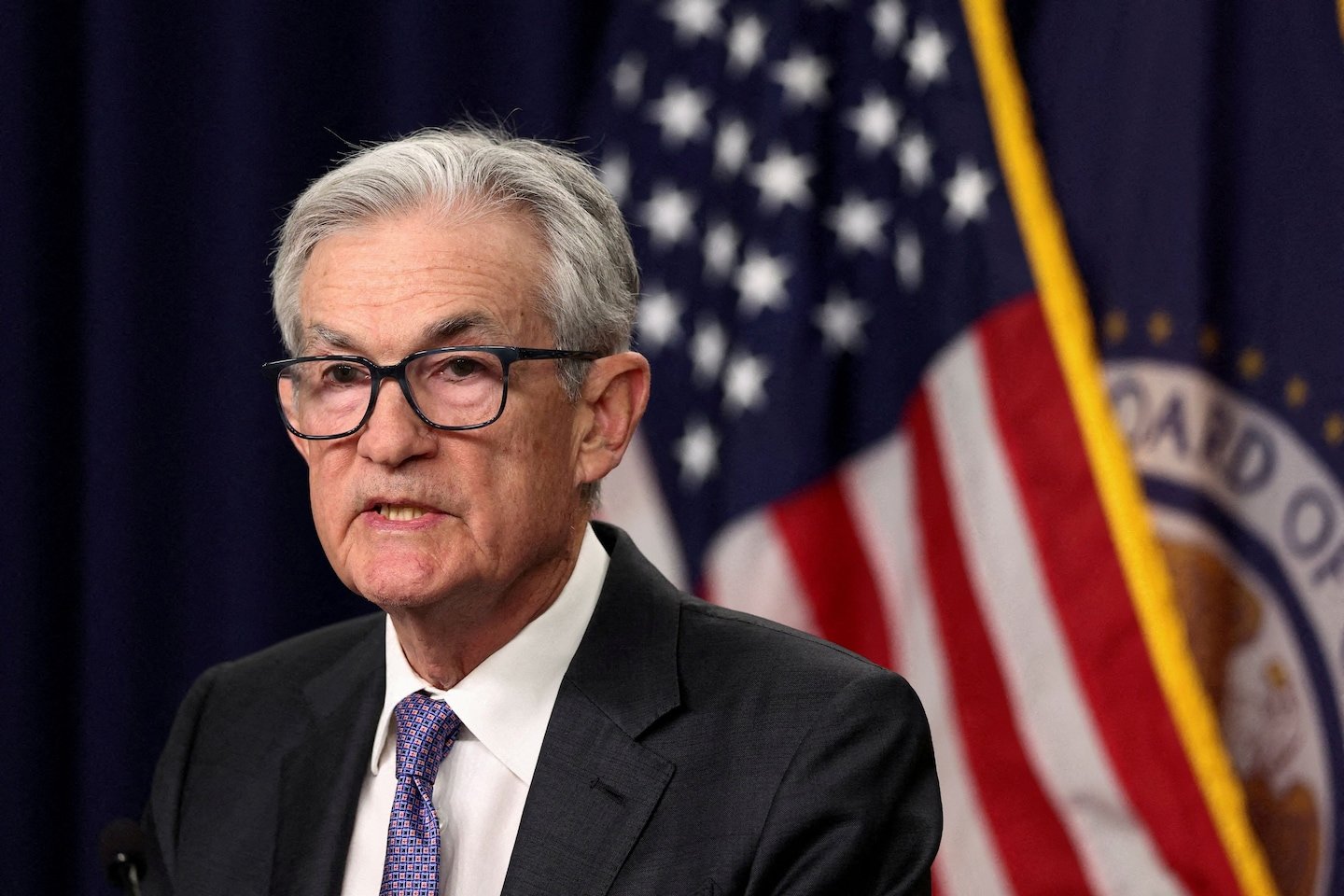
Powell to stay on Federal Reserve board after chair term ends, blocking immediate leadership reset
Jerome Powell is set to remain a Fed governor even after his chairmanship ends in May 2026, limiting President Trump’s ability to quickly reshape the central bank’s leadership
A SYSTEM-DRIVEN institutional transition at the United States Federal Reserve is reshaping expectations about control of monetary policy, as current Chair Jerome Powell is set to remain on the Fed’s Board of Governors even after his term as chair expires in May 2026.
What is confirmed is that Powell’s tenure as chair is scheduled to end next year, but his underlying term as a Federal Reserve governor extends further, allowing him to remain on the central bank’s governing board unless he chooses to resign.
That structural detail significantly affects how quickly a sitting president can influence the composition and direction of the institution.
The Federal Reserve is governed by a seven-member Board of Governors, each serving staggered long terms.
The chair is selected from among those governors but is not a separate permanent position.
As a result, a chair stepping down does not automatically create an additional vacancy on the board.
In this case, Powell’s decision to remain on the board would mean that even after relinquishing the chairmanship, he would continue to participate in key decisions on interest rates, financial stability, and regulatory policy.
This limits the immediate scope for President Donald Trump to appoint a second new governor in addition to a new chair, constraining the pace of leadership turnover.
The development comes amid broader political debate over the independence of the Federal Reserve.
Trump has repeatedly criticized the central bank’s interest rate decisions and has signaled a desire to install leadership more aligned with his economic agenda.
The structure of Powell’s continued presence complicates any rapid reshaping of the Fed’s policy direction.
The key issue is institutional continuity.
Even when the presidency changes or appointments shift, Federal Reserve governors serve fixed terms that are intentionally staggered to prevent any single administration from quickly gaining full control of the board.
Powell’s continued seat reinforces that design, ensuring that experienced policymakers remain in place during transitions.
Financial markets typically respond closely to signals about Federal Reserve leadership, since the chair plays a central role in setting interest rate policy that influences borrowing costs across the economy.
However, the broader board also votes on policy decisions, meaning Powell would retain influence even without the chair title.
The arrangement also affects succession dynamics.
The next chair will inherit leadership responsibilities but will not operate in a fully cleared institutional environment, potentially shaping the pace and direction of policy changes depending on internal board alignment.
Powell’s continued tenure underscores a core feature of the Federal Reserve system: leadership changes are designed to be gradual rather than abrupt, preserving policy stability across political cycles.
That structure now directly limits how quickly the incoming administration can reconstruct the central bank’s governing majority.
As the transition approaches, attention will focus on who replaces Powell as chair and how remaining governors align on inflation control, interest rates, and financial regulation under a leadership structure that remains partially unchanged.
What is confirmed is that Powell’s tenure as chair is scheduled to end next year, but his underlying term as a Federal Reserve governor extends further, allowing him to remain on the central bank’s governing board unless he chooses to resign.
That structural detail significantly affects how quickly a sitting president can influence the composition and direction of the institution.
The Federal Reserve is governed by a seven-member Board of Governors, each serving staggered long terms.
The chair is selected from among those governors but is not a separate permanent position.
As a result, a chair stepping down does not automatically create an additional vacancy on the board.
In this case, Powell’s decision to remain on the board would mean that even after relinquishing the chairmanship, he would continue to participate in key decisions on interest rates, financial stability, and regulatory policy.
This limits the immediate scope for President Donald Trump to appoint a second new governor in addition to a new chair, constraining the pace of leadership turnover.
The development comes amid broader political debate over the independence of the Federal Reserve.
Trump has repeatedly criticized the central bank’s interest rate decisions and has signaled a desire to install leadership more aligned with his economic agenda.
The structure of Powell’s continued presence complicates any rapid reshaping of the Fed’s policy direction.
The key issue is institutional continuity.
Even when the presidency changes or appointments shift, Federal Reserve governors serve fixed terms that are intentionally staggered to prevent any single administration from quickly gaining full control of the board.
Powell’s continued seat reinforces that design, ensuring that experienced policymakers remain in place during transitions.
Financial markets typically respond closely to signals about Federal Reserve leadership, since the chair plays a central role in setting interest rate policy that influences borrowing costs across the economy.
However, the broader board also votes on policy decisions, meaning Powell would retain influence even without the chair title.
The arrangement also affects succession dynamics.
The next chair will inherit leadership responsibilities but will not operate in a fully cleared institutional environment, potentially shaping the pace and direction of policy changes depending on internal board alignment.
Powell’s continued tenure underscores a core feature of the Federal Reserve system: leadership changes are designed to be gradual rather than abrupt, preserving policy stability across political cycles.
That structure now directly limits how quickly the incoming administration can reconstruct the central bank’s governing majority.
As the transition approaches, attention will focus on who replaces Powell as chair and how remaining governors align on inflation control, interest rates, and financial regulation under a leadership structure that remains partially unchanged.