Focus on the BIG picture.
Tuesday, Jul 21, 2026
Outside the box.

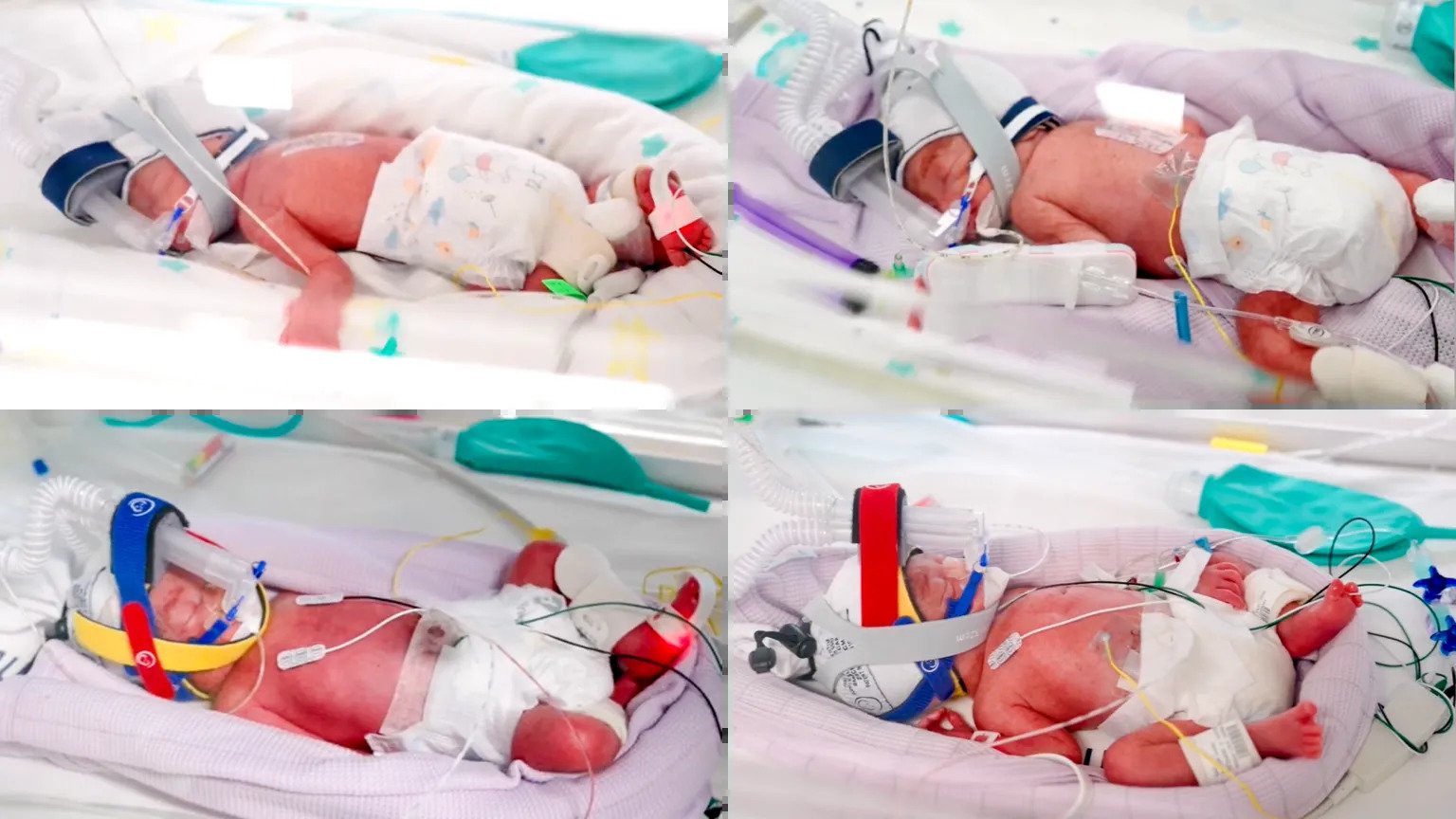
Naturally Conceived Identical Quadruplets Born in Rare Brisbane Delivery
Four premature girls who developed from a single fertilised egg and shared one placenta are receiving specialist neonatal care after an exceptionally rare pregnancy.
Four naturally conceived identical girls have been born at the Royal Brisbane and Women’s Hospital after an exceptionally rare and medically precarious pregnancy.
Emily, Harriet, Catherine and Alexa Na’amoana were delivered by caesarean section on 14 July at 28 weeks and four days of gestation.
The hospital says all four are doing extremely well in neonatal intensive care.
Their mother, 34-year-old Jenitar Na’amoana, and her husband, Jortham, already had four children and had not planned to expand their family.
The pregnancy itself was unexpected; learning that they were expecting quadruplets brought what the hospital described as immense surprise.
The girls are monozygotic quadruplets, meaning they developed after a single fertilised egg divided into four embryos.
They also shared one placenta, a configuration that made an already unusual pregnancy still more medically complex.
Maternal-foetal medicine specialist and obstetrician Dr Alexa Bendall estimated that identical quadruplets occur in roughly one in every 15 million pregnancies, although reliable frequencies are difficult to establish because so few cases exist.
Naturally conceived quadruplets of any type are estimated to occur in about one in 700,000 births.
Sharing a placenta can expose multiple foetuses to uneven blood flow and other serious complications, while carrying four babies increases the risks of premature delivery and illness affecting both mother and children.
Na’amoana was admitted to hospital at 25 weeks so clinicians could monitor the pregnancy continuously.
The medical team had regarded reaching 28 weeks as an important milestone.
Delivery took place four days beyond that target and required a large multidisciplinary team.
Bendall said Na’amoana had avoided the complications clinicians had feared throughout the pregnancy.
The doctor described the birth of four healthy babies at that stage as an extraordinary outcome.
One daughter, Alexa, was named after Bendall, who had cared for Na’amoana from early in the pregnancy.
The obstetrician called the gesture a beautiful tribute.
Her sisters were named Emily, Harriet and Catherine.
The four newborns remain premature and require specialist support despite their encouraging condition.
They are expected to stay in the hospital’s neonatal intensive care unit as they grow toward full term, allowing clinicians to oversee their breathing, feeding, development and other needs associated with an early birth.
The arrivals have doubled the number of children in the Na’amoana household.
Their four older siblings are aged between one and 10, leaving the parents to prepare for life as a family of 10 once the babies leave hospital.
Na’amoana has opened an online fundraising campaign to help the family obtain a vehicle with at least 10 seats and meet the costs of equipment, travel and caring for four newborns simultaneously.
Donations had exceeded 37,000 Australian dollars after the births.
For now, Emily, Harriet, Catherine and Alexa will remain under specialist neonatal supervision until they are ready to complete the journey home.
Emily, Harriet, Catherine and Alexa Na’amoana were delivered by caesarean section on 14 July at 28 weeks and four days of gestation.
The hospital says all four are doing extremely well in neonatal intensive care.
Their mother, 34-year-old Jenitar Na’amoana, and her husband, Jortham, already had four children and had not planned to expand their family.
The pregnancy itself was unexpected; learning that they were expecting quadruplets brought what the hospital described as immense surprise.
The girls are monozygotic quadruplets, meaning they developed after a single fertilised egg divided into four embryos.
They also shared one placenta, a configuration that made an already unusual pregnancy still more medically complex.
Maternal-foetal medicine specialist and obstetrician Dr Alexa Bendall estimated that identical quadruplets occur in roughly one in every 15 million pregnancies, although reliable frequencies are difficult to establish because so few cases exist.
Naturally conceived quadruplets of any type are estimated to occur in about one in 700,000 births.
Sharing a placenta can expose multiple foetuses to uneven blood flow and other serious complications, while carrying four babies increases the risks of premature delivery and illness affecting both mother and children.
Na’amoana was admitted to hospital at 25 weeks so clinicians could monitor the pregnancy continuously.
The medical team had regarded reaching 28 weeks as an important milestone.
Delivery took place four days beyond that target and required a large multidisciplinary team.
Bendall said Na’amoana had avoided the complications clinicians had feared throughout the pregnancy.
The doctor described the birth of four healthy babies at that stage as an extraordinary outcome.
One daughter, Alexa, was named after Bendall, who had cared for Na’amoana from early in the pregnancy.
The obstetrician called the gesture a beautiful tribute.
Her sisters were named Emily, Harriet and Catherine.
The four newborns remain premature and require specialist support despite their encouraging condition.
They are expected to stay in the hospital’s neonatal intensive care unit as they grow toward full term, allowing clinicians to oversee their breathing, feeding, development and other needs associated with an early birth.
The arrivals have doubled the number of children in the Na’amoana household.
Their four older siblings are aged between one and 10, leaving the parents to prepare for life as a family of 10 once the babies leave hospital.
Na’amoana has opened an online fundraising campaign to help the family obtain a vehicle with at least 10 seats and meet the costs of equipment, travel and caring for four newborns simultaneously.
Donations had exceeded 37,000 Australian dollars after the births.
For now, Emily, Harriet, Catherine and Alexa will remain under specialist neonatal supervision until they are ready to complete the journey home.