Focus on the BIG picture.
Wednesday, Jan 14, 2026
Outside the box.

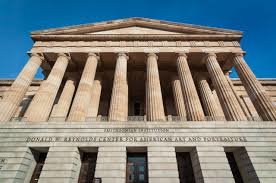
Smithsonian Faces Crucial Compliance Deadline as White House Demands Review of Museum Content
Federal funding is at stake as the Smithsonian must deliver extensive exhibition and programming documents under a Trump administration executive order
The Smithsonian Institution is confronting a pivotal moment as it reaches a White House-imposed deadline to provide thousands of internal documents for a sweeping review that will determine whether its museums’ exhibitions, programs and communications align with federal directives on historical content.
The deadline, set for January 13, requires eight Smithsonian museums to submit detailed material about current and upcoming exhibitions, educational offerings and interpretive texts for review by the White House.
Federal funding tied to the institution’s roughly one-billion-dollar annual budget is said to depend on compliance with the executive order that initiated the review.
The review stems from Executive Order 14253, issued in March, which directs a high-level appraisal of Smithsonian content for “improper ideology” and aims to ensure that public-facing narratives reflect a positive portrayal of American history and ideals.
The White House ordered a comprehensive internal review of eight key museums, including the National Museum of American History, the National Museum of African American History and Culture, the National Air and Space Museum and the National Museum of the American Indian, among others.
In a December letter to Smithsonian Secretary Lonnie G. Bunch III, White House officials underscored urgency and concern that the documentation be delivered in time to shape the Smithsonian’s role in the nation’s forthcoming semiquincentennial celebrations.
The correspondence reiterated that federal funds are available only if the institution’s materials and operations are consistent with the executive order.
The Smithsonian submitted some documents in September, but University officials said that much of the requested content remains outstanding.
The institution has declined to comment on the looming deadline, and internal efforts to compile extensive records have been described as laborious.
Opponents of the White House review argue that the Smithsonian’s charter is meant to guarantee curatorial independence, while supporters believe the review could help align national storytelling with broad public values.
As the deadline passes, observers say the outcome could influence not only how the Smithsonian presents American history but also how federal-funded cultural institutions navigate executive directives on content and interpretation in the lead-up to a milestone national anniversary.
The deadline, set for January 13, requires eight Smithsonian museums to submit detailed material about current and upcoming exhibitions, educational offerings and interpretive texts for review by the White House.
Federal funding tied to the institution’s roughly one-billion-dollar annual budget is said to depend on compliance with the executive order that initiated the review.
The review stems from Executive Order 14253, issued in March, which directs a high-level appraisal of Smithsonian content for “improper ideology” and aims to ensure that public-facing narratives reflect a positive portrayal of American history and ideals.
The White House ordered a comprehensive internal review of eight key museums, including the National Museum of American History, the National Museum of African American History and Culture, the National Air and Space Museum and the National Museum of the American Indian, among others.
In a December letter to Smithsonian Secretary Lonnie G. Bunch III, White House officials underscored urgency and concern that the documentation be delivered in time to shape the Smithsonian’s role in the nation’s forthcoming semiquincentennial celebrations.
The correspondence reiterated that federal funds are available only if the institution’s materials and operations are consistent with the executive order.
The Smithsonian submitted some documents in September, but University officials said that much of the requested content remains outstanding.
The institution has declined to comment on the looming deadline, and internal efforts to compile extensive records have been described as laborious.
Opponents of the White House review argue that the Smithsonian’s charter is meant to guarantee curatorial independence, while supporters believe the review could help align national storytelling with broad public values.
As the deadline passes, observers say the outcome could influence not only how the Smithsonian presents American history but also how federal-funded cultural institutions navigate executive directives on content and interpretation in the lead-up to a milestone national anniversary.